Eurescom leads the Horizon Europe project SNS CO-OP, which is selected to support and enhance the Smart Networks and Services initiative by coordinating the strategic activities that capture and promote the European industry’s vision for 6G.
Through the lighthouse project SUSTAIN-6G, led by Nokia, Eurescom collaborates with a consortium of leading innovators and industrialists to develop a strategy for a sustainable future for ICT and the communications infrastructure at large. This includes developing technologies that prioritize environmental, economic, and societal sustainability for all future services.
Eurescom, a leading European provider of management and support services in the high-tech area, marks the launch of two pivotal collaborative research projects in January 2025. Under the umbrella of Smart Networks and Services Joint Undertaking (SNS JU), these projects aim to solidify and improve European leadership in 6G technology, fostering a sustainable, inclusive, and innovation-driven network ecosystem that supports the EU’s long-term ambitions for universal next-generation technologies.
SNS CO-OP: SNS COLLABORATIVE OPERATIONS AND OUTPUT OPTIMISATION
SNS CO-OP is dedicated to coordinating strategic activities and aligning industry efforts across the currently, 78 projects of the SNS JU. In order to advance European initiatives in smart communications networks and next-generation technology, SNS CO-OP will amplify the achievements of SNS projects, highlight Europe’s leadership in 6G, by building on the successes of the previous support activities in the SNS OPS and SNS ICE projects. SNS CO-OP will ensure that the impact of the SNS JU continues to evolve and expand by supporting future phases of 6G development across the EU and beyond.
The SNS CO-OP consortium, is composed of 22 key partners,and will be led Uwe Herzog, Programme Manager, Eurescom. This project will ensure a seamless transition of the SNS support activities for the next two years. The carefully structured work plan of SNS CO-OP is designed to support and assist delivering the global impact of the key 6G developments as envisioned in the SNS work programme. It will establish and maintain a dialogue in the wider European 6G SNS community to consolidate the European Industry view on 6G and to promote the European vision around the world.
SUSTAIN-6G: SUSTainability-Advanced and Innovative Networking with 6G
SUSTAIN-6G aims to ensure that future 6G networks contribute to sustainable growth across key sectors. This unique approach will examine sustainability impacts across the full life-cycle of 6G technology, and apply the developed insights across multiple vertical sectors. By identifying key intersections between sustainability needs and the capabilities of 6G, the project will clarify the ways in which 6G can be used to responsibly drive economic and societal benefits.
SUSTAIN-6G’s mission is clear: to make sustainability integral to the design, deployment, and operation of 6G networks. SUSTAIN-6G will help shape a more sustainable, resilient, and inclusive digital future.
Together, SNS CO-OP and SUSTAIN-6G represent a significant part of the unified European SNS Initiative to advance 6G networks that are highly performant but also resilient and responsible. While SNS CO-OP will foster collaboration and strategic alignment across the large and diverse 6G SNS community, SUSTAIN-6G will bring a focused approach to sustainable technology development, considering both the immediate and long-term impacts of 6G technology on society, the environment, and the economy.
Projects and Working Groups in which Eurescom is actively contributing to, are at the forefront of key innovation milestones in 5G and 6G research. Recent publications showcase important advances across multiple areas: from the 6G SmartSat project’s pioneering work on dynamic routing in satellite mega-constellations, to the 5G-IS study outlining architectures for future space-based infrastructures. Within the Smart Networks and Services Joint Undertaking (SNS JU), major contributions have been made on defining 6G KPIs, establishing AI and ML as key enablers for next-generation networks, and shaping the evolving 6G architecture. Through the 6G-IA initiatives, further insights have been developed on emerging business models and ecosystem strategies, while promoting diversity and inclusion in the ICT sector through the WiTaR Working Group.
Together, these publications reflect Eurescom’s strong engagement in driving technological, architectural, business, and societal innovation toward a sustainable and inclusive 6G future.
6G SmartSat Wite Paper – Topology Semantic Routing for Mega-Constellations
Eurescom, as the prime coordinator of the 6G SmartSat ESA project, has released the white paper “Topology Semantic Routing for Mega-Constellations,” developed with Fraunhofer FOKUS, Airbus Defence and Space, and Deutsche Telekom. The paper introduces Topology Semantic Routing (TSR), an innovative solution for the dynamic routing challenges faced by Non-Terrestrial Networks (NTN) in LEO and MEO mega-constellations, where traditional protocols like OSPF and BGP fall short. TSR offers adaptive, real-time routing with minimal satellite compute load, using local information and pre-computed paths to maintain network resilience and efficiency without extensive signalling. It integrates with centralized routing models, supporting seamless 5G TN-NTN convergence, and addresses trade-offs between signalling and memory use. Future validation with OpenLANES will enhance its commercial readiness, marking a major step toward advancing multi-sector 6G satellite network applications.
The 5G-IS (“5G System Infrastructure Study”), funded under ESA’s ARTES programme, explores architecture design options and evaluation criteria for deploying a 5G space-based infrastructure (5GSBI), extending toward 6G, to complement terrestrial networks. A special focus was given to satellite connectivity solutions for automotive and road transportation sectors, identified as a key market. Advances in space technologies, such as new launch and propulsion methods, have improved performance and reduced costs, enabling low Earth orbit satellite mega-constellations with lower latency. These developments highlight the growing role of satellite communication in future 5G/6G infrastructures, a trend acknowledged by 3GPP, which has integrated non-terrestrial networks (NTN) into its standards from Release 17 onwards, with expanding support in upcoming releases.
The Test, Measurement, and KPIs Validation (TMV) Working Group (WG) of SNS JU focuses on developing and sharing best practices for 6G testing, monitoring, and analytics. The TMV WG aims to promote common methodologies across projects, support 6G trial Use Cases (UCs), and ensure a unified European vision for the 6G network lifecycle. A key objective is the definition and validation of performance KPIs. This white paper consolidates 6G KPIs from SNS JU projects, providing definitions, target values, and context to shape the 6G vision. Furthermore, the TMV WG promotes common collection procedures, validation methodologies, and analysis of KPI metrics. Various SNS JU projects provided the KPIs, which drive their technical developments.
SNS JU Technical Board – AI/ML as a Key Enabler of 6G Networks
The Smart Networks and Services Joint Undertaking (SNS JU), under Horizon Europe, is advancing Europe’s leadership in 6G by integrating AI and ML into future networks. A survey of 33 projects revealed 199 AI/ML-based mechanisms focused on RAN, resource management, diagnostics, and energy efficiency, mainly using supervised learning and deep learning methods. Projects rely on synthetic, real, and mixed datasets, with outputs targeting radio optimization, security, and resource management. Trends like Explainable AI (XAI) and privacy-preserving techniques such as federated learning are gaining importance. Through these efforts, SNS JU is laying the foundation for AI-native 6G networks while promoting ethical, sustainable innovation and reinforcing Europe’s technological sovereignty.
6G-IA Women in Telecommunications and Research (WiTaR) Working Group – Activity Reports 2024
The Women in Telecommunications and Research (WiTaR) Working Group is proud to present its 2024 Yearly Report. This report provides a snapshot of our efforts to promote the participation and advancement of women in telecommunications. Despite remarkable technological progress, the ICT industry still faces significant gender disparities, with women comprising less than 30% of the workforce globally and even lower representation in technical and leadership roles. These gaps limit diversity, hinder innovation, and reduce the sector’s potential. In 2024, WiTaR worked tirelessly to address these challenges through fostering inclusive workplace cultures, supporting mentorship and leadership development, and driving diversity-forward initiatives. Our activities this year reflect our ongoing commitment to building a more equitable ICT ecosystem.
6G-IA White Paper – Emerging 5G and Beyond Ecosystem Business Models
The telecommunications industry is adapting to new business dynamics introduced by 5G and preparing for similar challenges expected with 6G. Recognizing the importance of aligning technological advances with value creation, the 6G Industry Association (6G-IA) sub-working group Business Validation, Models, and Ecosystems (BVME-SG) has released a new white paper building on its previous work on 5G/B5G ecosystem business modeling. Using the Industry 4.0 vertical as an example, the paper applies a five-step framework to help stakeholders identify business opportunities and understand how ecosystem variations impact operations and strategy. It further explores the cost implications of ecosystem configurations, suggesting new methods for evaluating the technoeconomic viability of networks on a per-deployment and per-actor basis. Finally, the paper discusses the evolving roles within the 6G ecosystem, noting that, although 6G networks will be even more distributed and disaggregated than 5G, the same business modeling framework remains highly relevant for the transition.
6G Architecture Working Group White Paper – Towards 6G Architecture: Key Concepts, Challenges, and Building Blocks
This white paper has been prepared by the 6G Architecture working group of the Smart Network and Services Joint Undertaking (SNS JU). It presents a comprehensive snapshot of the current architectural considerations explored by the SNS JU projects. It discusses the rationale for novel architectural components, the ongoing design efforts, and the future outlook for 6G. It analyses the blueprint for next-generation mobile networks, building on past experiences while integrating cutting-edge advancements. The structure follows the IMT-2030 framework, categorizing insights into the key usage scenarios and overarching architectural aspects.
On 24 March 2022, the European Parliament and the European Council agreed to introduce new EU rules via the Digital Markets Act (DMA) to limit the market power of big online platforms. The DMA will ban certain practices used by large platforms acting as “gatekeepers” and enable the Commission to carry out market investigations and sanction non-compliant behaviour.
The text provisionally agreed by Parliament and Council negotiators targets large companies providing so-called “core platform services” most prone to unfair business practices, such as social networks or search engines, with a market capitalisation of at least 75 billion euro or an annual turnover of 7.5 billion euro. To be designated as “gatekeepers”, these companies must also provide certain services such as browsers, messengers or social media, which have at least 45 million monthly end users in the EU and 10,000 annual business users.
In three-way talks between Parliament, Council and Commission, also known as trilogue, EU lawmakers agreed that the largest messaging services, such as WhatsApp, Facebook Messenger or iMessage, will have to open up and interoperate with smaller messaging platforms upon request. Users of small or big platforms would then be able to exchange messages, send files or make video calls across messaging apps, thus giving them more choice. Regarding interoperability obligations for social networks, co-legislators agreed that such interoperability provisions will be assessed in the future.
The envisage new rules also aim to ensure that combining personal data for targeted advertising will only be allowed with explicit consent given to the gatekeeper. Furthermore, users should be allowed by gatekeepers to freely choose their browser, virtual assistants or search engines.
If a gatekeeper does not comply with the rules, the Commission can impose fines of up to 10% of the gatekeeper’s total worldwide turnover in the preceding financial year, and 20% in case of repeated infringements. In case of systematic infringements, the Commission may ban them from acquiring other companies for a certain time.
The Commission had proposed the Digital Markets Act in December 2020 to address the negative consequences arising from certain behaviours by online platforms acting as digital “gatekeepers” to the EU single market.
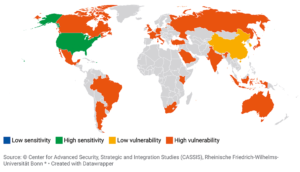
Digital dependence of EU countries remains high. This is a central result of a research report published by the Center for Advanced Security, Strategic and Integration Studies (CASSIS) at University of Bonn in April 2022. The report summarises the key findings of the Digital Dependence Index (DDI), which measures the dependence level on different technology sectors of 23 countries.
The primary indicators of the index focus on ICT trade, communication infrastructures, and intellectual property. The level of dependence is scaled from low sensitivity to high vulnerability. The DDI compares 23 dependence indicators based on three different data sets. The digital dependence status of countries can be distinguished as follows: DDI scores between 0.5 and 1 indicate being more digital dependent; DDI scores between 0 and 0.5 indicate being less digital dependent.
In 2019, 87 percent of countries were highly vulnerable. Although the global dependence structure remained stable since then, there are substantial changes.
China, South Korea, Russia, Kenya, and the US became more autonomous in the last decade. Japan and Indonesia, on the other hand, experienced the most pronounced increases in digital dependency while the positions of the other 16 countries changed very little.
The US is by far the least digitally dependent country and has even widened the gap towards the other countries since 2019. Only China and South Korea managed to reduce the gap towards the leader. China, in particular, made the greatest gains during the last ten years.
European countries have maintained a highly vulnerable status, while their autonomy gap to the US, China, and South Korea widened, as European countries have fallen behind in every dimension compared to the three most digitally autonomous countries. According to the report, Europe’s digital autonomy has eroded in the last decade. The reason is that digital interactions have become more asymmetric with China (ICT trade dependence), with the US (infrastructure and platform dependence), and the East Asian region (intellectual property dependence).
The authors of the report recommend that European countries should rethink their entire approach to digital technologies and employ a much more comprehensive and bold approach, in order to increase digital autonomy.
The 2021 edition of the Threat Landscape report by the European Union Agency for Cybersecurity, ENISA, highlights a surge in cybercrime, mainly driven by ransomware and cryptojacking attacks.
Ransomware ranks as a prime threat for the reporting period April 2020 to July 2021. The cybersecurity threat landscape has grown in terms of sophistication of attacks, complexity and impact. This trend is spurred by an ever-growing online presence, the transitioning of traditional infrastructures to online solutions, advanced interconnectivity, and the exploitation of new features of emerging technologies. Supply-chain attacks rank highly among prime threats because of the significant potential they have in inducing catastrophic cascading effects.
The 9 top threats: 9 threat groups were identified due to their prominence in the reporting period. They include ransomware; malware; cryptojacking; e-mail related threats; threats against data; threats against availability and integrity; disinformation – misinformation; non-malicious threats; and supply-chain attacks.
Key trends: The COVID-19 crisis has created possibilities for attackers, who used the pandemic as a dominant lure in campaigns for email attacks for instance. Monetisation appears to be the main driver of such activities. The techniques that threat actors used are numerous. The following non-exhaustive list presents some of the most prevalent threats identified in the report: Ransomware as a Service (RaaS)-type business models; multiple extortion ransomware schemes; Business Email Compromise (BEC); Phishing-as-a-Service (PhaaS); and Disinformation-as-a-Service (DaaS) business model.
Three types of threats receive particular attention in the report: ransomware, cryptojacking infections, and misinformation and disinformation.
Ransomware has been the prime threat during the reporting period, with several high profile and highly publicised incidents. The significance and impact of the threat of ransomware is also evidenced by a series of related policy initiatives in the European Union (EU) and worldwide. Compromise through phishing e-mails and brute-forcing on Remote Desktop Protocol (RDP) services remain the two most common infection vectors. The occurrence of triple extortion schemes also increased strongly during 2021 and cryptocurrency remains the most common pay-out method for threat actors.
Cryptojacking or hidden cryptomining is a type of cybercrime where a criminal secretly uses a victim’s computing power to generate cryptocurrency. With the proliferation of cryptocurrencies and their ever-increasing uptake by the wider public, an increase in corresponding cybersecurity incidents has been observed. Cryptocurrency remains the most common pay-out method for threat actors.
Misinformation and disinformation are for the first time appearing in the ENISA threat landscape report. Disinformation and misinformation campaigns are on the rise as a result of the increased online presence due to the COVID-19 pandemic, which has led to a high use of social media platforms and online media. Disinformation and misinformation campaigns are frequently used in hybrid attacks to foster doubt or create confusion, therefore reducing the overall perception of trust as a consequence and damaging this major proponent of cybersecurity in the process.
Threat actors: The report is focused on four categories of cybersecurity threat actors – state-sponsored actors, cybercriminals, hacker-for-hire actors, and hacktivists. Cyber threat actors are an integral component of the threat landscape. They are entities aiming to carry out a malicious act by taking advantage of existing vulnerabilities, with the intent to do harm to their victims. Understanding how threat actors think and act, what their motivations and goals are, is an important step towards a stronger cyber incident response. Monitoring the latest developments with respect to the tactics and techniques used by threat actors to achieve their objectives is crucial for an efficient defence in today’s cybersecurity ecosystem. Such threat assessment allows us to prioritise security controls and devise an adequate strategy based on the potential impact and likelihood of threat materialisation.
The ENISA Threat Landscape 2021 report is the annual report of the EU Agency for Cybersecurity, ENISA, on the state of the cybersecurity threat landscape. The 9th edition was published in October 2021.
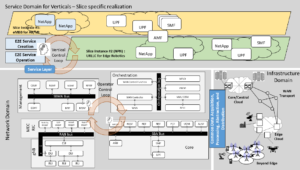
In October 2021, the 5G PPP Architecture Working Group published version 4.0 of the white paper “View on 5G Architecture”. It provides a consolidated view of the architectural efforts developed in the projects of the 5G PPP and other research efforts, including standardization. This serves not only to review the current state of the 5G architecture, but also to identify promising trends towards the next generation of mobile and wireless communication networks, 6G.
The 4th release of the white paper is focused on the output of the 5G PPP Phase 3 projects in terms of the architecture for the integration of large infrastructures and vertical industries, the long-term evolution of the 5G technologies and the service-specific features. The white paper presents a consolidated current overview on the 5G architecture as developed by these European research efforts.
Further information
White Paper: 5G PPP Architecture Working Group – View on 5G Architecture, Version 4.0 – https://zenodo.org/record/5155657
5G mobile subscriptions will exceed 580 million by the end of 2021, according to a projection by Ericsson. This trend is driven by an estimated one million new 5G mobile subscriptions every day.
The forecast from the latest edition of the Ericsson Mobility Report supports the expectation that 5G will become the fastest adopted mobile generation. About 3.5 billion 5G subscriptions and 60 percent 5G population coverage are forecast by the end of 2026.
However, the pace of adoption varies widely by region. Europe is off to a slower start and has continued to fall far behind China, the U.S., Korea, Japan and the Gulf Cooperation Council (GCC) markets in the pace of 5G deployments.
5G is expected to surpass a billion subscriptions two years ahead of the 4G LTE timeline for the same milestone. Key factors behind that include China’s earlier commitment to 5G and the earlier availability and increasing affordability of commercial 5G devices. More than 300 5G smartphone models have already been announced or launched commercially.
This commercial 5G momentum is expected to continue in coming years, spurred by the enhanced role of connectivity as a key component of post-COVID-19 economic recovery.
North East Asia is expected to account for the largest share of 5G subscriptions by 2026, with an estimated 1.4 billion 5G subscriptions. While North American and GCC markets are expected to account for the highest 5G subscription penetration, with 5G mobile subscriptions comprising 84 percent and 73 percent of all regional mobile subscriptions respectively.
Data traffic continues to grow year on year. Global mobile data traffic – excluding traffic generated by fixed wireless access (FWA) – exceeded 49 exabyte (EB) per month at the end of 2020 and is projected to grow by a factor of close to 5 to reach 237 EB per month in 2026. One exabyte (EB) comprises one billion gigabytes (GB). Smartphones, which currently carry 95 percent of this traffic, are also consuming more data than ever. Globally, the average usage-per-smartphone now exceeds 10 GB/month and is forecast to reach 35 GB/month by the end of 2026.
The COVID-19 pandemic is accelerating digitalization and increasing the importance of – and the need for – reliable, high-speed mobile broadband connectivity. According to the latest report, almost nine out of ten communications service providers (CSPs) that have launched 5G also have a fixed wireless access (FWA) offering (4G and/or 5G), even in markets with high fiber penetration. This is needed to accommodate increasing FWA traffic, which the report forecasts to grow by a factor of seven to reach 64 EB in 2026.
Massive IoT technology (NB-IoT and Cat-M) connections are forecast to increase by almost 80 percent during 2021, reaching almost 330 million connections. In 2026, these technologies are forecast to comprise 46 percent of all cellular IoT connections.
On 19 March 2021, 26 CEOs of companies, including 13 European telecom CEOs, signed a declaration to support the Green and Digital Transformation of the EU. They formed the European Green Digital Coalition, committing on behalf of their companies to take action in the following areas:
• To invest in the development and deployment of greener digital technologies & services that are more energy and material efficient,
• Develop methods and tools to measure the net impact of green digital technologies on the environment and climate by joining forces with NGOs and relevant expert organisations, and
• Co-create with representatives of others sectors recommendations and guidelines for green digital transformation of these sectors that benefits environment, society and economy.
The European Green Digital Coalition will help not only the tech sector to become more sustainable, circular and a zero polluter, but also to support sustainability goals of other priority sectors such as energy, transport, agriculture, and construction while contributing to an innovative, inclusive and resilient society. Its members will work closely with the European Commission and others to deliver on their commitments and will report regularly on progress made. In 2022, the first available results and progress reports will be presented. 45 SMEs and startups support the European Green Digital Coalition, and many will take the sustainability commitments to join in the near future.
In April 2020, British Telecommunication PLC (BT) and Ericsson signed a deal to deploy Ericsson’s dual-mode 5G Core, a fully container-based cloud native Mobile Packet Core for 4G, 5G Non-standalone and 5G Standalone services as a single fully integrated core.
The solution, delivered on BT’s Network Cloud, will form a key component in BT’s move to a single converged IP network. It will incorporate network orchestration and automation, including continuous delivery and integration processes, and it will be integrated into BT’s existing customer experience management platforms.
BT decided on Ericsson to replace Huawei’s equipment from the core of its 5G network after evaluating different 5G core network vendors. In January 2020, the UK government had decided to ban Huawei from the country’s core network. Huawei is allowed to supply gear for the UK’s 5G radio access networks (RANs), but it will be restricted to a 35{b28ae05319d94bff0b4d65c5a9f4524dd588360f05c61ef440e1608e0a1c4144} cap per operator in this part of the 5G network.
The 5G PPP Technology Board and the 5G IA Verticals Task Force have published a White Paper on “Empowering Vertical Industries through 5G Networks – Current Status and Future Trends” (20 August 2020). This white paper summarises the progress and results produced by the projects of the 5G PPP programme in regard to the development of innovative 5G network services for vertical industries. It analyses 5G requirements and the business case for the use of 5G by verticals. Furthermore, the report presents exemplary use cases from eleven vertical sectors and identifies key 5G features that have been used to meet the specified requirements.
The White Paper is relevant for defining future research and innovation activities beyond 5G. The outcomes of the 5G PPP will serve as the basis for the Smart Networks and Services (SNS) programme, which aims to organise the European research and innovation activities for the evolution of communication networks in the timeframe until 2028. One of the main objectives of the SNS programme is the full digitisation of vertical industries.



 Further information

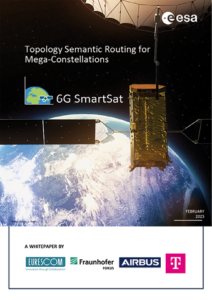 Eurescom, as the prime coordinator of the 6G SmartSat ESA project, has released the white paper “Topology Semantic Routing for Mega-Constellations,” developed with Fraunhofer FOKUS, Airbus Defence and Space, and Deutsche Telekom. The paper introduces Topology Semantic Routing (TSR), an innovative solution for the dynamic routing challenges faced by Non-Terrestrial Networks (NTN) in LEO and MEO mega-constellations, where traditional protocols like OSPF and BGP fall short. TSR offers adaptive, real-time routing with minimal satellite compute load, using local information and pre-computed paths to maintain network resilience and efficiency without extensive signalling. It integrates with centralized routing models, supporting seamless 5G TN-NTN convergence, and addresses trade-offs between signalling and memory use. Future validation with OpenLANES will enhance its commercial readiness, marking a major step toward advancing multi-sector 6G satellite network applications.

 The Test, Measurement, and KPIs Validation (TMV) Working Group (WG) of SNS JU focuses on developing and sharing best practices for 6G testing, monitoring, and analytics. The TMV WG aims to promote common methodologies across projects, support 6G trial Use Cases (UCs), and ensure a unified European vision for the 6G network lifecycle. A key objective is the definition and validation of performance KPIs. This white paper consolidates 6G KPIs from SNS JU projects, providing definitions, target values, and context to shape the 6G vision. Furthermore, the TMV WG promotes common collection procedures, validation methodologies, and analysis of KPI metrics. Various SNS JU projects provided the KPIs, which drive their technical developments.
 The Smart Networks and Services Joint Undertaking (SNS JU), under Horizon Europe, is advancing Europe’s leadership in 6G by integrating AI and ML into future networks. A survey of 33 projects revealed 199 AI/ML-based mechanisms focused on RAN, resource management, diagnostics, and energy efficiency, mainly using supervised learning and deep learning methods. Projects rely on synthetic, real, and mixed datasets, with outputs targeting radio optimization, security, and resource management. Trends like Explainable AI (XAI) and privacy-preserving techniques such as federated learning are gaining importance. Through these efforts, SNS JU is laying the foundation for AI-native 6G networks while promoting ethical, sustainable innovation and reinforcing Europe’s technological sovereignty.
 The Women in Telecommunications and Research (WiTaR) Working Group is proud to present its 2024 Yearly Report. This report provides a snapshot of our efforts to promote the participation and advancement of women in telecommunications. Despite remarkable technological progress, the ICT industry still faces significant gender disparities, with women comprising less than 30% of the workforce globally and even lower representation in technical and leadership roles. These gaps limit diversity, hinder innovation, and reduce the sector’s potential. In 2024, WiTaR worked tirelessly to address these challenges through fostering inclusive workplace cultures, supporting mentorship and leadership development, and driving diversity-forward initiatives. Our activities this year reflect our ongoing commitment to building a more equitable ICT ecosystem.
 The telecommunications industry is adapting to new business dynamics introduced by 5G and preparing for similar challenges expected with 6G. Recognizing the importance of aligning technological advances with value creation, the 6G Industry Association (6G-IA) sub-working group Business Validation, Models, and Ecosystems (BVME-SG) has released a new white paper building on its previous work on 5G/B5G ecosystem business modeling. Using the Industry 4.0 vertical as an example, the paper applies a five-step framework to help stakeholders identify business opportunities and understand how ecosystem variations impact operations and strategy. It further explores the cost implications of ecosystem configurations, suggesting new methods for evaluating the technoeconomic viability of networks on a per-deployment and per-actor basis. Finally, the paper discusses the evolving roles within the 6G ecosystem, noting that, although 6G networks will be even more distributed and disaggregated than 5G, the same business modeling framework remains highly relevant for the transition.
 This white paper has been prepared by the 6G Architecture working group of the Smart Network and Services Joint Undertaking (SNS JU). It presents a comprehensive snapshot of the current architectural considerations explored by the SNS JU projects. It discusses the rationale for novel architectural components, the ongoing design efforts, and the future outlook for 6G. It analyses the blueprint for next-generation mobile networks, building on past experiences while integrating cutting-edge advancements. The structure follows the IMT-2030 framework, categorizing insights into the key usage scenarios and overarching architectural aspects.