Skip to content
  • About Us
    • Company Profile
    • Our Team
    • Shareholders & Members
    • Opportunities
  • Services
    • Launch of Industry-Driven R&D Initiatives
    • Securing of Research Funding
    • Management of European R&D Projects
    • Management of European R&D Programmes
    • Studies on Strategic Topics in ICT
  • EuresTools®
    • EuresTools Reporter
    • EuresTools Tracker
    • EuresTools Workspace
    • EuresTools Website
    • EuresTools Conferencing
    • EuresTools Mailing List
    • EuresTools Pricing
  • Projects
    • Ongoing Projects
    • Past Projects
  • News
    • News
    • Events
    • Eurescom message
  • Contact
    • Travel information
    • Location
×
Linkedin Youtube
 

CyberWi – Cyber-security in the Wireless Industrial use case

Harold Linke
HITEC Luxembourg S.A.


Ludwig Seitz
Combitech (until 2019 RISE)


Joni Jämsä
CENTRIA University of Applied Sciences


Andreas Ohlsson
Applio Tech AB

While the fusion of cloud, mobile and wireless technologies is one of the biggest business enablers, it is also seen as a major cyber-security challenge. The lack of security technologies that function across such different infrastructures hinders the adoption
of these technologies on the global market, thus limiting the growth potential in this ­sector.

The three-year CELTIC project CyberWi (2016-2018) created ­results on security solutions ­integrating seamlessly over different infrastructures, like Cloud Computing, IoT networks and Embedded Systems, and showed a way towards deployment of commercially viable secure systems that can be implemented in Industrial Internet applications.

CyberWi was a joint undertaking by 13 partners from 3 European countries: Luxembourg, Finland and Sweden.

Approach

In order to ensure that the obtained results work in a production environment, demonstrators and test beds were implemented and publicly presented.

The use cases covered the following topics:
› Building automation, to protect the operation of different sensors and actuators deployed in a building
› Home automation, to protect heterogeneous consumer devices functioning as part of an automated home
› Logistics, to protect the information collected when tracking transports and goods
› Industrial systems, to secure a supervisory control and data acquisition (SCADA) system on an oil platform
› Traffic applications, to ensure the safe operation of a traffic signal pre-emption system for emergency services
› Weather services, to ensure road weather station operation as a service hotspot for multiple vehicles

In addition, the development of the OSCORE IETF standard opened the door to progress other lightweight security enablers in areas such as authorization and access control, group communication and authentication. The development of security standards has raised industry interest and led to new collaborations.

Achieved results

CyberWi developed new architectures and standards to improve the security in the above-mentioned use cases. The results have a high commercial impact.

These are some examples:
› The SME Applio (former Q2d Solutions) is now in a go-to-market position with a new software product family developed based on CyberWI results. There are several different commercial IoT solutions about to be implemented. A free and simple IoT service called “Applio Free” has been launched and is in use.
› Road Weather Station – By developing open interfaces the project has conducted road weather stations communication measurements and improved the cybersecurity of wireless connections between the road weather station and the server.
› Hali 2.0 – Traffic Light pre-emption system for emergency vehicles helps municipalities, fire/police departments and hospitals to reach their target faster and safer. Hali is implemented in several Finnish towns with over 700 users.

Further results in standardization and research:
› IETF standards (OSCORE and ACE) for object security and access control in constrained environments (e.g. sensor networks). These standards are integrated into several products. RISE has gained a foothold in the international standardization community at IETF and plans to exploit this in future research projects.
› Open source reference implementations of our proposed standards contributed to commercial open-source libraries implementing the OMA Lightweight M2M standard,
› CyberWi led to the implementation of the Cyber Security Laboratory named SecuLab at the Finnish research institute CENTRIA. SecuLab examines, tests and develops the security of industrial Internet and wireless systems. SecuLab provides tools for system security testing and expertise in information security management to SMEs of the region. It provides expert consulting, whether the company needs an assessment of the information security situation or support for solutions that can be used in company operations.
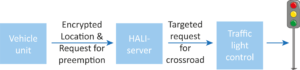

Hali 2.0 overview

Conclusion

The CyberWi project successfully contributed to different R&D topics in the cybersecurity area. A main result is the establishment of a security standard for IoT devices (OSCORE), which is the basis for new additional standards (e.g. Group OSCORE etc). The results of CyberWi are part of several commercial applications and laid the foundation of new services and products.

› Further information

CyberWI project on CELTIC-NEXT website – https://www.celticnext.eu/project-cyberwi/

CELTIC-NEXT CyberWi

Eureka − A major tool to promote research and innovation

Interview with Eureka chairman Miguel Bello Mora

On 1st July, Portugal took over the Eureka chairmanship for one year – already for the third time in the 35-year history of Eureka. The motto of the Portuguese Chairmanship is “Innovation for a greener, digital and healthier planet through a collaborative approach”. CELTIC News editor Milon Gupta asked Eureka chairman Miguel Bello Mora, CEO of the Atlantic International Research Centre in Portugal, about priorities and progress of Eureka after the first quarter of the Portuguese Eureka term.

What are the main priorities of the ­Portuguese Eureka chairmanship?

Miguel Bello Mora: We have five main priorities for the Portuguese Eureka chairmanship:

First, to increase the global outreach of the Eureka Network by promoting collaboration with international organizations with an important innovation component, like the European Space Agency, and via the organization of a series of international events.

Second, to enhance new forms of cooperation for effective RDI programmes by strengthening the relation with the European Union within the new Horizon Europe framework programme for research, development, and innovation.

Third, strengthening the Eureka Network’s positioning by reinforcing the mechanisms for the generation of projects, contributing to the revitalization of the ­Eureka Clusters Programme.

Fourth, adding value to the Eureka label, with the organisation of Eureka’s Global ­Innovation Summit 2022 and the Eureka Ministerial Meeting in Portugal in June 2022.

And fifth, to continue the necessary restructuring of the Eureka Secretariat and pursue a healthy financial model for the ­Eureka Secretariat.

Which role do you see for the Eureka Clusters Programme in the context of the Portuguese priorities?

Miguel Bello Mora: The Portuguese chairmanship is contributing to the revitalization of the Eureka Clusters Programme by implementing the new governance model, ensuring greater compromise from public authorities on the funding of projects, intensifying the participation of industrial key players at the board of Clusters’ governance structures and promoting collaboration and cross-fertilisation between Clusters through the organisation of joint calls.

A joint thematic call is promoted with a topic focused on Space-Ocean-Earth Observation Systems and Space related technologies which would include the promotion of projects linked with the Green Deal in areas like Earth Observation from Space and its combination with Artificial Intelligence.

How would you describe the progress of Eureka in the first months of the Portuguese chairmanship?

Miguel Bello Mora: During the first months of the Eureka Portuguese chairmanship some of the strategic priorities have been implemented, like the collaboration with the European Space Agency, where a Memorandum of Understanding is in preparation, and the first of the international events on “Eureka meets the Atlantic through Space-Ocean-Earth collaborative innovations”. In addition, the final proposal for the Eurostars 3 programme, one of the flagship projects of Eureka, has been completed in August.

What is your vision for Eureka and its programmes beyond the Portuguese chairmanship?

Miguel Bello Mora: Our vision beyond the ­Portuguese Chairmanship is to have Eureka as a major tool to promote research and innovation, strengthening the bottom-up, open and flexible nature of the network by building on the work done by the previous Chairmanships while following the strategic priorities of the recently approved Eureka Strategic Roadmap for 2021-2027.

Eureka shall promote the dynamism of the economy and European innovation through the recovery period from the crisis associated with the COVID-19 pandemic and should stimulate new opportunities for the development of new products and services in global markets, as well as new international collaborations towards citizens wellbeing and healthy living.

CELTIC-NEXT Cluster

How Portugal supports CELTIC-NEXT projects

The Portuguese National Innovation Agency

Rita Silva
ANI – Agência Nacional de Inovação, SA

ANI – Agência Nacional de Inovação, SA, is the National Innovation Agency of Portugal. It is owned in equal shares by IAPMEI – the Portuguese Agency for Competitiveness and Innovation under the Ministry of the Economy and Digital Transition – and FCT – the Portuguese Foundation for Science and Technology under the Ministry of Science, Technology and Higher Education. ANI supports technological and business innovation in Portugal, contributing to the consolidation of the national innovation system and to strengthening the competitiveness of the national economy in global markets.

In 2020, Portugal reached a 1,6% R&D share of national GDP, an all-time high. 57% of R&D funding comes from companies’ investments. There are around 4,300 R&D-performing companies investing an average of 420,000 euro per year to develop new technologies.

Portugal’s innovation strategy

Along this path, an ambitious national strategy for technological and entrepreneurial innovation for the period 2018-2030 has been defined. It includes main targets such as achieving a global investment in R&D of 3% of GDP by 2030, with a relative share of two thirds coming from private expenditure, as well as becoming a European leader in digital skills by 2030. From 2021 to 2027, Portugal aims to double the Portuguese participation in European Union funding programmes, and to attract around 2 billion euros for R&I, as well as tripling the number of students in mobility in higher education, compared to 2014-2020.

ANI has a central role in the Portuguese innovation ecosystem and contributes to the achievement of the major national innovation goals. The Agency manages financial and ­fiscal incentives programmes to promote private investment in R&D and to foster collaborative R&D between companies and R&D institutions for an effective transfer of knowledge to the market. ANI also promotes the internationalisation of Portuguese innovative companies and R&D institutions through supporting their participation in the Horizon Europe R&DI Framework Programme as well as other international networks for R&D cooperation and business internationalisation such as the Enterprise Europe Network and the Eureka Network.

Portugal has now for the third time since becoming one of the 18 founding member states of the Eureka Network in 1985 taken over the Chairmanship of Eureka from July 2021 until June 2022. ANI is part of the Chairmanship Team, hosting the National Eureka office.

FACTS about Portuguese participation in CELTIC- NEXT projects

The EUREKA Clusters prove to be an excellent channel for the internationalisation of Portuguese companies, academia, RTOs and research centres enabling them to access to global value chains, to new knowledge and to partner with numerous countries. In fact, the opportunity offered by the Eureka Network and the Clusters projects to collaborate beyond Europe on a truly global stage is one of the major benefits identified by companies.

CELTIC-NEXT is the Eureka Cluster with
the largest Portuguese participation. This is related to the fact that the technological area with the largest Portuguese participation in EUREKA projects is electronics, IT and telecoms technology (62 %).

Between 2008-2020, 31 CELTIC projects with Portuguese participation were funded. Since 2017, with the introduction of a grant-based funding instrument relying on European Structural and Investment Funds (ESIF) to support Eureka and Eurostars projects, the funding of Eureka Clusters projects has become more agile and stable in Portugal. This has raised interest and created renewed dynamics among stakeholders to apply and participate.

Under the new instrument “Projetos de I&D Industrial à Escala Europeia”, 11 new CELTIC projects were recently funded, reflecting a total investment from the Portuguese entities involved of 7 million euro and corresponding to approximately 4.5 million euro of public funding.

The Portuguese entities most represented in CELTIC-NEXT projects include companies such as UBIWHERE Lda, CELFINET – CONSULTORIA EM TELECOMUNICAÇÕES, S.A., Proef Eurico Ferreira S.A., GLINTT Healthcare Solutions S.A., Wavecom – Soluções Radio S.A., and renowned research centres like Instituto de Telecomunicações, Instituto Superior de Engenharia do Porto (ISEP), or Instituto Politécnico de Castelo Branco.

CELTIC-NEXT projects with Portuguese participation focus on several ICT areas such as energy efficiency and quality of service/experience in mobile telecommunications networks, smart operations optimization and performance monitoring in mobile telecommunications networks, healthcare, smart cities, and internet of the future. Their main partner countries are Spain, France, Finland, Sweden, Turkey, Canada, Korea, and Israel.

As an added-value of participating in
CELTIC-NEXT projects, Portuguese entities report an overall increase in competitiveness levels through the possibility to access new markets, to improve their positioning in global value chains, an increase in exports, improvement in R&DI capacities and gain of new expertise through the possibility to employ highly qualified human resources and lastly, the enlargement of the company’s product portfolio and cross-selling of solutions.


ANI headquarters in Porto

› Further information
ANI website – https://www.ani.pt/en

CELTIC-NEXT Cluster

What living in interesting times means for CELTIC-NEXT

David Kennedy
CELTIC-NEXT Chair Person

In common folklore it is often unclear, if the wish “may you live in interesting times” is intended as a curse or a blessing. Either way, it can mean that you experience a lot of change and you need to remain active and responsive to the changes to ensure that you progress positively. Well, for the CELTIC-NEXT community the recent times have been very interesting with lots of changes impacting every aspect of our domain.


© AdobeStock

CELTIC-NEXT in the new post-Covid world

One interesting aspect of the way we all restructured our lives and work in the “lock-down” period is that we have rapidly learned to do many things remotely. This creates a very significant shift from travelling and meeting to using communications to stay in contact via webinars and videoconferencing. In fact, we have learned that many meetings are no longer necessary, if the participants have reliable communications of sufficient capacities. The issue here is that we have proved the concept for remote working – even if we were forced into it without any preparation – to the extent where it is unlikely that we will ever justify the amount of travel and meetings we had in 2019 going forward.

The impact of this on business processes is that the integration of high-speed high-capacity communications infrastructures into both the production and use of many advanced products is now assured and the communications technologies must deliver.

A good example will be the advanced traffic management on the roads and the introduction of autonomous cars. In this context all road users need to be equally informed about changing circumstances on the road and, more specifically, any safety risks. And once you start supplying this information, the supply must be continuous and reliable and economical. Despite the increasing requirement for pervasive communications, we are also under pressure to ensure the sustainability of communications by lowering the power consumption of all elements of the network.

In summary, the new outlook for the ICT domain is that we have to provide incredible speed and reliability for the connections for low cost with a very low environmental profile. Clearly there are many challenges in this.

CELTIC-NEXT and the New Eureka ­Clusters Programme

In the past two years the CELTIC-NEXT Cluster has worked with the other Eureka Clusters to help evolve the Eureka Clusters Programme (ECP). The idea is to revitalise the instrument, as an effective and efficient international research collaboration tool and to stimulate more involvement and investments.

The approach was to consider the processes and see where the programme could be more responsive to the ever-changing set of research and innovation requirements and priorities facing industrial and national interests. A key result is the introduction of joint calls operated collectively by the relevant Clusters while presenting a consistent and seamless interface to the project proposers and the national authorities. To demonstrate the new flexibility of the Clusters, the first joint call – the AI call 2020 – was launched and run successfully. The lessons learned included greater collaboration between Clusters and more analysis of the delays and interactions in the project decisions as the Clusters combined resources. The next step in this development we hope to see now is a reduction in the overall time to decision for Eureka projects and that this experience can also be used to improve the throughput of the regular Cluster “bottom-up” calls.

The new flexibility has increased the operational costs for the Clusters, but it is anticipated that it should stimulate more national investment in the new joint topics which will increase the overall volume of the programme. This increase in research project volume should compensate for the increased costs to keep the ECP instrument efficient and practical. We in CELTIC-NEXT have heavily invested in the new structure and we are now looking forward to see how the programme volumes evolve.

Conclusion

From the CELTIC-NEXT perspective we remain committed to embracing the changes and using them to help us better serve our community. The origin of the CELTIC community was the need to bring the digital communications benefits to the world. This has evolved to the point where the vertical communities are now informed and active regarding the benefits advanced communications can bring to their domains that they are now becoming drivers of the changes in the communications infrastructures and services too.

We do live in interesting times, and CELTIC-NEXT remains committed to helping all parts of industry and society to embrace and benefit from advanced communications.

Reconfigurable Intelligent Surfaces for 6G

In this article, an author team from the ARIADNE project share their insights on Reconfigurable Intelligent Surfaces for 6G.

Continue reading
6G

Editorial

Dear readers,

While 5G networks are still being deployed, work on 6G, the sixth generation of mobile communication technologies, has already begun. Will 6G just be an evolutionary update of 5G? Or will it achieve a new innovation level in connecting people, robots and things? Researchers all over the world have started to explore these and more questions along the road towards 6G.

In this issue of Eurescom message, we provide a glimpse on what is done in Europe to move towards 6G. We present selected research and innovation projects that are already working on different technological aspects that may later become parts of the 6G standard.

In the first article of the cover theme, Eurescom message editor Uwe Herzog gives an overview on activities and concepts currently being explored on the road to 6G. The next article by the Head of Nokia Standards, Peter Merz, presents the EU flagship project on 6G, Hexa-X. Peter Merz is also the interview partner in our exclusive cover theme interview, which follows an article by Eurescom message editor Anastasius Gavras on global initiatives towards 6G. In the next article, an author team from the ARIADNE project share their insights on Reconfigurable Intelligent Surfaces for 6G. In the final article of the cover theme, Yue Zhang from the University of Leicester presents the technological vision of the 6G BRAINS project.

This edition of Eurescom message also includes a variety of further articles on different, ICT-related topics. See, for example, the new opinion article by Eurescom director David Kennedy on the challenges of personally dealing with ubiquitous data collection in his column “The Kennedy Perspective”. Under “Events”, we report about two interesting virtual events – the IEEE International Symposium on Broadband Multimedia Systems and Broadcasting and the roundtables of the 5G-VINNI project on TelecomTV. See also our “News in brief” section, which features the latest release of the 5G PPP white paper on 5G architecture and the new ENISA threat landscape report. Finally, in the latest “A bit beyond” article you can learn about AI machines becoming inventors.

One comment on our own behalf: the print edition of this issue of Eurescom message is printed on recycled paper certified by the Forest Stewardship Council (FSC). This reflects our commitment to the sustainable use of natural resources.

My editorial colleagues and I hope you will find value in this edition of Eurescom message, and we would appreciate your comments on the ­current issue as well as suggestions for future ­issues. Enjoy reading our magazine.

Milon Gupta
Editor-in-chief

The Road to 6G

Events calendar

7 – 11 December 2021
IEEE Global Communications Conference (GLOBECOM 2021)
Madrid, Spain
https://globecom2021.ieee-globecom.org

8 – 11 January 2022
IEEE Consumer Communications & Networking ­Conference (CCNC 2022)
Virtual Conference
https://ccnc2022.ieee-ccnc.org

28 February – 3 March 2022
MWC Barcelona 2022
Barcelona, Spain
https://www.mwcbarcelona.com

7 – 10 March 2022
25th Conference on Innovation in Clouds, Internet and Networks (ICIN 2022)
Paris, France (Hybrid Conference)
https://www.icin-conference.org

6 – 10 June 2022
2022 EuCNC & 6G Summit
Grenoble, France
https://www.eucnc.eu

Sn@pshot

CHARITY project meeting in Heidelberg

The CHARITY project meeting in Heidelberg, Germany on 14-15 October 2021 was the first in-person project meeting organised by Eurescom since the Corona pandemic spread across Europe more than 1.5 years earlier. It was also the first in-person encounter of the CHARITY partners, 9 months after the project had started. The photo shows Antonis Protopsaltis from ORamaVR demonstrating CHARITY’s virtual-reality based medical training use case.

Further information about the CHARITY project is available at https://charity-project.eu

The old dog learns new tricks

In the early days of the internet our expectations were limited – even Tim Berners-Lee considered his invention of the World Wide Web as just something “to allow information sharing within internationally dispersed teams, and the dissemination of information by support groups”. Since the international fear of COVID-19 has taken effect, we expect the internet to be the saving grace for humanity. In fact our dependency on our online connectivity is such that in 2016 the UN declared, in a non-binding resolution, that “the same rights people have offline must also be protected online”. But now that we really need it, are we ready to move our lives online?

Continue reading

An exciting year of transition and renewal for CELTIC-NEXT

New ambitions and new roadmap


Xavier Priem
Director CELTIC Office

CELTIC-NEXT has been through several changes this year: a new Director, updated vision, mission and roadmap, and last but not least, the active role in the new Eureka Clusters Programme (ECP). Our Spring Call has been very successful, with six projects labelled and now in the funding phase, and we are curious to see the proposals from our Autumn Call, which closed on 22nd November. We are very active in preparing the future with a new Flagship series programme and closing partnerships with other funding bodies.

An enriched DNA for future growth

When I became the new CELTIC Director at the end of March this year, I discovered, from the inside, CELTIC’s strong DNA, built over its 18 years of successful fostering of the ICT RDI community across Eureka countries. It has been around nine months since then – one could say, the time of a pregnancy. It has been an interesting experience, because, in a way, we have further enriched CELTIC’s DNA over the last months in various manners.

First, we did this by following the long-­established tradition of labelling new projects from the last bottom-up Spring Call; here I personally wish to all projects to be successful in being awarded with their ­national fundings.

Secondly, we did this via the joint work and exchanges we had with our other Eureka Clusters friends in the context of the ECP Multi-Annual-Plan preparation and successful approval, on 17th June 2021, by Eu­reka and its funding Public Authorities. We will use the opportunity of the ECP MAP to address wider industrial communities and bring in additional funding countries to our ICT community. The ECP MAP application gave us also the additional opportunity to revisit the vision, mission and roadmap, last elaborated in 2018, in the light of the latest challenges and opportunities that both our ICT community and the wider world have been facing since then, like COVID-19, supply-chain challenges and the new potential role of satellites and alike in 5G, 6G and overall services.

Finally, and very much linked to the last point, CELTIC will cross its DNA with other communities in the near future, starting with the European Space sector.

This new enriched DNA will be the base for future flagship calls and projects, coming in addition to the successful series of CELTIC flagship projects like SASER, SENDATE and currently AI-NET.

Progressing implementation of Eureka Clusters Programme

After an intensive preparation and application period, which culminated in the ECP authorisation to operate as Clusters, the five Eureka Clusters CELTIC-NEXT, EUROGIA2020, ITEA4,

SMART and XECS are now implementing the first Multi-Annual-Plan (MAP) as well as the first Annual Operational Plan (AOP). CELTIC-NEXT is, as in the preparation phase, very active in the implementation phase, in order to best represent our ICT community’s interests in the joint committees and actions. This period is crucial for CELTIC-NEXT to get the maximum return on investment from the new Eureka Clusters Programme, by getting the best representation in those additional funded calls. Therefore, I want to use this occasion to encourage readers from the RDI community to feed us with your needs, wishes and ideas on topics (technologies, use cases, and more) for the elaboration of future joint thematic call topics. The first thematic call will be about “Sustainable Industry” and will, among others, look at Green ICT as well as Space-Earth-Ocean Integrated Systems.


Conclusion and Outlook

As the new Director, I am proud and honoured to drive this transformation and the development of CELTIC on behalf of CELTIC’s Management Group and Core Group members. Our new strategy gets already positive responses from the funding authorities of numerous Eureka countries, who want to invest in our new vision, mission and roadmap as presented in our application to ECP MAP. Our future flagship series programme is also getting very good traction, encouraging us to further pursue this new path. 2022 will be an interesting year for CELTIC!

CELTIC-NEXT Cluster
  • Previous
  • 1
  • 2

5Copyright © 2025 by Eurescom

 
  • Corporate Information
  • Data Protection Declaration
  • Terms of Use
  • Corporate Information
  • Data Protection Declaration
  • Terms of Use