

David Kennedy
Director of Eurescom
kennedy(at)eurescom.eu
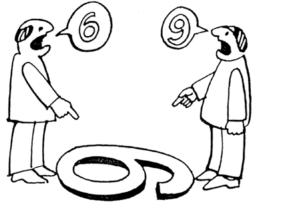
The funny thing about perspectives is that they are often totally dependent on the viewpoint. For example; my bias about traffic behaviour has a completely different target if I take my bicycle to work compared to when I drive – as a driver I hate those cyclists who go through red lights and tiny gaps in the traffic – but once I get on the bike, it is those selfish motorists who are the evil ones!! The point here is that you tend to judge the scenario from the circumstances you are in and from this point of view it is very difficult to appreciate the position of others.
 © CC0
© CC0
The reason for thinking about this is that we have, with the ICT/Internet revolution, enabled a generation of people with little or no real-life experience who have decided they want to make a career out of telling others how to think. They have learned that they get the most air time by being polarised, even radical, in their statements. And the evil in our open internet ICT world is that algorithms, originally designed to allow you to see more of what you like, are now becoming proactive disseminators of the hate messages on the basis you liked one so here are more. The sad point is that many of the instigators are actually apolitical – but they are happy to use an extreme view to sell their message, advertise their products or even spread their propaganda. This is why we need a more resilient ICT structure. We need to see who is talking, who is paying, know if it is true and be able to stop the rot.
A good start
The Welsh parliament (yes, Wales has one!) has just passed a law to make it illegal for candidates to lie during Senedd elections. In this context they would have committed a criminal offence by lying. Now we know this will be difficult to implement in the real world – but if we look back to the Brexit referendum in the UK, the US presidential election and a few other votes around the world, we can immediately see that honesty has been compromised. The truth is not relevant for many modern-day politicians and they are actually winning by shouting lies long enough and loud enough so that people believe them. The new Welsh rule is a good start – but this rule should always apply. If a politician lies, or his team lie for him, then he should lose his right to represent people.
However, this is just a treatment for the crisis of confidence people have in politics nowadays and the overload of false and modified information we are seeing. We don’t know who to trust any more.
Resilient ICT
The only way forward now is to build more resilient ICT systems. We need to evolve ICT systems that are more than just cybersecure. Stopping hackers is simple enough, but how do we stop the algorithms placing half truths in our inboxes, feeding our subconscious bias’s? The answer is obviously first to ensure the digital infrastructure is secure so bad people just can’t access it. But then we need to do a lot more to make sure content is verifiable. Finding out if something is real means we need to know who produced something, if that is a real person or a bot, and who paid for it.
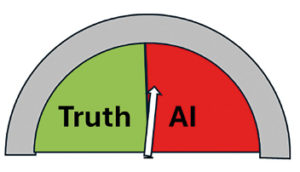
To do this we will need a set of real-time tools to fact-check content. A well-trained AI system should be able to identify misinformation and mitigate the transmission of falsehoods even before we read them. The catch in this is whose definition of “well-trained” should we use?
 © Canva
Epilogue
We have created an incredible communications infrastructure to disseminate knowledge as a great equaliser – but it is also being misused to disseminate disinformation. Generation Z are the internet generation – and have done great things – but we need Generation Alpha to do better now!
Further education
“Truth is rarely pure and never simple”, Oscar Wild, The Importance of Being Earnest