
Enabling Reliable and Scalable Wireless for Industry with DECT-2020 NR


Juho Pirskanen Mika Lasanen
Wirepas Oy VTT


Ivan Pretel Andreas Frotzscher
Fonlabs SL. Fraunhofer IIS
Introduction
The Ultra Scalable Wireless Access (USWA) project was established to research how to best harness the capabilities of the ETSI DECT-2020 New Radio (NR) standard and its first products in various industrial applications. At the very beginning of the project only very first chipset supporting DECT-2020 NR were appearing. The project also aimed to study potential technology enhancements for future DECT-2020 NR releases, and even to explore possible migration paths towards 6G systems. By September 2025, after three years research, the DECT-2020 NR technology landscape has evolved considerable: ETSI has published second release (Release 2) of the DECT-2020 NR standard, and a variety of chipsets and commercial products have emerged across different application domains. As we now are finalising the USWA project, we present some of our results below.
Main USWA results
System architectures and application requirements
The requirements analysis has prioritized users and stakeholders throughout the adaptation of Volere methodology, ensuring technological innovation is firmly guided by real-world requirements. Employing this user-centric approach, 21 practical use cases were identified and categorized under distinct areas, Figure 1, e.g., Electricity Network Quality Monitoring; Condition Monitoring in Industrial Facilities; Wireless Communication for Robots. From these use cases, several critical technical requirements including latency, reliability, jitter, transmission capacity, mobility, availability, energy efficiency, location accuracy, and security were rigorously analysed across multiple scenarios for the foundation of the system’s architectures.
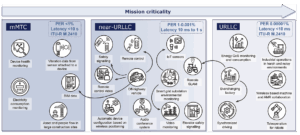
Figure 1: Identified use cases and their communcation requirements
The use cases were further classified into three performance-oriented categories depicted in Figure 1:
› mMTC (massive Machine-Type Communications): Targeted at high device density and data exchange, with less stringent latency and reliability requirements.
› URLLC (Ultra-Reliable Low Latency Communications): Requires maximum reliability and minimal latency for time-sensitive operations.
› Near-URLLC: An emerging classification bridging mMTC and URLLC, tailored for evolving IoT demands. These use cases necessitate specific thresholds for latency and packet error rates, supporting new industrial applications where both reliability and flexibility are paramount.
Based on this analysis, a comprehensive Architecture Layers Schema, Figure 2, was developed, aligning each use case’s needs with a universal system architecture. Details of this schema delivers architectural recommendations and guidelines for various scenarios, facilitating enhancements to DECT-2020 NR technology via diverse implementations and testing deployments.
The architecture comprises of three principal layers:
› Use Case Layer: Engages with experimenters to coordinate and oversee use cases, manage experimental lifecycles, and validate key performance indicators.
› Management & Orchestration (M&O) Layer: Oversees the deployment, execution, and administration of experiments, including device management and overall system control.
› Infrastructure Layer: Manages user traffic through back-end systems, Internet/LAN, gateways, and DECT-2020 NR radio networks, integrating with devices and applications specific to individual use cases.
System requirements preliminary identified were directly mapped to DECT-2020 NR features and the intended architecture, guaranteeing that critical needs such as latency and transmission capacity are addressed per scenario. The architecture further defines principal system interfaces and provides implementation guidelines applicable to mMTC, URLLC, and near-URLLC environments.
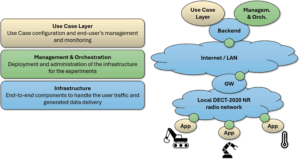
Figure 2: Architecture Layers Schema mapping into generic system architecture
IoT mesh network solutions
IoT Mesh solutions work focused on developing DECT-2020 NR technology further in massive IoT use cases as well as evaluating system performance with different link and system simulation models in generic massive IoT mesh architecture illustrated in Figure 2. First, an extensive study on Release 1 performance was conducted based on system and link simulation tools including comparison to 802.11ax based Wi-FI systems. It was found that DECT-2020 NR physical layer can operate in a robust manner with high spectral efficiency, low TX powers and limited device activity levels in variable environments and use cases.
New improvements were considered to medium access and routing protocol layers, including optimization for downlink packet routing, enhanced channel access for very low power devices, and efficient and reliable distribution of configuration data in mesh network operation to mention few.
The performance evaluation continued with improved system simulation models focusing on different topics of the IoT mesh communication. Topics included overall energy consumption of the network, uplink and downlink system capacity and co-existence of the IoT system with other systems such as old DECT cordless phones. Further, extensive simulation studies concluded that DECT-2020 NR access method is significantly better than access method required in Unlicensed Personal Communications Service (UPCS) band, 1920-1930 MHz. Finally, a study for DECT-2020 NR positioning framework was concluded, by evaluating performance of several widespread positioning approaches, based on Time-of-Arrival (ToA), Angle-of-Arrival (AoA) Received Signal Strength (RSS) and different hybrid versions of the listed positioning approaches.
Ultra reliable and low latency mesh networks
The URLLC aspect of USWA integrates DECT-2020 NR and UWIN-based radio interfaces to support ultra-reliable communication, to develop a mesh network topology with a packet error rate (PER) of 10−7 while maintaining sub-1 ms transmission latency. Mesh networking plays a crucial role in enabling direct communication between devices, such as robots in smart factory environments and other robotic applications like flexible production and adds further redundancy for improved reliability.
To achieve these goals, system design incorporates the most promising mesh network techniques, AI driven optimization, and security measures to improve network adaptability. This involves researching and selecting suitable PHY and MAC layer techniques and developing a simulator for performance evaluations.
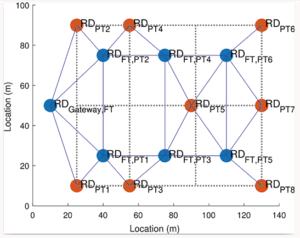
Figure 3: Evaluation scenario of URLLC mesh network
For this purpose, MAC protocol enhancements were developed for DECT-2020 NR to reduce the end-to-end transmission latency and by this increase the throughput. The protocol enhancements are verified in various simulated network constellations. One of the considered scenarios is depicted in Figure 3, showing an indoor industrial environment with six radio devices operating as routers, depicted as RDFT,PT, one radio device operating as gateway, RDFT. Finally, eight radio devices are operating as leaf nodes, RDPT. The RDPTs are mobile at the speed of 2 m/s on a predefined path, represented by the dotted lines in Figure 3. Moreover, RDFT/PT and RDGateway,FT are deployed in a static position to provide coverage in the region of interest.
With the proposed scheme the end-to-end latency and throughput could be improved notably as shown in Figure 4.
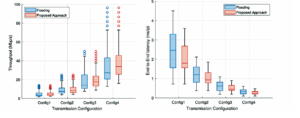
Figure 4: End-to-End latency and throughput evaluation of the proposed date dissemination scheme
compared to standard flooding procedure of DECT 2020 NR
Especially for URLLC networks in scattered radio environments, a proper allocation of radio resources is crucial to further minimize the outage probability. For this purpose, a channel aware resource allocation method was developed, improving transmission reliability by adding only minimal signalling overhead. Figure 5presents an example of the resource scheduling for the wireless links between a gateway and three robots. Each link needs isochronous transmissions resources. The developed resource allocation method optimizes for each link the allocation of resource blocks by considering the current channel conditions and its time varying nature.
Further developments include the use of network coded cooperation to improve the transmission reliability and the development of Hardware accelerators for Post Quantum Cryptography (PQC) encryption / decryption methods.
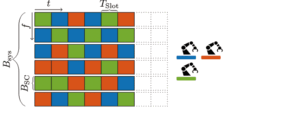
Figure 5: Example of resource allocation for three links where each link gets allocated two resources in each time step.
Proof of concepts
Given the wide range of use cases identified during the project, the number of PoCs implemented was equally extensive. One of the initial steps in PoC development was to conduct an extensive link distance measurement campaign in different environments ranging from indoor factory and office to outdoor grid lines, campus areas and open fields to observation tower as shown in Figure 6. The aim of these measurements was to gain practical insights on achievable link distances with different TX powers levels using the first DECT-2020 NR chipset implementations. These measurements were essential to ensure smooth implementation of other PoCs paving the way to real commercial deployments.
To illustrate one proof of concept (PoC) of the USWA project, specifically Energy QoS monitoring, Figure 7 presents the overall PoC architecture. The solution leverages DECT-2020 NR technology to enable modular, low-maintenance deployment of new control, monitoring, and protection components (IEDs) within substations, eliminating the need for rewiring. Furthermore, wireless mesh technologies enhance system resiliency by providing alternative communication paths. The PoC demonstrates how reliable wireless connectivity can replace wired connections while ensuring accurate transmission of energy Quality of Service (QoS) and consumption data from Circuit Monitoring Sensor (CMS) devices.
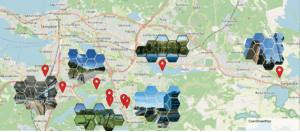
Figure 6: Different link distance measurement location in Tampere Finland
Standardisation and dissemination
To obtain efficient and strong impact from a research project to wireless technology development, regular participation to corresponding standardization forums is vital. To achieve this USWA project partners have had active participation to ETSI TC DECT, promoting new solutions for DECT-2020 NR. This work has resulted in several improvements to the Release 2 standard of DECT-2020 NR.
Dissemination was an important goal in the project. In addition to several publications obtained, two information sharing webinars were held and YouTube videos of both events were made available. In addition, USWA Winter School was organised for postgraduate students at Ruka, Finland, in February 2025. Furthermore, USWA was present in EuCNC & 6G summit 2025 conference within DEC NR+ special session as well as with Demo booth. Finally, USWA project was regularly present in Berlin 6G summits.
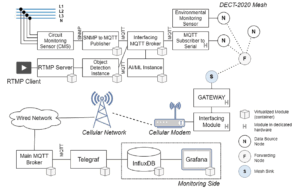
Figure 7: PoC system architecture for Energy QoS monitoring
Conclusions
During the USWA project, technology landscape evolved significantly due to rapid rise of AI and promising new possibilities for automation and process optimization. At the same time, introduction of new DECT-2020 NR based chipsets and products in the marketplace has established DECT-2020 NR as mature and reliable wireless technology for industrial applications. With new solutions and PoC developments, the USWA project has demonstrated enormous opportunities for different industry areas, where DECT-2020 NR technology provides cost-efficient, reliable and resilient wireless communication solution connecting devices and advanced data processing solutions. However, innovation continues, and DECT-2020 NR provides a solid foundation for future technologies beyond the project and today’s applications.
Acknowledgements
Project partners acknowledge research funding from by the European Union – NextGenerationEU – received through Business Finland, Centro para el Desarrollo Tecnológico Industrial, Federal Ministry of Education and Research, and Turkish funding agency.