Skip to content
  • About Us
    • Company Profile
    • Our Team
    • Shareholders & Members
    • Opportunities
  • Services
    • Launch of Industry-Driven R&D Initiatives
    • Securing of Research Funding
    • Management of European R&D Projects
    • Management of European R&D Programmes
    • Studies on Strategic Topics in ICT
  • EuresTools®
    • EuresTools Reporter
    • EuresTools Tracker
    • EuresTools Workspace
    • EuresTools Website
    • EuresTools Conferencing
    • EuresTools Mailing List
    • EuresTools Pricing
  • Projects
    • Ongoing Projects
    • Past Projects
  • News
    • News
    • Events
    • Eurescom message
  • Contact
    • Travel information
    • Location
×
Linkedin Twitter Youtube
 

Eurescom supports Accelerating 5G/6G NTN Innovation


Adam Kapovits
Eurescom

Eurescom contributes to ESA workshop regarding the convergence of 5G communication and Earth Observation

The 5th ESA Workshop on Advanced Flexible Telecom Payloads was held at ESA’s European Centre for Space Applications and Telecommunications (ECSAT) at the Harwell Science and Innovation Campus in the UK, between the 18 and 20 March 2025. Over 100 experts from across Europe participated at the workshop. Adam Kapovits from Eurescom has contributed to the workshop session on Flexible Payloads for 5G/6G NTNs with the results from the ESA project 5GEOSiS – 5G Earth Observation Server in Space, a 5G repurposable payload as a service, and received very positive feedbacks from the audience.

ESA NICT workshop held in Tokyo at the NICT Innovation Center on 31st March 2025

The European Space Agency and the National Institute of Information And Communications Technology Japan first signed a Letter of Intent (LoI) in 2018 regarding joint efforts and cooperation in the field of 5G satellite communications.

Subsequently, the two sides supported their own industries launching investigations as technology path finders for global satellite communication networks convergence, integration into 5G and to validate use cases of common interest, such as natural disaster prevention and mitigation, global maritime transportation, and Internet of Things (IoT) to cover oceans and airspaces.

These activities were performed on the European side as part of the ESA SATis5 project (funded within ESA’s Space for 5G/6G and Sustainable Connectivity portfolio) under the leadership of Eurescom GmbH and with the assistance of Fraunhofer FOKUS as technical manager, and together with the Japanese industrial team under the leadership of Japan Radio Co., Ltd, and with SKY Perfect JSAT Corporation and the University of Tokyo as partners.

On 31stMarch 2025 a half a day workshop was held between the European and Japanese teams when the experts from the two sides and from the funding agencies (ESA and NICT, respectively) met to discuss the key results of the trials that resulted from the collaboration, the lessons learnt and technical areas of interest for continuing the collaboration.

The collaboration was organised in phases. In the first phase industry partners worked on the interconnection of local 5G systems via satellite, as well as the management of long-distance networks between Europe and Japan.The teams achieved a network quality evaluation of satellite and 5G connection, working to understand the feasibility of satellite 5G networks via international long-distance communications, as well as the successful transmission of 4K Video and IoT Data.

In a second phase multi-orbit (geostationary (GEO) / low Earth orbit (LEO)) 5G transport solutions were investigated and validated, and the multi-5G-Core enhancements that are necessary and typical in international communications. These topics were introduced and are now being discussed in 3GPP Rel 19/20.

In this phase, the European team concentrated on links performance monitoring; dynamic path selection between GEO-LEO-Terrestrial networks; and data path management. Meanwhile, the Japanese team concentrated on network slicing, Quality of Service, active bandwidth control and application detection in switching GEO-LEO-Terrestrial link scenarios.

Technical achievements from European partners included experimenting and validating services in Public Protection and Disaster Relief (PPDR) fire-fighting scenarios with 5G temporary local networks interconnected via satellite, including User Equipped UAVs for video monitoring. Experimentation taking place in Berlin, Brandenburg area in Germany.

Additionally, the Japanese team showcased their experimentation and validation of PPDR use cases utilizing Non-Public 5G networks over satellite, such as 4K video footage viewed through Virtual Reality lenses, remote control of field-deployed robot via video transmission, and various applications for remote areas.

Overall, the European and Japanese Phase 2 trials confirmed the feasibility of real-time switching of multi-orbit satellite links, and the associated network components and applications sessions. Additionally, the Over the Air validation trials demonstrated the feasibility of seamless path switching.

Looking forward, both the European and Japanese side investigates how the collaboration could be continued and extended towards Beyond 5G and 6G Non-Terrestrial Networks (NTN).

Further information

  • “Advanced Flexible Telecom Payloads Event” – Nikal Events. Available at: https://nikal.eventsair.com/advanced-flexible-telecom-payloads/
  • “5GEOSIS – 5G Earth Observation Server in Space” – ESA Connectivity. Available at: https://connectivity.esa.int/projects/5geosis-%E2%80%93-5g-earth-observation-server-space
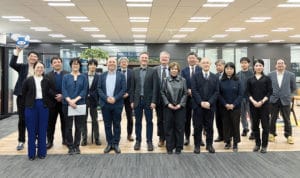

ESA NICT workshop participants form the European and Japanese partners at the NICT Innovation Center in Tokyo, on 31st March

From left to right:  Yuma Abe, NICT, Natsuko Ouchi, SKY Perfect JSAT Corporation, Nobuyuki Setoguchi, SKY Perfect JSAT Corporation, Sachie Tsubokura, Japan Radio Co., Ltd, Atsumu Mishima, SKY Perfect JSAT Corporation, Marius Iulian Corici, Fraunhofer FOKUS, Shinichi Mizuno, Japan Radio Co., Ltd, Bjoern Riemer, Fraunhofer FOKUS, Adam Kapovits, Eurescom GmBH, Maria Guta, ESA, Prof Akihiro Nakao, The University of Tokyo, Kenji Kanai, The University of Tokyo, Amane Miura, NICT, Katsuyoshi Ishida, Japan Radio Co., Ltd, Kiyomi Yoshida, Japan Radio Co., Ltd, Keita Kaida, The University of Tokyo, Mayuko Tsuji, Japan Radio Co., Ltd, Yoji Oshima, The University of Tokyo.

5G/6G NTN Innovation ESA

From Under the Sea to Space: Critical Digital Infrastructures for Global Connectivity

This article presents the technologies and solutions used in global connectivity, their respective roles, and the threats that are pertinent specifically to the undersea communication cable systems.

Continue reading
critical digital infrastructure global connectivity INPACE project

fiQare: Advanced Intelligent Quality Assurance for Release Enhancement

The essential role of information and communication systems in Smart Grids is presented in context of SNS JU lighthouse project SUSTAIN-6G on integrating sustainability into the development of 6G communication technologies, aiming to align technological advancements with environmental goals by assessing various stakeholders and domains requirements.

Continue reading

F4iTECH Revolution: Transforming Industry with Federated AI

Enhancing Data Privacy and Resource Management in Industry through Decentralized AI Solutions

                                                                                                                         
Dr. İsmail Uzun
INOSENS

The F4iTECH (Federated AI Platform for Industrial Technologies) project revolutionizes the manufacturing and airport industries by integrating Federated Learning (FL) and advanced AI technologies. Through a decentralized platform, F4iTECH enhances operational efficiency, ensures data privacy and optimizes resource management while addressing hidden challenges and reducing costs. With six pilot implementations showcasing transformative impacts, this innovative approach promises a more intelligent, resilient and sustainable future for industrial environments.

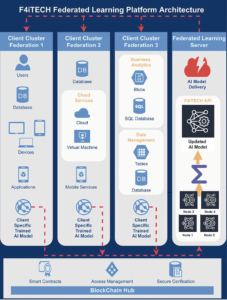
Building on its innovative approach, the F4iTECH project not only improves operational workflows but also tackles critical industry challenges such as data transmission, security and privacy. By leveraging FL-based AI, the platform enables real-time monitoring and decision-making without centralizing sensitive data, thereby enhancing compliance with regulatory frameworks and preserving data sovereignty. The integration of blockchain technology further secures data sharing through smart contracts, fostering collaboration among stakeholders while maintaining individual data ownership. The project’s success is evident in its six pilot implementations, which demonstrated tangible benefits like reduced operational inefficiencies, improved resource allocation, and enhanced resilience in both manufacturing and airport sectors. The Figure 1 shows the system approach and user interaction.

Achieved Results

The project successfully demonstrated significant benefits for the manufacturing and airport industries by integrating FL-based AI into production and operational workflows. A major achievement is the development of FLactionTM, a scalable and privacy-preserving federated learning platform that enables decentralized AI training across multiple edge devices with a user-friendly approach for data scientists. FLactionTM supports seamless model aggregation while ensuring data remains on local devices, addressing privacy concerns and regulatory requirements in industrial applications.

In the airport use case, the project delivered solutions that provide stakeholders with highly accurate, real time predictions of passenger flows for specific time windows. By leveraging advanced machine learning models, these insights enabled airports, airlines, and ground handling services to optimize resource allocation, staffing, and facility management, leading to smoother operations and improved passenger experiences. As a result, the project significantly reduced operational inefficiencies stemming from outdated or inaccurate forecasting methods, minimizing delays, overcrowding, and resource mismanagement. Furthermore, the integration of FL-based AI tackled critical industry challenges, particularly in data transmission, security, and privacy. By enabling decentralized data analysis, the solution eliminated the need for large-scale centralized data repositories, thereby enhancing compliance with stringent regulatory frameworks while also preserving data sovereignty for participating stakeholders. This approach not only ensured the confidentiality of sensitive passenger information but also fostered greater collaboration among stakeholders by allowing them to access valuable insights without compromising individual data ownership.

The results of the project are expected to have a lasting impact on different sectors, enhancing operational efficiency, reducing costs and improving stakeholder collaboration. The technologies developed may serve as a foundation for new product developments, standardization efforts, and further research. Additionally, the outcomes of the project, including methodologies and findings, have the potential for publication in major papers, fostering wider adoption and refinement of FL-based AI in industry applications.


Figure 1: F4iTECH Federated Learning Platform Architecture

Impact

F4iTECH delivers significant benefits to the manufacturing, retail and airport industries by seamlessly integrating FL-based AI solutions into industrial processes. Utilizing distributed ledgers, the project securely records all relevant events and transactions within the Industry 4.0 ecosystem, enabling stakeholders and end consumers to intuitively verify data and establish smart contracts. Through systematic AI-driven predictive maintenance and machinery inspection, F4iTECH enhances equipment performance and reduces deterioration rates by 20%. By addressing and resolving hidden operational challenges, the project aims to cut invisible and internalized costs by 15%, contributing to more efficient and cost-effective industrial environments.

Conclusion

The F4iTECH project demonstrates how Federated Learning (FL) and advanced AI technologies can transform industrial sectors by enhancing operational efficiency, data privacy, and resource management. The project’s decentralized approach not only solves hidden challenges but also reduces costs and improves resilience. Future projects/products could build on F4iTECH’s methodologies to explore broader applications of FL-based AI in other industries, advancing data-driven innovation while maintaining stringent privacy standards.

For more information, visit:

https://www.celticnext.eu/project-f4itech/

CELTIC-NEXT Cluster

Spain strengthens its support to CELTIC-NEXT Programme

CDTI Centre for the Technology Development and the Innovation

                                                                                                                     
Juana Sanchéz
CELTIC-NEXT representative
Centre for the Technology Development and the Innovation (CDTI)

CDTI is a Business Public Entity under the Ministry of Science, Innovation and Universities that promotes innovation and technological development of Spanish companies. This is the entity that engages applications assistance and support R&D&I projects of Spanish companies at national and international level.

Therefore, the aim of CDTI is to contribute to the improvement of the technological level of Spanish companies through the development of the following activities:

› Technical and economic evaluation and awarding of public aid to innovation through subsidies or aid partly refundable R&D projects developed by companies.

› Management and promotion of the Spanish participation in international programmes for technology cooperation.

› Promotion of the international transfer of technology and business support services to technological innovation.

› Support for the establishment and consolidation of technology-based enterprises.

The bulk of its infrastructure is in Madrid but, in addition, CDTI offers to Spanish companies a strategic network of offices and representatives abroad (SOST OFFICES – Spain Office of Science and Technology), specifically in Belgium, Brazil, Chile, China, India, Japan, Korea, Mexico, Morocco and USA, to support them in their technology activities abroad.

News on Funding in Spain

CDTI launches its first INNOGLOBAL Call with FEDER (European Regional Development Fund) funds to reinforce the support in International Cooperation projects labelled from January to October 2025. Projects labelled under CELTIC-NEXT Spring Call 2025 are eligible for this Call. The beneficiaries are Spanish SMEs and mid-caps (up to 500 employees). Subcontracting is possible (not mandatory) up to 50% (70% in Health sector).

Spanish companies that belong to the eligible regions (Andalusia, Balearic Islands, Canary Islands, Castilla-La Mancha, Castilla y León, Valencian Community, Extremadura, Galicia, and Murcia) will be able to benefit with grants up to 80% of the budget.

The fundable activities are industrial research and/or experimental development. The eligible costs include personnel, instruments / material, subcontracting, general expenses, audit, travel and indirect costs. The minimum budget is €175,000 per company/project. The projects must start in 2025 and end by June 30, 2028, at the latest.

INNOGLOBAL opens from May till June 2025. An international funding request (EUREKA funding request in case of CELTIC-NEXT) will be required before applying.

For the rest of the non-eligible regions, CDTI offers a mix of loan and grants under the “Proyectos de Cooperación Tecnológica Internacional” funding line.

CELTIC Spanish successful project 5G-PERFECTA

5G-PERFECTA project is a good example of CELTIC-NEXT success, which aim has been to develop the technology to assure the 5G service quality based on data processing, that is, to guarantee that the quality of 5G networks is aligned with the expectations of bandwidth, latency and other key performance indicators. The project has contributed to the analysis of the 5G performance, the supervision of 5G networks, technologies for monitoring 5G networks, supervision of services and applications as well as 5G monitoring and measurement devices.

The project has developed a 5G performance compliance testing assurance solution that calculates KPIs (Key Performance Indicators) to show the real behaviour of 5G network and services. In addition, 5G-PERFECTA has developed automated processes, tools and mechanisms ensuring 5G service quality based on data processing and analytics approaches, under two main project scenarios and six use cases. The 5G Network Performance scenario provides the performance monitoring information and includes the testbed and measurement scope for 5G network performance analysis. The 5G Quality Assurance scenario provides the quality of service monitoring information, including the time sensitive networking mechanisms, the deployment of critical services with performance guarantees and the QoS observability for 5G. The following figure shows the project scenarios and use cases.

In addition, 5G-PERFECTA has developed a monitoring platform to deliver real measurements over the new generation mobile networks, tested on a real infrastructure. These performance indicators are helping to determine the suitability of new mobile infrastructure, including 5G to support next generation applications in mobility.

The project, led by Minsait, has benefited greatly from a well-balanced consortium, involving 5G operators, vendors and system integrators with small and medium-sized enterprises and academia from Spain, Sweden, Türkiye, Portugal and Poland.

The overall quality is perceived as high objectively measured by the amount of valuable contributions outside the project group (86) to the technology related to 5G-PERFECTA, in which the main innovations have been transferred: 44 papers in most relevant international journals symposiums and conferences (IEEE ISCC, IEEE INFOCOM, JCOMSS, IEEE Access, IEEE Transactions, Elsevier Measurement, etc.); 10 contributions to standardization bodies (ITU-T, VQEG and TM Forum); 10 PhD theses & Master theses; and 22 other exhibitions, dissemination events and activities.

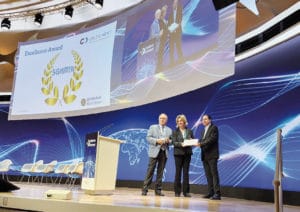
5G-PERFECTA project has received the CELTIC-NEXT Excellence Award for Services and Applications in 2024.


5G-PERFECTA wins the 2024 CELTIC-NEXT Excellence Award for Services and Applications.

Conclusion/Outlook

Spain has strongly supported CELTIC programme since it started in 2003. Telecommunications sector in Spain has an experienced and high added value community at national and international level.

CDTI strengthens its support to CELTIC programme with FEDER INNOGLOBAL Calls. Participants of CELTIC Spring Call 2025 can benefit from the FEDER INNGLOBAL Call 2025.

Further information

› CDTI website – https://www.cdti.es/en
› 5G-PERFECTA – http://www.5gperfecta.eu/

CELTIC-NEXT Cluster

CELTIC-NEXT Services Portofolio

Xavier Priem
Director CELTIC Office

Operating CELTIC-NEXT as an EUREKA ECP Cluster means that the Office delivers an extensive portfolio of services to our ICT Community and to the EUREKA Network of National Funding and Innovation Agencies.

CELTIC-NEXT’s project calls:

The operation of a CELTIC NEXT call for bottom-up project proposals involves several specific actions:

The first action is to prepare for the call – this means preparing the support for the management of the calls and proposals in terms of Office human resources and system tools, from application preparation to evaluation and labelling. This includes:

  • Announcing the call on the Cluster’s Website: https://www.celticnext.eu/
  • Defining and opening the call portal: https://cluster-projects.eurestools.eu/index
  • Updating the Brokerage tool: https://www.celticnext.eu/brokerage-tool/

Once the systems are prepared, the online or physical events for the call must be orchestrated:

  • Launch event (online) – how and what to propose
  • Brokerage event (physical or hybrid) – presentation of public authorities funding, proposers pitches and consortia participants matchmaking

The office staff facilitates these events by offering pitching preparation support before the event and running Consortium Building Sessions in the days following the brokerage and matchmaking.

The office must also allocate a set of qualified experts for the technical assessment of proposals. Should a proposal be labelled, its participants can expect help from the office for the negotiation with the different Public Authorities and coordination of preparation activities up to the project launch.

CELTIC-NEXT’s Flagships

These involve a similar process to the Project construction, but it is initiated in response to the convergence of industry demands and national interests.

CELTIC-NEXT’s Promotion Events

CELTIC-NEXT showcase events are planned, wherever possible, to maximise the exposure and value to the projects and the authorities. These are usually planned in coordination with other major events to ensure good audiences and to control costs.

CELTIC-NEXT’s Support to Projects:

CELTIC-NEXT oversees the running projects to ensure they are working to plan and can deliver the expected results. This is achieved by frequent interactions between the project officer and the project leader and several formal reviews (mid-term, final) during the project life.

Typically, a CELTIC-NEXT project can expect:

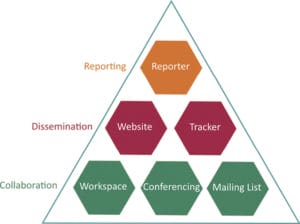
  • Comprehensive support for reporting, dissemination and collaborative working through the CELTIC-NEXT tool set
  • Assistance, coaching and monitoring support from the Project officer
  • Advice and guidance from experts and project officers during the project’s lifecycle (on demand) and in particular at review times (by default)
  • Simple processes for Project Change Request management, providing flexibility and resiliency to projects when plans need to change

CELTIC-NEXT provides also support for Dissemination activities to the project by inviting them to present at CELTIC-NEXT’s Events, nominating speakers and participations at international events like EUCNC, EGIS,… and highlighting the major achievement of the projects via CELTIC-NEXT’s media channels: LinkedIn, Newsletter, CELTIC News…


Figure 1: CELTIC-NEXT Tools Set

The number of calls per year and regularity

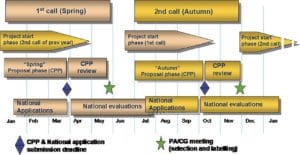
The CELTIC-NEXT community, in consultation with the national authorities have decided that their dynamic domain is best served by having two opportunities in the calendar year to present their project ideas for consideration. Accordingly, two bottom-up calls are organised each year, one in Spring (deadline end of April) and one in Autumn (deadline end of October). For these calls. proposers are free to define their project ambitions according to their ICT research interests and can submit them via our Online Project Portal.

In addition to bottom-up calls, CELTIC offers the opportunity to generate “Flagship” projects/calls at any time if there is an agreed interest. These special interest initiatives can emerge if the industry and PAs share a strong interest in collaborating on a Special Flagship initiative to address a key theme. The CELTIC office will facilitate the flagship by having an agreed submission date, which can differ from the above schedule by specific agreement with the involved PAs, and organising the review and project preparation process around this. These projects are usually in the range of several tens of million Euros for a 3–5-year duration.

Flagship projects are, by their nature, very successful because they are a balance of bottom-up and top-down approaches.

It is important to mention that CELTIC-NEXT operates exclusively thanks to the fees it collects from projects that got labelled and started. This is the only revenue source enabling all the aforementioned services. CELTIC-NEXT Office neither receives public funding from EUREKA Countries nor private money from its Core Group.


Figure 2: CELTIC-NEXT Calls Timeline

CELTIC-NEXT Cluster

From historical flagships to flagships programme

What are CELTIC-NEXT Flagships?

Xavier Priem
Director CELTIC Office

CELTIC historic flagship programme started with 100-Gigabit Ethernet Transport Technologies (100 GET), Safe and Secure European Routing (SASER), Secure Networking for a data center cloud in Europe(SENDATE) projects, and Accellerating digital transformation in Europe by Intelligent NETwork automation (AI-NET) flagship. The ramping-up Sustainable Technologies for Advanced Resilient and Energy-Efficient Networks (SUSTAINET) flagship is the successor of those highly successful flagship projects. This is a clear success track record. And they also create highly collaborative communities, as you can take from the AI-NET song ! Those flagship projects were and are still possible because Industry and National Funding Innovation Agencies jointly recognise(d) the absence of adequate funding support in addressing a particular area of the CELTIC-NEXT’s ICT Strategic and Innovation Road Map (SRIA).


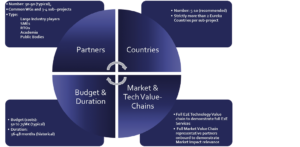
Figure 1: Typical Flagship Characteristics

Preparing and launching a Flagship project requires a concerted approach between a core group of large industry players and a core group of public funding agencies. This small core team delimits the relevant R&D&I area of the flagship, the overall approximative budget envelope to be targeted, and the agenda for developing the project proposal. This is the first preparation phase, consisting of a top-down approach in terms of thematic area and budget envelope. Then, once this is designed, the core industrial consortium will open the flagship proposal to more participants, enabling a considerable number of industry players, SMEs, RTOs, and academics to join the consortium. This is the phase of bottom-up growth within the agreed SRIA area. This is also potentially a growth in terms of budget needs.

Due to the accrued number of participants (up to 100) and subtopics, the Flagship project is then organised around three to four subprojects and an umbrella project that contains all common cross-subproject topics. Another form of maintaining coherence for the horizontal topics is to have a common Work Package with joint tasks across the subprojects (also called vertical projects in the flagship jargon).

Once the horizontal and vertical project proposals are ready, they are submitted to CELTIC-NEXT and the Public Authorities like regular project proposals made in the two-yearly bottom-up calls. They must fulfil the same rules, evaluation criteria, and KPIs.

Flagships are a unique selling point of CELTIC-NEXT in the Eureka Cluster Programme (ECP). There is a strong demand from National Funding & Innovation Agencies to join either in the current topical area of our flagships or in other areas of our SRIA. We aim to reproduce that success in several of them, clearing streams of flagships.

Preparing flagships demands a high intensity of preparation work as they are like mini-programmes. This means that a strategy needs to be put in place to develop them in time and quality. As they target kind of European “funding” market failures, they need also to be well explained to gather the EUREKA national funding agencies support.

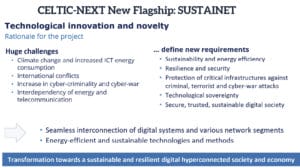
Recall of SUSTAINET high-level description: “In the midst of global crises and geopolitical challenges, Europe is charting its course towards a digital, sustainable future. However, with its share of the global ICT market declining, urgent actions are required to ensure technological sovereignty. This project addresses this multifaceted challenge by focusing on network resilience, energy efficiency, sustainability, high-performing end-to-end networks, and network security.

Achieving seamless interconnection of digital systems, essential for future high-performance communication networks, demands research in ICT hardware and control software. The transition towards a “Digital Society” necessitates increased dependence on ICT for power supply control, emphasising the need for resilient, scalable networking technologies combined with the support of new services such as cognitive and complete context awareness.

Network resilience is paramount in such interconnected networking for critical infrastructures and requires new concepts to ensure communication continuity during errors or disasters. Such networking will also call for secure networks with robust cybersecurity measures to combat evolving threats.

Furthermore, network sustainability is vital for realising a climate-neutral future. Telecommunications networks must prioritise connectivity and serve as platforms for a sustainable society. Operators must adapt to fluctuating renewable energy availability, transitioning from consumers to prosumers in the energy market.

Collaborative R&D efforts are imperative to achieve these objectives and regain technological sovereignty. Government support and industry initiatives must converge to drive innovation in key technologies, fostering industrial cooperation and joint R&D initiatives.

This project proposes a holistic approach, integrating research in frictionless network performance, resilience, security, and sustainability to propel Europe towards a sustainable, technologically sovereign future.”

How does it translate into a tangible project?

Here are some KPIs for SUSTAINET :

  • 8 Countries at labelling time, over 10 now, with some still joining during the ramp-up phase
  • Over 90 participants of all types, Telcos, Large Industry, SMEs, RTOs, Academia
  • Over 70 M€ budget,
  • Over 500 FTEs, split into 3 vertical projects and one umbrella set of horizontal tasks
  • 36 months duration (indicative depending on funding decisions timing)
  • High expected impact and visibility in standards & markets


Figure 2: CELTIC-NEXT New Flagship: SUSTAINET

Further information

  • SUSTAINET flagship information: https://www.celticnext.eu/project-sustainet/
  • AI-NET flagship song video: https://youtu.be/SCz-BA9ja5E?si=AolQIcYkJ9EgxLLf
CELTIC-NEXT Cluster

Recent publications


Audrey Bienvenu
Eurescom GmbH

Projects and Working Groups in which Eurescom is actively contributing to, are at the forefront of key innovation milestones in 5G and 6G research. Recent publications showcase important advances across multiple areas: from the 6G SmartSat project’s pioneering work on dynamic routing in satellite mega-constellations, to the 5G-IS study outlining architectures for future space-based infrastructures. Within the Smart Networks and Services Joint Undertaking (SNS JU), major contributions have been made on defining 6G KPIs, establishing AI and ML as key enablers for next-generation networks, and shaping the evolving 6G architecture. Through the 6G-IA initiatives, further insights have been developed on emerging business models and ecosystem strategies, while promoting diversity and inclusion in the ICT sector through the WiTaR Working Group.

Together, these publications reflect Eurescom’s strong engagement in driving technological, architectural, business, and societal innovation toward a sustainable and inclusive 6G future.

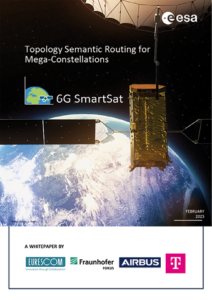
6G SmartSat Wite Paper – Topology Semantic Routing for Mega-Constellations

Eurescom, as the prime coordinator of the 6G SmartSat ESA project, has released the white paper “Topology Semantic Routing for Mega-Constellations,” developed with Fraunhofer FOKUS, Airbus Defence and Space, and Deutsche Telekom. The paper introduces Topology Semantic Routing (TSR), an innovative solution for the dynamic routing challenges faced by Non-Terrestrial Networks (NTN) in LEO and MEO mega-constellations, where traditional protocols like OSPF and BGP fall short. TSR offers adaptive, real-time routing with minimal satellite compute load, using local information and pre-computed paths to maintain network resilience and efficiency without extensive signalling. It integrates with centralized routing models, supporting seamless 5G TN-NTN convergence, and addresses trade-offs between signalling and memory use. Future validation with OpenLANES will enhance its commercial readiness, marking a major step toward advancing multi-sector 6G satellite network applications.
  • Read the full white paper here: https://connectivity.esa.int/sites/default/files/6G%20SmartSat%20Whitepaper%20-%20Topology%20Semantic%20Routing%20for%20Mega-Constellations-v1.pdf


5G-IS White Paper – 5G Space-based Infrastructure 

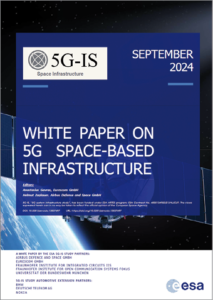
The 5G-IS (“5G System Infrastructure Study”), funded under ESA’s ARTES programme, explores architecture design options and evaluation criteria for deploying a 5G space-based infrastructure (5GSBI), extending toward 6G, to complement terrestrial networks. A special focus was given to satellite connectivity solutions for automotive and road transportation sectors, identified as a key market. Advances in space technologies, such as new launch and propulsion methods, have improved performance and reduced costs, enabling low Earth orbit satellite mega-constellations with lower latency. These developments highlight the growing role of satellite communication in future 5G/6G infrastructures, a trend acknowledged by 3GPP, which has integrated non-terrestrial networks (NTN) into its standards from Release 17 onwards, with expanding support in upcoming releases.

  • Read the full white paper here: https://zenodo.org/records/14756152


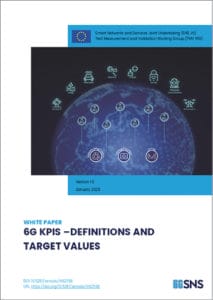
6G KPIs – Definitions and Target Values

The Test, Measurement, and KPIs Validation (TMV) Working Group (WG) of SNS JU focuses on developing and sharing best practices for 6G testing, monitoring, and analytics. The TMV WG aims to promote common methodologies across projects, support 6G trial Use Cases (UCs), and ensure a unified European vision for the 6G network lifecycle. A key objective is the definition and validation of performance KPIs. This white paper consolidates 6G KPIs from SNS JU projects, providing definitions, target values, and context to shape the 6G vision. Furthermore, the TMV WG promotes common collection procedures, validation methodologies, and analysis of KPI metrics. Various SNS JU projects provided the KPIs, which drive their technical developments.

  • Read the full white paper here: https://smart-networks.europa.eu/wp-content/uploads/2025/03/white-paper-kpis_7_3_2025_with-disclaimer.pdf


SNS JU Technical Board – AI/ML as a Key Enabler of 6G Networks

The Smart Networks and Services Joint Undertaking (SNS JU), under Horizon Europe, is advancing Europe’s leadership in 6G by integrating AI and ML into future networks. A survey of 33 projects revealed 199 AI/ML-based mechanisms focused on RAN, resource management, diagnostics, and energy efficiency, mainly using supervised learning and deep learning methods. Projects rely on synthetic, real, and mixed datasets, with outputs targeting radio optimization, security, and resource management. Trends like Explainable AI (XAI) and privacy-preserving techniques such as federated learning are gaining importance. Through these efforts, SNS JU is laying the foundation for AI-native 6G networks while promoting ethical, sustainable innovation and reinforcing Europe’s technological sovereignty.
  • Read the full white paper here: https://smart-networks.europa.eu/wp-content/uploads/2025/02/ai_ml_white-paper-sns_tb_v1.0.pdf


6G-IA Women in Telecommunications and Research (WiTaR) Working Group – Activity Reports 2024

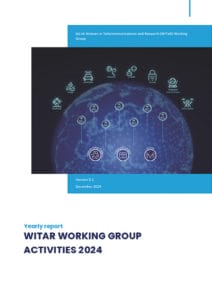
The Women in Telecommunications and Research (WiTaR) Working Group is proud to present its 2024 Yearly Report. This report provides a snapshot of our efforts to promote the participation and advancement of women in telecommunications. Despite remarkable technological progress, the ICT industry still faces significant gender disparities, with women comprising less than 30% of the workforce globally and even lower representation in technical and leadership roles. These gaps limit diversity, hinder innovation, and reduce the sector’s potential. In 2024, WiTaR worked tirelessly to address these challenges through fostering inclusive workplace cultures, supporting mentorship and leadership development, and driving diversity-forward initiatives. Our activities this year reflect our ongoing commitment to building a more equitable ICT ecosystem.

  • Read the full white paper here: https://6g-ia.eu/wp-content/uploads/2025/01/witar-yearly-report-2024.pdf


6G-IA White Paper – Emerging 5G and Beyond Ecosystem Business Models

The telecommunications industry is adapting to new business dynamics introduced by 5G and preparing for similar challenges expected with 6G. Recognizing the importance of aligning technological advances with value creation, the 6G Industry Association (6G-IA) sub-working group Business Validation, Models, and Ecosystems (BVME-SG) has released a new white paper building on its previous work on 5G/B5G ecosystem business modeling. Using the Industry 4.0 vertical as an example, the paper applies a five-step framework to help stakeholders identify business opportunities and understand how ecosystem variations impact operations and strategy. It further explores the cost implications of ecosystem configurations, suggesting new methods for evaluating the technoeconomic viability of networks on a per-deployment and per-actor basis. Finally, the paper discusses the evolving roles within the 6G ecosystem, noting that, although 6G networks will be even more distributed and disaggregated than 5G, the same business modeling framework remains highly relevant for the transition.

  • Read the full white paper here: https://zenodo.org/records/14756405


6G Architecture Working Group White Paper – Towards 6G ­Architecture: Key Concepts, Challenges, and Building Blocks

This white paper has been prepared by the 6G Architecture working group of the Smart Network and Services Joint Undertaking (SNS JU). It presents a comprehensive snapshot of the current architectural considerations explored by the SNS JU projects. It discusses the rationale for novel architectural components, the ongoing design efforts, and the future outlook for 6G. It analyses the blueprint for next-generation mobile networks, building on past experiences while integrating cutting-edge advancements. The structure follows the IMT-2030 framework, categorizing insights into the key usage scenarios and overarching architectural aspects.

  • Read the full white paper here: https://smart-networks.europa.eu/wp-content/uploads/2025/03/archwg-whitepaper-v1.3-for-public-consultation.pdf

MWC Barcelona 2025


Audrey Bienvenu
Eurescom GmbH

Projects at a glance

At Mobile World Congress (MWC) 2025 in Barcelona, the future of wireless technology and connectivity took center stage. Several pioneering projects under the Smart Networks and Services Joint Undertaking (SNS JU) made a significant impact, showcasing how Europe is shaping the next era of communication through innovation, collaboration, and groundbreaking research.

OPTI-6G Presence at MWC 2025 Through Consortium Partner RunEL


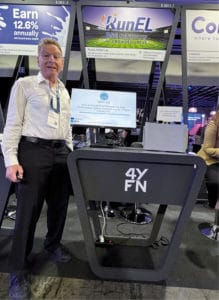
RunEL Co-founder Israel Koffman provided a dynamic platform for presenting OPTI-6G

From March 3–6, 2025, the OPTI-6G Project made a strong debut at MWC Barcelona, represented by its consortium partner, RunEL. Co-founder Israel Koffman led the project’s presence at Hall 8.0, Stand 8.0B31.7A, where industry leaders, researchers, and innovators gathered to explore the future of 6G networks.

Key Highlights:

  • 6G Innovation Showcase: Presentation of cutting-edge advancements in next-generation wireless networks.
  • Industry Engagement: Building bridges with global leaders to shape future smart connectivity.
  • Collaborative Research Insights: Sharing innovative approaches fueling 6G development.
  • SNS JU Synergy: Engaging with over 80 projects defining the 6G landscape through SNS JU collaboration.

As part of a broader effort, OPTI-6G’s participation strengthened Europe’s leadership in future network technologies and highlighted the project’s role in advancing the smart connectivity ecosystem.

CENTRIC at MWC 2025: Showcasing the Future of AI-Enabled Wireless Sensing

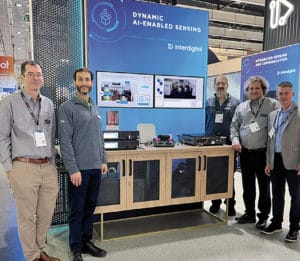
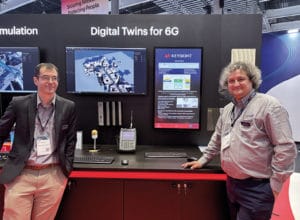
The CENTRIC project also made headlines at MWC 2025, where partners InterDigital and Keysight Technologies unveiled revolutionary AI-powered wireless sensing technologies.

Live Demonstrations at Hall 5C51 included:

  • AR/VR Immersive Experiences: Enhanced by AI-driven sensing accuracy.
  • Intruder Detection: For smart home and security system integration.
  • eHealth Monitoring: Non-intrusive, real-time health tracking using RF signals.
  • Autonomous Vehicle Integration: Smarter, safer transportation networks.

Using a radio frequency digital twin, the demo illustrated how AI can interpret channel state information (CSI) to detect human movement in complex environments — a major leap forward for wireless sensing.

This innovation stems from research within both CENTRIC and 6G-SANDBOX, two SNS JU-supported initiatives at the forefront of merging AI with next-generation networks. The CENTRIC showcase captured how AI-enhanced sensing will be pivotal for future 6G applications, offering a glimpse into the smarter, more adaptive networks of tomorrow.


“AI is set to transform the wireless industry, and our partnership through CENTRIC and 6G-SANDBOX enables us to explore groundbreaking applications and smarter connectivity solutions.” — Michael Dieudonné, R&D Manager at Keysight


Left to right: Carles Navarro Manchón (Keysight Technologies), Phillip Leithead (InterDigital, Inc), Philip Pietraski (InterDigital, Inc), Michael Dieudonne (Keysight Technologies) & Douglas Castor (InterDigital, Inc).

SNS ICE Booth – Fostering Global 6G Collaboration

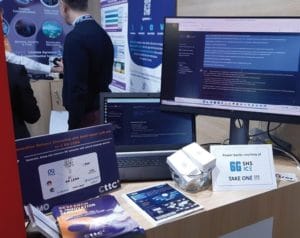
The SNS ICE (Smart Networks and Services International and European Cooperation Ecosystem) initiative had a strong presence at Booth No. 4 at MWC 2025.

                           
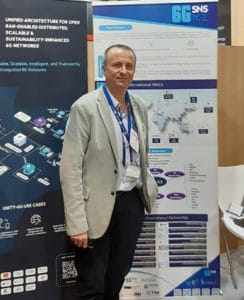
Carles Anton-Haro (CTTC) at the SNS ICE booth at the MWC 2025

The SNS ICE project is dedicated to:

  • Fostering European and international synergies in the evolving 6G ecosystem.
  • Promoting SNS JU activities and achievements on a global stage.
  • Establishing strategic dialogues with national initiatives, Horizon Europe partnerships, and global R&D clusters.
  • Engaging vertical industries to accelerate adoption of tailored 6G applications.

Throughout its mission, SNS ICE has actively monitored global standardization efforts, organized influential workshops, and participated in key events like Techritory and EuCNC, ensuring that European research remains at the forefront of global 6G discussions.

At MWC 2025, visitors could meet the SNS ICE team, learn about Europe’s growing leadership in next-generation networks, and engage in conversations shaping the future of global connectivity.

MWC Barcelona 2025 marked an important chapter for the European 6G research community. Projects like OPTI-6G, CENTRIC and SNS ICE exemplify Europe’s commitment to driving innovation, fostering collaboration, and building a smarter, more connected future.

Further information

  • OPTI-6G project website: https://opti-6g.sns-ju.eu/
  • CENTRIC project website: https://centric-sns.eu/
  • SNS ICE CSA project website: https://smart-networks.europa.eu/csa-s/#SNS-ICE

The need for Critical Infrastructures

David Kennedy
Eurescom


© Canva

As we grow up, the lucky ones are surrounded by critical infrastructures in the nicest sense. I mean that their parents and family are there to let them know right from wrong, bring them back into line when juvenile behaviour got a bit out of control and generally provide good societal membership guidance. Grandparents are probably the best for giving constructive criticism, sometimes quite direct, without getting involved in the ongoing parent-child power struggle.

Generally, you can add to your values as you grow and develop through education, life experience and surviving the rough parts of life, to become a good balanced member of society. At this point you should be providing the constructive critical support infrastructure to your friends, junior colleagues and offspring and so it goes on.

New Need for “Critical” Infrastructures

Part of the societal problem today is that the information age has enabled us to have access to so much news, entertainment, & live events from all around the world that we are having a hard time contextualizing it and keeping it all in perspective. When you see headlines about kidnappings and shootings every day it is easy to think that they are normal occurrences.

When your news sources deliberately exaggerate negative news to get “clicks”, they are feeding our fears and contributing to a model where we think the world is a dangerous place. I saw headlines recently that car theft was 20% up in Germany. On checking there were about 15,000 cars stolen from a national fleet of 49 million cars. So statistically, your chances of getting your car stolen is not much greater than 1:3200. The point being that the headline made me worry a lot more than the actual figures.

The example is trivial, but recent global politics has shown it is now possible to fool some of the people for all of the time, and more dangerously to fool all of the people for some of the time. A lot of damage can be done in the that time. This is why we need help from our infrastructures to stop the flow of misinformation and teach people how to critically evaluate the data they receive.

My idea for Critical infrastructures?

My idea of Critical infrastructure is to use our future information highways to educate and support. Mark Twain wrote, “Travel is fatal to prejudice, bigotry, and narrow-mindedness, and many of our people need it sorely on these accounts. Broad, wholesome, charitable views of men and things cannot be acquired by vegetating in one little corner of the earth all one’s lifetime.”

I believe that our information network has the capability to allow people to learn, to experience new cultures, and to entertain themselves virtually. But it has to be secure and safe too. For this we need to ensure the information highway is kept safe by good people, with an altruistic interest in really helping the world. We somehow are repeating the history of the highways – first cars were not understood, then they had lots of freedom, then they got regulated for the common good.

Now we need to understand if we can teach AI to be the good policeman in the infrastructure.


  • Previous
  • 1
  • 2
  • 3
  • Next

5Copyright © 2025 by Eurescom

 
  • Corporate Information
  • Data Protection Declaration
  • Terms of Use
  • Corporate Information
  • Data Protection Declaration
  • Terms of Use