The article “Cybersecurity in the AI era” presents the dual role of AI through a three-dimensional framework: cybersecurity for AI, AI for cybersecurity, and AI against cybersecurity highlighting key technical challenges and calls for a proactive, interdisciplinary approach to embed secure AI practices across the lifecycle, thereby positioning cybersecurity as a strategic enabler.
Continue readingFORTRESS – Fully Optimised Root of Trust for Robust Embedded Secure Systems
By reinforcing digital trust at the root, Eurescom led EU-funded FORTRESS project contributes to a new generation of AI-ready cybersecurity, where resilience begins not in reaction to threats, but in the very design of secure, intelligent systems.
Continue readingINPACE ‒ Emerging Cybersecurity Architecture of digital partnership countries
Through the Eurescom co-ordinated project INPACE we learn how India, Japan, South Korea, and Singapore are shaping cybersecurity frameworks to safeguard critical information infrastructure, strengthen public–private collaboration, and advance cyber resilience.
Continue readingEU Cybersecurity Framework
The article “EU Cybersecurity Framework” presents how the EU is building a unified defence through initiatives such as the EU Cybersecurity Act, the Cyber Resilience Act (CRA), and the NIS2 Directive — supported by key institutions.
Continue readingEvents

Techritory Forum 2025
Techritory Forum 2025 gathered between the 22-23 October 2025 over 2,000 participants from 63 countries to discuss Europe’s digital future. The SNS CO-OP project, coordinated by Eurescom, played a central role in strengthening international cooperation and aligning European 6G research with strategic priorities.
SNS CO-OP actively contributed to co-creation sessions that combined inclusion, technological innovation, and industry insights. The WiTaR in Focus session, led by Pooja Mohnani (Eurescom) and Veronica Vuotto (TRUST-IT), featured a video message from Erzsébet Fitori (SNS JU) and keynotes from Dr Rute C. Sofia (5G+/6G ETF) and Prachi Sachdeva (TNO), addressing gender balance, representation, and practical guidance for women in research and standardisation.
The ISAC in SNS Trials session, chaired by Carles Antón-Haro (CTTC) and Veronica Vuotto (Trust-IT Services), highlighted monetisation potential for 6G in smart manufacturing, autonomous mobility, and infrastructure monitoring, including large-scale trials, standardisation activities, and a panel with Antonio de la Oliva (UC3M), Panagiotis Demestichas (WINGS ICT Solutions), Andreas Gavrielides (IMEC), and Barbara Pareglio (GSMA Intelligence).
Additionally, the session A European Cloud: Myth or Reality? examined cloud sovereignty, sustainability, and innovation for 6G, featuring insights from operators, telecom players, and open-source initiatives like 3C Networks. Together, these sessions illustrated SNS CO-OP’s central role in connecting research, standards, industry, and inclusivity to reinforce Europe’s 6G leadership.
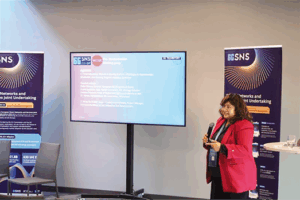
Pooja Mohnani from Eurescom opening the WiTaR session at Techritory 2025
5th NTN Workshop: Towards a Unified TN–NTN System
Held on 6 November 2025, the 5th NTN Workshop convened satellite operators, mobile network providers, and researchers to discuss progress towards integrating terrestrial and non-terrestrial networks, coinciding with the start of 6G standardisation that includes NTN from the outset. Presentations and demonstrations highlighted emerging testbeds, in-orbit assets, and new architectures supporting seamless unification. The workshop emphasised collaboration across sectors and showcased opportunities opened by developments in 6G and O-RAN. It was organised by Maria Guta (ESA), Adam Kapovits (Eurescom), and Marius Corici (Fraunhofer FOKUS).
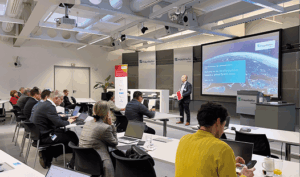
Marius Corici from Fraunhofer FOKUS opening the 5th NTN Workshop
INPACE EU–Indo-Pacific Digital Partnership Conference 2025
The conference took place in Singapore on 28–29 October and brought together policymakers, researchers, and industry stakeholders to strengthen cooperation on digital innovation. Representing Eurescom, Adam Kapovits contributed to discussions on advancing EU–Singapore collaboration in 6G research, identifying shared priorities in network architectures and testbed development. Later, he joined a session outlining Horizon Europe and EUREKA funding opportunities, clarifying participation routes for partners in the Indo-Pacific. The event reinforced the importance of international cooperation in shaping advanced digital ecosystems.
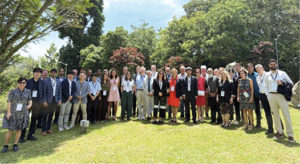
Group picture at the EU-Indo-Pacific Digital Partnership Conference 2025
EuCNC & 6G Summit 2025
At the EuCNC & 6G Summit 2025 in Poznań, Eurescom highlighted Europe’s leadership in next-generation communication systems. Through coordinated projects and expert participation, the organisation demonstrated progress shaping the path towards 6G.
A workshop on Terrestrial and Non-Terrestrial Network (TN-NTN) unification, co-organised with major European research and space actors, emphasised the growing importance of integrating satellite and terrestrial networks. Presentations covered handover techniques, direct-to-device connectivity, multilink communication, regenerative payloads, spectrum coexistence, and system-level testbeds, pointing towards future unified 3D network architectures.
The OPTI-6G project presented advances in photonic near-infrared cell-free networks supporting building-scale connectivity with multi-connectivity and AI-based interference management.
CENTRIC demonstrated AI-driven compression of Channel State Information with hardware-in-the-loop testing, highlighting progress in AI-native air interfaces.
SUSTAIN-6G focused on sustainability in future networks, contributing tools for assessing environmental and societal impact, supported by live demonstrations such as connected agriculture.
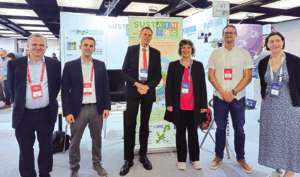
SUSTAIN-6G booth at EuCNC 2025: Panagiotis Demestichas (University Piraeus), Sokratis Barmpounakis (WINGS), Christoph Schmelz (Nokia), Chiara Mazzone (SNS JU), Antonio Sainz (QUAMPO) and Liesbet Van der Perre (KU Leuven)
The Women in Telecommunications and Research (WiTaR) session placed visibility and inclusion at the centre of the 6G agenda. Led by Bahare M. Khorsandi and Marie-Hélène Hamon, the session gathered research and industry voices to define concrete actions to improve representation across the SNS JU ecosystem. The resulting roadmap underscored the shared responsibility to build a more inclusive research landscape.
Together, these contributions demonstrated how European collaboration is driving 6G innovation, combining technological progress with sustainability and inclusivity.
Eurescom led EU-funded project PAROMA-MED showcased its pioneering work on privacy-preserving and secure healthcare data infrastructures enabling high-performance AI/ML workflows.
Pooja Mohnani, Project Manager at Eurescom GmbH, presented how PAROMA-MED is building resilient digital foundations grounded in Europe’s core values — privacy, openness, trust, and innovation. Professor Christoph Thuemmler, Chief Medical Officer at 6GHI, and Carles Anton Haro from CTTC highlighted the current challenges in European data infrastructures and sovereignty and joined the conversation to build a connected, compliant and collaborative Europe through secure data ecosystem.
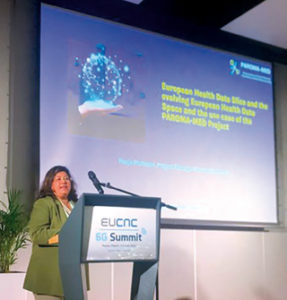
NEM Summit 2025 in Berlin
Signature of MoU between NEM and the 6G-IA in Berlin
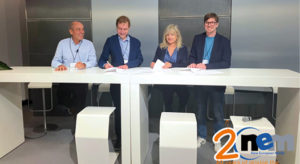
The NEM Summit 2025 took place in Berlin on 21–22 October, marking 20 years of the NEM Initiative. The event explored ethical, inclusive, and sustainable media futures under the theme Connected Realities. Sessions addressed frameworks for virtual worlds, the role of generative AI, and the impact of future connectivity on media services. A second day focused on inclusive and human-centred XR design, cultural applications, and collaboration across research and industry. The summit concluded with the NEM General Assembly and a reflection on two decades of European media innovation.
Further information
• 5th NTN Workshop: https://www.fokus.fraunhofer.de/en/ngni/events/5th-ntn-workshop-2025.html
• INPACE website: https://inpacehub.eu/
• TECHRITORY website: https://www.techritory.com/
• SNS CO-OP webpage: https://smart-networks.europa.eu/call-3-stream-csa/#SNS-CO-OP
• 6G-IA WiTaR webpage: https://6g-ia.eu/witar/
• NEM website: https://nem-initiative.org/
• OPTI-6G website: https://www.opti-6g.sns-ju.eu/
• CENTRIC website: https://centric-sns.eu/
• SUSTAIN-6G website: https://www.sustain-6g.eu/
The day the Internet died
“A bit beyond” explores whether AI is quietly undermining its own future in the Internet era. As generative AI increasingly trains on AI-created content, researcher warns of “model collapse,” where systems lose diversity, accuracy, and coherence.
Continue readingEditorial
Dear readers,
As Europe accelerates its digital and AI ambitions, cybersecurity stands as both the enabler and threat! Artificial intelligence is transforming the digital landscape exponentially! It is redefining how we create, communicate, and secure information — while simultaneously expanding our vulnerability. As algorithms grow more capable, so do the threats that exploit them. Cybersecurity in the AI era is no longer a question of defence alone, but of foresight, adaptability, and trust. This new frontier calls for coordinated action: bringing technology enthusiasts, researchers, policymakers, and industry leaders around a shared vision of technological sovereignty and trust. In the AI era, security cannot be an afterthought; it must be the cornerstone of innovation and digital governance.
The Kennedy’s perspective leads to a thought-provoking reflection on the time when innovation and risk evolve hand in hand. Drawing inspiration from the classic “ambulance in the valley,” the article challenges us to rethink whether we are investing enough in prevention rather than repairing the consequences. In his article he includes Scott Adams Six Filters of Truth that help us to reflect i.e., what’s true and what’s false; read the article and share your thoughts!
The invited article on the Cybersecurity in the AI era presents the dual role of AI through a three-dimensional framework: cybersecurity for AI, AI for cybersecurity, and AI against cybersecurity. It highlights key technical challenges and calls for a proactive, interdisciplinary approach to embed secure AI practices across the lifecycle, thereby positioning cybersecurity as a strategic enabler.
Gain insights into the evolving Digital Partnership on Cybersecurity in the Indo-Pacific region through the article “INPACE – Emerging Cybersecurity Architecture of Digital Partnership Countries.” The piece highlights how India, Japan, South Korea, and Singapore are shaping comprehensive cybersecurity frameworks to safeguard critical information infrastructure, strengthen public–private collaboration, and advance cyber resilience. Together, these nations are building a robust digital foundation — one that blends policy, regulation, and innovation to address the complex challenges of the connected world.
The foundations of cybersecurity must evolve with Artificial Intelligence reshaping the digital world. At the core lies the secure boot process — the mechanism that ensures only trusted software runs on a device, protecting systems from tampering and unauthorized access. Eurescom led EU-funded FORTRESS project is developing a hybrid secure boot architecture that combines classical and post-quantum cryptography. By reinforcing digital trust at the root, FORTRESS contributes to a new generation of AI-ready cybersecurity, where resilience begins not in reaction to threats, but in the very design of secure, intelligent systems.
As cyber threats grow in scale and sophistication, the European Union is advancing on framework to ensure that trust, resilience, and security remain at the core of its digital transformation. The article “EU Cybersecurity Framework” presents how the EU is building a unified defence through initiatives such as the EU Cybersecurity Act, the Cyber Resilience Act (CRA), and the NIS 2 Directive — supported by key institutions. These efforts form the backbone of Europe’s mission to safeguard its digital future and empower citizens, businesses, and public institutions to thrive securely in the digital age.
In the article “A bit beyond” the author explores whether AI is quietly undermining its own future in the Internet era. As generative AI increasingly trains on AI-created content, researcher warns of “model collapse,” where systems lose diversity, accuracy, and coherence. With synthetic data now saturating the web and ad-based revenue models under strain, both AI reliability and the digital economy face growing uncertainty. The article calls for authentic, human-generated content and transparent data practices to sustain trust, creativity, and truth in the AI-driven Internet.
This edition of Eurescom’s Message continues our mission to share insights and perspectives that shape the future of connectivity.
We warmly invite your feedback and ideas for upcoming issues. Write to us at and let us know which topics you’d like us to explore next. Your input helps us make each edition more relevant, inspiring, and impactful.
Enjoy reading!
Pooja Mohnani
Editor-in-chief
Words from the Director
What CELTIC-NEXT Cluster has delivered in the first half of 2025
and what is coming next?

Xavier Priem
Director CELTIC Office
priem@celticnext.eu
What CELTIC-NEXT Cluster has delivered in the second half of 2025
and what is coming in 2026.
For CELTIC-NEXT, 2025 was a year of renewal. The second EUREKA Clusters’ Programme (ECP) Arrangement was signed at the beginning of June 2025, with an effective start date of 1 July 2025. CELTIC-NEXT’s EUREKA Cluster’s License has been renewed for the next seven years with the strong support from the EUREKA Countries’ Network!
Let’s review what was achieved in 2025 and what we are currently planning for 2026.
2025 achievements:
On June 12, 2025, I had the honour of defending our CELTIC-NEXT application for a renewed license to operate as EUREKA Cluster. We received a clear positive vote from all voting countries, with a single exception (abstention). Beyond the quality of our application, it is the high-quality work of our community and our Office that has received this highest recognition from the EUREKA Network. The EUREKA Countries place seven years of renewed trust in us. We can now build on those seven years to develop a powerful new phase of CELTIC-NEXT: a revised and broader SRIA, improved and simplified processes, and expanding our presence across more countries, including beyond European borders (Canada, Brazil, Chile, Singapore, etc.).
Our intense engagement in the overall EUREKA Clusters Programme (ECP) will continue following three principal axes:
1. Pursuing the lead role on the writing of the ECP Processes Handbook, working with the other clusters and the Public Authorities. This work is essential as it will define more harmonised processes between clusters and public authorities to address the current challenges of the ECP, such as the time it takes to start a project after it has been labelled.
2. Implementing the requested changes in our CELTIC-NEXT processes and tools to reflect on point nr. 1.
3. Coordinating Clusters’ contributions to the ECP, with CELTIC-NEXT’s Director as Clusters Coordinator for the Industry side.
2025 saw the transition from the Canada-Germany Presidency to the Switzerland Presidency
Thank you, Canada and Germany!
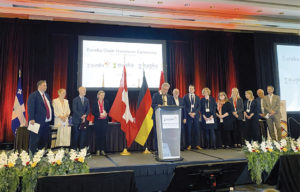
Eureka Chair Handover Ceremony: from Germany & Canada Presidency to Switzerland Presidency
The EUREKA Network was co-presided over by Canada and Germany from July 2024 to June 2025. Switzerland has now taken over for the current EUREKA year, from July 1, 2025, to June 30, 2026. CELTIC-NEXT’s Director’s assignment as Clusters Coordinator Industry spans over the same period.
In the name of CELTIC-NEXT, I would like to thank Canada and Germany for their outstanding leadership and support in achieving the significant step of renewing the ECP and the five Clusters licenses. This work has exposed CELTIC-NEXT to the Canadian Public Authority Representatives more deeply, which leads us to jointly plan an increased participation of Canadian entities (SMEs mainly) in our cluster’s bottom-up calls and flagships.
Welcome Switzerland!
From 1 July 2025 to 30 June 2026, Switzerland, represented by the innovation funding agency Innosuisse, assumes EUREKA’s Chair. This leadership role coincides with a major milestone: EUREKA’s 40th anniversary. In this capacity, the Swiss Chair has outlined an ambitious agenda, built around three forward-looking priorities:
1. Strengthening collaboration: among EUREKA’s beneficiaries, members, and partner organisations;
2. Amplifying impact: showcasing successes and shaping the future funding portfolio, and,
3. Empowering beneficiaries: through improved support and operational excellence.
More about Swiss Chair priorities and events under https://www.eurekanetwork.org/about-us/chair/
2025-2026 Running/Upcoming Calls
The Spring Call 2025 was a success, with nineteen valid proposals, from which eleven got labelled and are in the ramp-up phase. It is still possible to join some of these projects while they are ramping up. Please visit https://www.celticnext.eu/running-projects/ for more information.
When this edition of the CELTIC-NEXT’s News is published, the Autumn Call 2025 would have closed (deadline 24 October 2025). Therefore, it is already time to announce the Spring Call 2026!
The Spring Call 2026 will be launched at the beginning of December 2025 in an online event. The Proposers’ Brokerage Day will take place in person at the end of January or the beginning of February 2026, probably in Brussels/Belgium (to be confirmed). The precise date and location will be announced via our Newsletter and our website. The full project proposals’ submission will close on April 24, 2026, for a labelling decision before mid-June 2026. The forecasted possible start period for labelled projects would then be the second half of 2026.
A new, updated SRIA will enable future successful innovation support and change.
We are still collecting updates from our community on our Strategic Research and Innovation Roadmap (SRIA), which we are currently refining. We will incorporate this new SRIA in our Launch Events and Proposers’ Brokerage Days in 2026, to allow consortia to propose innovative projects in a more extensive variety of technologies, services, applications, and verticals. This reinforces our traditional bottom-up approach. We will continue to run our Spring and Autumn Calls based on this successful legacy. Bottom-up approach is a unique selling point of CELTIC-NEXT as an EUREKA Cluster compared to other international funding schemes (top-down approach). Please contact me () if you wish to contribute.
Flagships
SUSTAINET is running!
The new flagship, SUSTAINET, was labelled for its initial application in June 2024. Its central theme is network resilience, energy efficiency, sustainability, high-performing end-to-end networks, and network security. In the meantime, SUSTAINET and its three sub-projects have kicked-off. Despite being in the ramp-up phase, SUSTAINET has already begun its dissemination work, notably by attending several events like Hannover Messe and the ICOC 2025 Conference.
Canadian companies have now also joined SUSTAINET, extending its boundaries beyond Europe.
The CELTIC-NEXT office is happy to connect with potential new partners interested in joining the flagship during this first phase. Please contact us at u or directly the SUSTAINET Consortium .
3D-NET is ramping up!
The Spring Call 2021 project 6G-SKY concluded this summer 2025, marking a great success. It’s leading partner, Airbus Defence & Space, together with KTH and several participants from 6G-SKY, successfully applied in the Spring Call 2025 and have been granted a new labelled project, called 3D-NET. 3D-NET is the seed of a future flagship strand on Airspace/Non-Terrestrial and Terrestrial Networks convergence. Don’t hesitate to get in touch with us at .
Acquiring new Core Group memberships
The director of CELTIC-NEXT has the mandate from CELTIC-NEXT’s Core Group to propose and integrate new industry members into the existing Core Group. Discussions are ongoing with several industrial companies.
Outlook into 2026
The new ECP is signed to last seven years, providing the EUREKA Clusters with extended visibility into the future and, therefore, elaborating a stronger path for growth.
2026 will be the year of the new EUREKA Clusters Programme (ECP) ramp-up and more detailed implementation.
2026 will be a year of improvement; Optimization and simplification of processes to increase the programme’s efficiency, reducing delays from ideation to proposal submission, evaluation and finally to funding (incl. its synchronisation).
2026 will be a year of growth, starting with the renewed trust and support of existing partnering Public Authorities, and new incoming funding countries, such as Lithuania, Chile, and Brazil.
Finally, in 2026, an increased collaboration with Canada will take place. We have initiated discussions on how to facilitate Canada’s participation in CELTIC-NEXT brokerage events. This means that we will integrate this into our event planning, as it requires time to assemble such delegations to travel to Europe.
Further information
Stay tuned by visiting our Call Calendar page: https://www.celticnext.eu/call-calendar/ and/or by subscribing to our
Newsletter under https://www.celticnext.eu/news-subscription/
CELTIC Proposers Day in Aveiro
At the Heart of the CELTIC Community: the European AI-ACT & 6G Fuelling the AI Compute Continuum

Christiane Reinsch
CELTIC-NEXT Programme Coordinator
On September 11th 2025, the CELTIC-NEXT Community gathered once again for the highly anticipated CELTIC Proposers Day in Aveiro, Portugal.
Welcome:
The day started with a warm welcome from José Carlos Pedro, the President of the Board of Directors from our host organization Instituto de Telecomunicações in Aveiro, Portugal, followed by a short welcome from the CELTIC-NEXT Director Mr. Xavier Priem.
Both underlined the importance of in-person gatherings to foster new project ideas and to exchange on the latest advancements in the next generation of telecommunication.
Keynotes:
Two keynotes in the area of AI have been presented focusing on International Regulation and legal Frameworks, highlighting the transformative potential of 6G, current trends in the compute continuum that underpin a European value-based AI ecosystem.
On the Path to the AI-ACT:
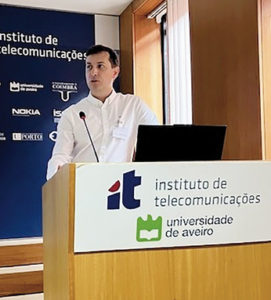 The first keynote gave insights “on the path to the AI-ACT”, kindly presented by Prof. Diogo Gomes from Instituto de Telecomunicações.
Prof. Diogo Gomes started with an overview on the EU AI-ACT that has been unanimously approved by the EU Council on 21 May 2024 and is foreseen to be fully applicable in 2026. The EU AI-ACT balances innovation with fundamental rights and safety, it is the first comprehensive European AI regulatory framework. Prof. Gomes touched on the basics of its Risk-based framework ranging from no obligation for minimal risk to conformity assessment for unacceptable AI risks as, for example, social scoring as well as unacceptable prohibited aspects of AI covered within the EU AI-ACT.
Transparency and Explainability, record-keeping as well as Auditability were mentioned as key requirements for High-Risk AI systems.
Open questions such as the ambiguity in definitions, enforcement capacity and expertise as well as risk of over-regulation vs under regulation have been discussed, as the importance of global competitiveness of AI systems is of utmost importance and the compliance is often seen as a burden to the industry.
He emphasized the need for adaptive flexible rules in a fast-moving field to underline the strength of the European industry in the Telecom ecosystem and the benefit it provides to its vertical markets. This approach strengthens vertical markets to thrive and fully leverage a strong alliance in the telecom sector.
In his keynote Prof. Gomes gave an overview on international legal frameworks such as for example the Algorithmic Accountability Act and the Stop Discrimination by Algorithmic Acts in the United States; the AIDA Act in Canada; the Basic Act on the Development of Artificial Intelligence and Establishment of Foundation for Trust in Korea, and the Act on the Promotion of Research, Development and Utilization of Artificial Intelligence-Related Technologies in Japan.
GSMA RAI that provides guidance for mobile operators and ecosystem partners on designing and deploying AI responsibly have been touched as well as the technical standards for secure and trustworthy AI from ETSI supporting the EU AI-Act compliance ecosystem through harmonized standards.
6G: Fuelling the AI Compute Continuum
The second keynote, kindly presented by Wolfgang John, Principal Researcher at Ericsson Research Sweden, on the topic of “6G: Fuelling the AI Compute Continuum” began with an overview of the International Telecommunication Union (ITU) process regarding the ongoing 6G 3GPP standardization activities, which are scheduled to start in end of 2024 and are expected to lead to commercial release in 2029 and beyond.
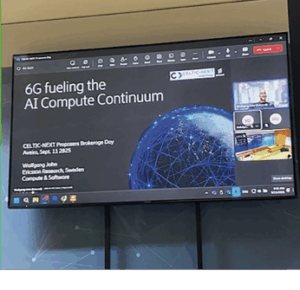 Wolfgang John provided insights on how AI-native networks, 6G Compute, Trustworthy systems and limitless connectivity capabilities of the 6G network platform serve as key enablers for co-creating a cyber physical world. First ideas on AI powered services have been shown working on today’s but also on tomorrows mobile networks that are both a communication and a computing platform.
Next generation of 6G networks include AI native infrastructure closely coupled to distributed data networks through a common platform functionality as cloud infrastructure, transport and data infrastructure serving end customers needs. The 6G network platform ensures service assurance, external interaction and business support through network assets that include cloud native and AI native infrastructure in a cyber physical world.
Especially the 6G AI compute continuum will simplify the procurement and deployment of future ready applications and devices. Optimization of connectivity compute and AI as well as network architectures supporting network insights and data as well as optimizing data transfer proved by large scale use cases have been highlighted during the presentation.
Examples of relevant data and insights within a mobile network as fraud detection and prevention, connectivity status and prediction, spatial data and user density have been mentioned to evolve in the future by the implementation of 6G and the AI compute continuum.
Trust, privacy and data sovereignty has been highlighted as potential driver for local compute and AI services. This presents a significant opportunity for mobile network operators as a nationally regulated business partner offering trustworthy bundles of communication, compute, data handling and AI model management. Immediate questions from the audience were raised on when the solution would be ready to be used. Which underlined the interest from industry viewpoint on the 6G and AI native compute continuum.
Funding Landscape in CELTIC:
As part of the Proposers Day, representatives from the CELTIC funding bodies explained details of funding in their country. Mrs. Polina Pereira from ANI opened the session by warmly welcoming the CELTIC Community in Aveiro and then presented the funding scheme in Portugal. Following Mrs. Pereira’s presentation, Mrs. Juana Sánchez from CDTI, Spain, gave insights on new funding opportunities in Spain and encouraged the participants from Spain to submit a high quality proposals related to the advices given in her presentation.
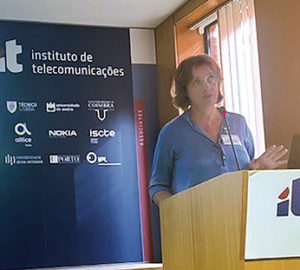
Representative from ANI, Portugal: Mrs. Polina Pereira Representative from CDTI, Spain: Mrs. Juana Sanchez
Following the funding presentation in Spain, our new Public Authorities representative Mrs. Bahriye Özkara from TUBITAK, Türkiye, showed relevant details on how to apply on national level in Türkiye to the interested participants. The funding landscape in Finland and support of CELTIC Calls has been kindly explained by Mr. Heikki Uusi Honko from Business Finland. Mrs. Camille Tang-Taye Pinois from BPI France followed his presentation and provided insights on the processes in France to the audience.
Successful SME
Mr. Pedro Lousa from Beyond Vision, highlighted the impressive growth and success of Beyond Vision which is a high-tech drone company, noting that it is among the first drone operators to utilize 5G technology, enabling extended-range communications. He also emphasized the company’s coordination role within the CELTIC project Intelligent Edge of Things (IEoT) that operated and finished successfully even during the Corona Pandemic. The expected revenue for Beyond Vision’s Drone Group, which entered the market in 2021, is projected to reach approximately €13 million by 2025, supported by a workforce of around 70 employees. The company specializes in dual-use applications for both civil and military purposes.
Insights from the Experts
In the next session, hands on experience from the CELTIC Experts where given. The session was opened by Mr. Xavier Priem, CELTIC Director, followed closely by Prof. Ayman Radwan, who explained in detail his CELTIC project success in the Health area as well as useful advices on the journey from Proposal Idea to a successful project end including strong guidelines on how to prepare a successful CELTIC Proposal.
Pitching Session and Consortium Building
Overall 15 new project ideas have been presented in the pitching session moderated by Mrs. Christiane Reinsch, CELTIC programme coordinator, who also moderated the days proceedings.
The pitching session was highly interactive and showcased innovation, featuring presentations such as Secure X, presented by DFKI from Germany, which captivated the audience with its cutting-edge security solutions. Celtiberian SL from Spain impressed with DronaaS, highlighting the potential of drone-as-a-service. A team of two from Airties, Türkiye, introduced Scota and Wi-Excellence, their smart connectivity test automation solutions, which promise to enhance network performance and Wi-Fi connectivity. Finally, Screenlight presented the concept of Cinema Futuro, sparking excitement about the future of cinema and its evolving technologies. Many more presentations were given, each one not only informative but also interactive, engaging the audience in discussions about the future of their dynamic sectors. Each of the presenters invited to an online consortium-building sessions that took place the following week.
Throughout the day, the pitch presenters gathered around posters to discuss their presentations with potential new partners.
After the pitching session, the attendees enjoyed the guided tour through the Lab of Insituto de Telecomunicações.
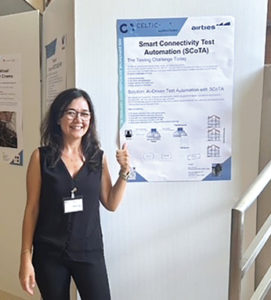
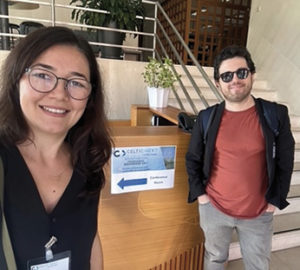
Poster Session: Burcu Ergun, Airties, Türkiye At the Entrance, happy team of two: Mehmet Sükrü Kuran and Burcu Ergun from Airties, Türkiye
Further information
https://www.celticnext.eu/event/proposers-brokerage-day-on-11-september-2025-in-aveiro-portugal/
USWA
Enabling Reliable and Scalable Wireless for Industry with DECT-2020 NR


Juho Pirskanen Mika Lasanen
Wirepas Oy VTT


Ivan Pretel Andreas Frotzscher
Fonlabs SL. Fraunhofer IIS
Introduction
The Ultra Scalable Wireless Access (USWA) project was established to research how to best harness the capabilities of the ETSI DECT-2020 New Radio (NR) standard and its first products in various industrial applications. At the very beginning of the project only very first chipset supporting DECT-2020 NR were appearing. The project also aimed to study potential technology enhancements for future DECT-2020 NR releases, and even to explore possible migration paths towards 6G systems. By September 2025, after three years research, the DECT-2020 NR technology landscape has evolved considerable: ETSI has published second release (Release 2) of the DECT-2020 NR standard, and a variety of chipsets and commercial products have emerged across different application domains. As we now are finalising the USWA project, we present some of our results below.
Main USWA results
System architectures and application requirements
The requirements analysis has prioritized users and stakeholders throughout the adaptation of Volere methodology, ensuring technological innovation is firmly guided by real-world requirements. Employing this user-centric approach, 21 practical use cases were identified and categorized under distinct areas, Figure 1, e.g., Electricity Network Quality Monitoring; Condition Monitoring in Industrial Facilities; Wireless Communication for Robots. From these use cases, several critical technical requirements including latency, reliability, jitter, transmission capacity, mobility, availability, energy efficiency, location accuracy, and security were rigorously analysed across multiple scenarios for the foundation of the system’s architectures.
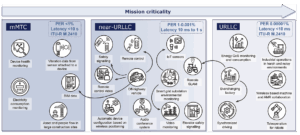
Figure 1: Identified use cases and their communcation requirements
The use cases were further classified into three performance-oriented categories depicted in Figure 1:
› mMTC (massive Machine-Type Communications): Targeted at high device density and data exchange, with less stringent latency and reliability requirements.
› URLLC (Ultra-Reliable Low Latency Communications): Requires maximum reliability and minimal latency for time-sensitive operations.
› Near-URLLC: An emerging classification bridging mMTC and URLLC, tailored for evolving IoT demands. These use cases necessitate specific thresholds for latency and packet error rates, supporting new industrial applications where both reliability and flexibility are paramount.
Based on this analysis, a comprehensive Architecture Layers Schema, Figure 2, was developed, aligning each use case’s needs with a universal system architecture. Details of this schema delivers architectural recommendations and guidelines for various scenarios, facilitating enhancements to DECT-2020 NR technology via diverse implementations and testing deployments.
The architecture comprises of three principal layers:
› Use Case Layer: Engages with experimenters to coordinate and oversee use cases, manage experimental lifecycles, and validate key performance indicators.
› Management & Orchestration (M&O) Layer: Oversees the deployment, execution, and administration of experiments, including device management and overall system control.
› Infrastructure Layer: Manages user traffic through back-end systems, Internet/LAN, gateways, and DECT-2020 NR radio networks, integrating with devices and applications specific to individual use cases.
System requirements preliminary identified were directly mapped to DECT-2020 NR features and the intended architecture, guaranteeing that critical needs such as latency and transmission capacity are addressed per scenario. The architecture further defines principal system interfaces and provides implementation guidelines applicable to mMTC, URLLC, and near-URLLC environments.
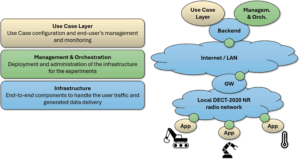
Figure 2: Architecture Layers Schema mapping into generic system architecture
IoT mesh network solutions
IoT Mesh solutions work focused on developing DECT-2020 NR technology further in massive IoT use cases as well as evaluating system performance with different link and system simulation models in generic massive IoT mesh architecture illustrated in Figure 2. First, an extensive study on Release 1 performance was conducted based on system and link simulation tools including comparison to 802.11ax based Wi-FI systems. It was found that DECT-2020 NR physical layer can operate in a robust manner with high spectral efficiency, low TX powers and limited device activity levels in variable environments and use cases.
New improvements were considered to medium access and routing protocol layers, including optimization for downlink packet routing, enhanced channel access for very low power devices, and efficient and reliable distribution of configuration data in mesh network operation to mention few.
The performance evaluation continued with improved system simulation models focusing on different topics of the IoT mesh communication. Topics included overall energy consumption of the network, uplink and downlink system capacity and co-existence of the IoT system with other systems such as old DECT cordless phones. Further, extensive simulation studies concluded that DECT-2020 NR access method is significantly better than access method required in Unlicensed Personal Communications Service (UPCS) band, 1920-1930 MHz. Finally, a study for DECT-2020 NR positioning framework was concluded, by evaluating performance of several widespread positioning approaches, based on Time-of-Arrival (ToA), Angle-of-Arrival (AoA) Received Signal Strength (RSS) and different hybrid versions of the listed positioning approaches.
Ultra reliable and low latency mesh networks
The URLLC aspect of USWA integrates DECT-2020 NR and UWIN-based radio interfaces to support ultra-reliable communication, to develop a mesh network topology with a packet error rate (PER) of 10−7 while maintaining sub-1 ms transmission latency. Mesh networking plays a crucial role in enabling direct communication between devices, such as robots in smart factory environments and other robotic applications like flexible production and adds further redundancy for improved reliability.
To achieve these goals, system design incorporates the most promising mesh network techniques, AI driven optimization, and security measures to improve network adaptability. This involves researching and selecting suitable PHY and MAC layer techniques and developing a simulator for performance evaluations.
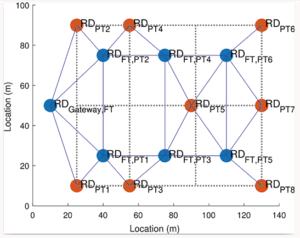
Figure 3: Evaluation scenario of URLLC mesh network
For this purpose, MAC protocol enhancements were developed for DECT-2020 NR to reduce the end-to-end transmission latency and by this increase the throughput. The protocol enhancements are verified in various simulated network constellations. One of the considered scenarios is depicted in Figure 3, showing an indoor industrial environment with six radio devices operating as routers, depicted as RDFT,PT, one radio device operating as gateway, RDFT. Finally, eight radio devices are operating as leaf nodes, RDPT. The RDPTs are mobile at the speed of 2 m/s on a predefined path, represented by the dotted lines in Figure 3. Moreover, RDFT/PT and RDGateway,FT are deployed in a static position to provide coverage in the region of interest.
With the proposed scheme the end-to-end latency and throughput could be improved notably as shown in Figure 4.
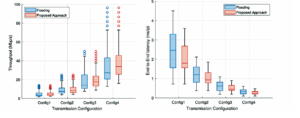
Figure 4: End-to-End latency and throughput evaluation of the proposed date dissemination scheme
compared to standard flooding procedure of DECT 2020 NR
Especially for URLLC networks in scattered radio environments, a proper allocation of radio resources is crucial to further minimize the outage probability. For this purpose, a channel aware resource allocation method was developed, improving transmission reliability by adding only minimal signalling overhead. Figure 5presents an example of the resource scheduling for the wireless links between a gateway and three robots. Each link needs isochronous transmissions resources. The developed resource allocation method optimizes for each link the allocation of resource blocks by considering the current channel conditions and its time varying nature.
Further developments include the use of network coded cooperation to improve the transmission reliability and the development of Hardware accelerators for Post Quantum Cryptography (PQC) encryption / decryption methods.
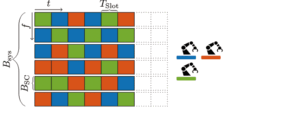
Figure 5: Example of resource allocation for three links where each link gets allocated two resources in each time step.
Proof of concepts
Given the wide range of use cases identified during the project, the number of PoCs implemented was equally extensive. One of the initial steps in PoC development was to conduct an extensive link distance measurement campaign in different environments ranging from indoor factory and office to outdoor grid lines, campus areas and open fields to observation tower as shown in Figure 6. The aim of these measurements was to gain practical insights on achievable link distances with different TX powers levels using the first DECT-2020 NR chipset implementations. These measurements were essential to ensure smooth implementation of other PoCs paving the way to real commercial deployments.
To illustrate one proof of concept (PoC) of the USWA project, specifically Energy QoS monitoring, Figure 7 presents the overall PoC architecture. The solution leverages DECT-2020 NR technology to enable modular, low-maintenance deployment of new control, monitoring, and protection components (IEDs) within substations, eliminating the need for rewiring. Furthermore, wireless mesh technologies enhance system resiliency by providing alternative communication paths. The PoC demonstrates how reliable wireless connectivity can replace wired connections while ensuring accurate transmission of energy Quality of Service (QoS) and consumption data from Circuit Monitoring Sensor (CMS) devices.
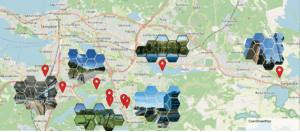
Figure 6: Different link distance measurement location in Tampere Finland
Standardisation and dissemination
To obtain efficient and strong impact from a research project to wireless technology development, regular participation to corresponding standardization forums is vital. To achieve this USWA project partners have had active participation to ETSI TC DECT, promoting new solutions for DECT-2020 NR. This work has resulted in several improvements to the Release 2 standard of DECT-2020 NR.
Dissemination was an important goal in the project. In addition to several publications obtained, two information sharing webinars were held and YouTube videos of both events were made available. In addition, USWA Winter School was organised for postgraduate students at Ruka, Finland, in February 2025. Furthermore, USWA was present in EuCNC & 6G summit 2025 conference within DEC NR+ special session as well as with Demo booth. Finally, USWA project was regularly present in Berlin 6G summits.
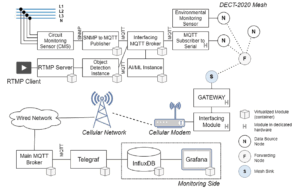
Figure 7: PoC system architecture for Energy QoS monitoring
Conclusions
During the USWA project, technology landscape evolved significantly due to rapid rise of AI and promising new possibilities for automation and process optimization. At the same time, introduction of new DECT-2020 NR based chipsets and products in the marketplace has established DECT-2020 NR as mature and reliable wireless technology for industrial applications. With new solutions and PoC developments, the USWA project has demonstrated enormous opportunities for different industry areas, where DECT-2020 NR technology provides cost-efficient, reliable and resilient wireless communication solution connecting devices and advanced data processing solutions. However, innovation continues, and DECT-2020 NR provides a solid foundation for future technologies beyond the project and today’s applications.
Acknowledgements
Project partners acknowledge research funding from by the European Union – NextGenerationEU – received through Business Finland, Centro para el Desarrollo Tecnológico Industrial, Federal Ministry of Education and Research, and Turkish funding agency.