
Skip to content
  • About Us
    • Company Profile
    • Our Team
    • Shareholders & Members
    • Opportunities
  • Services
    • Launch of Industry-Driven R&D Initiatives
    • Securing of Research Funding
    • Management of European R&D Projects
    • Management of European R&D Programmes
    • Studies on Strategic Topics in ICT
  • EuresTools®
    • EuresTools Reporter
    • EuresTools Tracker
    • EuresTools Workspace
    • EuresTools Website
    • EuresTools Conferencing
    • EuresTools Mailing List
    • EuresTools Pricing
  • Projects
    • Ongoing Projects
    • Past Projects
  • News
    • News
    • Events
    • Eurescom message
  • Contact
    • Travel information
    • Location
×
Linkedin Twitter Youtube
 

How Eureka Clusters keep reinventing ­themselves

Valérie Blavette
Orange

In order to effectively foster innovation, the Eureka Clusters, including CELTIC-NEXT, are constantly innovating themselves. This is why we are currently setting up a new Eureka Clusters Programme that increases synergies between Clusters. This new programme was designed during the former Dutch Eureka Chairmanship and is being implemented during the current Austrian Chairmanship, whose motto is ‘‘Towards a New Eureka’’. It is impressive to see how an Intergovernmental organisation that was created in 1985 is so dynamic, flexible and future-looking to enhance collaboration at a global scale.

It was decided to set up a new governance structure for the Eureka Clusters Programme, which is based on new bodies for representing both the Public Authorities and the Cluster communities, as well as to facilitate dialogue between the industry and the national funding bodies.

New governance for better public-­private dialogue

For enhancing the public-private dialogue, the Public Authorities Committee (PAC) has been set up at director’s level with representatives of over 20 countries at the time of writing. In addition, the Clusters Committee (CC) has been formed, with three industry representatives of each Cluster.

The kick-off meeting of the ECP programme took place on 15th October. In the meeting, the PAC and CC members discussed the importance of the Eureka Clusters for their respective company, industry and community as well as some strategic and topical priorities.

CELTIC-NEXT is represented by Vincent Marcatte, Orange Vice President, Julie Byrne, Nokia Head of Partnerships and David ­Kennedy, Director of Eurescom.

At the time of writing, the new Public ­Authority Committee (PAC) had already gathered 19 participating countries, chaired by the UK.

Agreeing on strategic priorities

When industry and the Public Authorities will agree on some strategic topic, it will be reflected in the Multi-Annual Plan (MAP) of the ECP. When the MAP will be finally approved in June 2021 thematic calls among a set of clusters or at individual level will be decided for the next four years, starting with the most urgent ones. Among the topics and challenges high on the agenda of both the Public Authorities and the PAs are AI, Green Deal, Cyber­security and Beyond 5G/6G.

Denmark and South Korea have proposed a new joint Cluster call on “Technology driven Green Transition” that could take place already in the transition period with projects funded already in 2021, if enough countries can join.

The Central Coordinating Function and the CC Support Group

The new ECP will be supported by the Central Coordination Function (CCF) that will be half funded by the PAs and half by the clusters. Nadja Rohrbach, who has been working at the Eureka Secretariat in charge of Clusters since more than two years, seconded by the German Ministry for Education and Research (BMBF), has been in charge of the CCF from the PA side since last summer.

The Cluster Committee will be assisted by a Support Group, where CELTIC will be represented by Jari Lehmusvuori from Nokia, ­Antonio Cuadra Sanchez from Indra Minsait, Peter Herrmann, Celtic Office director, and the CELTIC-NEXT Chair.

CELTIC-NEXT and the Eureka Clusters AI call

CELTIC-NEXT paved the way for the new ­governance during its Inter-Cluster Spokespersonship. We started seizing the opportunity of AI being high on the agenda of both industry and a number of Public Authorities by setting-up the first AI call jointly organised by CELTIC-NEXT, Eurogia, ITEA, PENTA and Euripides. It was both a collective challenge and an educating experience. A new cluster tool and portal had been developed by Eurescom specifically for this first joint call.

The clusters attracted 16 countries who gave their financial support to that call including Singapore, which is new in Eureka. By mid-June, when the call ended, we received 41 valid project proposals.

For this first joint call it was decided to synchronise label and funding decisions wherever possible. The supporting Public Authorities agreed to participate to a pre-consensus and a consensus meeting where the decision to label / fund projects from all clusters was examined, taking into account the evaluations both from the cluster tech­nical experts and from the PAs.

Finally 16 projects were labelled and a quick path for funding of those projects has been explored by the countries.

Open to the verticals and to challenges

The Eureka Clusters keep innovating, and CELTIC-NEXT is open for more joint initiatives and challenges that advance European and global innovation in the smart connected world domain. For our autumn call we organised once again a joint call with Eurogia, the Cluster on low carbon energy. In mid-September we had an exciting joint proposers day with over 200 registered participants, and a new brokerage tool. This is just one example for a converged industry effort including
the verticals, which shows how CELTIC-NEXT contributes to the new Eureka Clusters Programme.

Conclusion

After two years of dense activity as CELTIC-NEXT Chair, I am now required for a new position inside Orange.

Through my roles as CELTIC Chair and Inter-Cluster Spokesperson, I have been happy to contribute to increasing the interest of the Public Authorities towards CELTIC-NEXT and Eureka Clusters in general.

As for me, I will still participate as CELTIC-NEXT Core-Group member from Orange.

Last but not least, I wish all the best to my successor and to CELTIC-NEXT!
AI-NET Kick-Off Event

CELTIC Flagship Project for Intelligent Network Automation


Milon Gupta
CELTIC Office

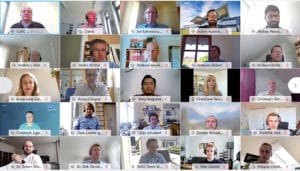
On 1st June 2021, CELTIC flagship project AI-NET was officially launched at a high-level online event. Representatives from the public authorities of Germany, Sweden and Finland as well as representatives of the AI-NET project consortium, comprising major players from industry (large and SMEs), research organisations, and academia, presented the visions and goals of the ambitious European project to an audience of more than 150 participants.


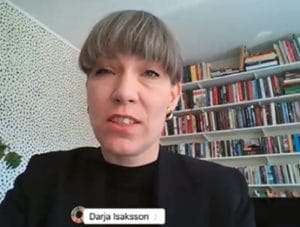
Darja Isaksson, Director General at Vinnova, Sweden’s Innovation Agency


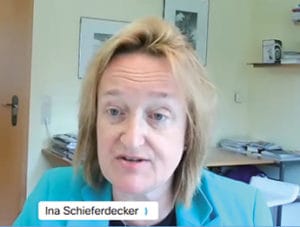
Prof. Dr.-Ing. Ina Schieferdecker, Director-General for Research for Digitalization and Innovation at the German Federal Ministry of Education and Research (BMBF)

AI-NET aims at ‘Accelerating Digital Transformation in Europe with Intelligent Network Automation’. The project is addressing the challenge that the current centralised cloud infrastructure is not adequate for serving the requirements of the digital transformation in Europe. AI-NET is built on the premise that three technologies need to be combined to shape a new secure service and application platform: 5G, edge-centric computing, and artificial intelligence.

The main goal of the AI-NET project is to provide enablers and solutions for high-performance services deployed and operated at the network edge. AI-NET is using artificial intelligence for complementing traditional optimisation algorithms, in order to manage vastly increased network complexity.

The kick-off event was opened by Prof. Dr.-Ing. Ina Schieferdecker, Director-General for Research for Digitalization and Innovation at the German Federal Ministry of Education and Research (BMBF). She said: “AI-NET is an important step for Germany and Europe towards technological sovereignty.”

In the following presentations, the representatives of the funding agencies from Sweden and Finland – Darja Isaksson, Director General at Vinnova, Sweden’s Innovation Agency, and Heikki Uusi-Honko, Head of International Networks at Business Finland – shared their views on the importance of AI-NET from the perspective of their national innovation strategies. While Ms Isaksson pointed out that “AI-NET is a cornerstone in Vinnova’s strategy for digital transformation”, Mr Uusi-Honko highlighted the importance of AI-NET for contributing to sustainable growth in Europe. CELTIC-NEXT Vice Chair Jari Lehmusvuori, Head of Department at Nokia Bell Labs, completed the session by presenting the European innovation perspective of Eureka Cluster CELTIC-NEXT.

The next session was dedicated to presenting the AI-NET sub-projects AI-NET-ANIARA, led by Ericsson Research, AI-NET-PROTECT, led by ADVA, and AI-NET-ANTILLAS, led by Nokia Bell-Labs. Magnus Frodigh, Vice President & Head of Ericsson Research, Sweden, Dr. Christoph Glingener, CTO ADVA Optical Networking, Germany, and Patricia Layec, Research Department Head, Nokia Bell-Labs, France, presented the ambition of AI-NET to connect critical infrastructures and data centres through enhanced transport networks and improved networking concepts that will results in reinforced overall security.

The event concluded with a panel discussion on how Europe can accelerate the digital transformation with intelligent network automation. Panelists in the session moderated by Eurescom Director and CELTIC Chairman David Kennedy were Dr. Mohsen Amiribesheli, Research Technology Manager at Konica Minolta Global R&D; Dr. Markus Ohlenforst, Managing Director at IconPro GmbH; Dominik Flick, Project Manager for Energy Performance Management at Stellantis / Opel Automobile GmbH; Dr. Timo Lehnigk-Emden, Managing Director at Creonic GmbH; and Prof. Dr. Jan Juerjens, Director Research Projects at Fraunhofer Institute for Software and Systems Engineering.


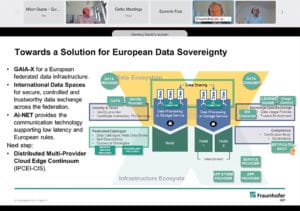
Presentation by Prof. Dr. Jan Jürjens from Fraunhofer ISST

About AI-NET

AI-NET is a 74 million-euro public-private partnership project under CELTIC-NEXT, the EUREKA Cluster for next generation communications for a digital society. AI-NET comprises three sub-projects with 92 companies, research organisations, and universities from Germany, Sweden, Finland, France, United Kingdom, Netherlands, and Poland. The CELTIC-NEXT flagship project is coordinated by ADVA Optical Networking SE, a European telecommunications vendor headquartered in Germany.

AI-NET is publicly co-funded by the public authorities of Germany (BMBF), Sweden (VINNOVA), Finland (Business Finland), and the United Kingdom (Innovate UK). The project will end in August 2024.

› Further information

› AI-NET Kick-Off Event Page – https://www.celticnext.eu/event/celtic-ai-net-kick-off-event/
› AI-NET Project Page – https://www.celticnext.eu/project-ai-net/

Next generation communications meets clean energy

Virtual Proposers Day of CELTIC-NEXT and EUROGIA2020

Milon Gupta
CELTIC Office

The second Proposers Day held by CELTIC-NEXT and EUROGIA2020 on 15–16 September 2020 was quite different from the first edition, which took place on 29th January in Madrid at the Nokia premises. This time, the COVID-19 restrictions made an in-person event impossible. Thus, the Proposers Day was held as a virtual event. The positive aspect was that the number of registered participants doubled to over 200. Also the number of proposal ideas for the joint CELTIC Eurogia Call in autumn increased, from 12 to 15. And no less than 11 Public Authorities presented funding opportunities in their countries.

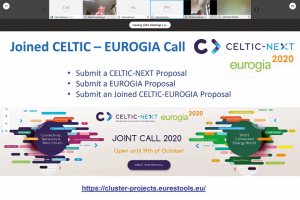
Due to the successful first joint proposers day, CELTIC-NEXT and EUROGIA2020 had decided to bring together both Eureka Cluster communities again for the autumn call that was open until 19th October. Responding to the growing need for cross-cutting approaches and synergies between Eureka Clusters, the goal of the joint call was to expand knowledge, boost visibility and promote cooperative efforts for innovative results. The second joint Proposers Day offered a discussion forum for organisations interested to participate in a collaborative research project via CELTIC-NEXT in the area of next generation communications or via EUROGIA2020 in the area of low-carbon energy technologies.

Welcome and keynote

The first day of the event started with welcome speeches by Valérie Blavette, Inter-Cluster Spokesperson and CELTIC Chairperson from Orange, and Sinem Altuncu, EUROGIA2020 General Manager from Paycore. This was followed by a keynote on cybersecurity challenges, given by Dr. Heiko Lehmann from Deutsche Telekom’s T-Labs. According to Dr. Lehmann, the rapid evolution of cybersecurity threats creates growing market opportunities.


Keynote speaker Dr. Heiko Lehmann from Deutsche Telekom’s T-Labs

Session on proposal submission

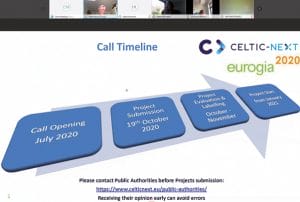
After the inspiring beginning, it was time to get to the nuts and bolts of proposal submission. Pierre Besse, Vice-President of EUROGIA and Dr. Peter Herrmann, CELTIC Office Director presented how easy it is to submit a project to the Joint Call. Both presented the eligible subjects of their respective Cluster and explained the requirements for a successful project proposal and how the online submission tool can be accessed. In addition, they explained the timeline and the evaluation process for proposals by technical experts and Public Authorities.

Business Impact from CELTIC and ­EUROGIA projects

If some participants were wondering about the benefits of getting involved in Eureka Cluster projects, they got convincing answers in the session on business impacts from CELTIC and EUROGIA projects, which was moderated by Pierre Besse from EUROGIA2020. In the first presentation, Dr. Antonio Cuadra-Sanchez presented the business benefits which his company Minsait (part of Indra Sistemas S.A., Spain) gained from its multiple participations in CELTIC projects, in particular the award-winning NOTTS project on next generation over-the-top multimedia services.

The business example for EUROGIA was equally convincing. Sahin Calglayan from Turkish Energy IoT Platform provider Reengen presented the benefits and impacts of EUROGIA project SolarPact.

Funding and focus in different countries

On the second day, representatives from 11 Public Authorities presented in a session moderated by CELTIC Programme Coordinator Christiane Reinsch the funding situation and research focus areas in their respective country. The countries and representatives included: Austria – Michael Walch, FFG; South Africa – Toto Matshediso and Vinny Pillay, DST; Canada – Narayanan Kasturi, NRC-CNRC; Israel – Neta Gruber, IIA; Turkey – Umut Ege, TUBITAK; Finland – Hannu Nurmi, Business Finland; Germany – Sabine Hemmerling, DLR; Spain – Juana Sanchez, CDTI; Switzerland – Colette John-Grant, InnoSuisse; South Korea – Hyewook Joung, KIAT; and Singapore – Navjeev Singh, Enterprise Singapore.


Presentation by Navjeev Singh from Enterprise Singapore

Singapore and South Africa were for the first time represented at a Proposers Day, which shows the growing international reach of CELTIC-NEXT and EUROGIA2020.

Successful SMEs

The session on successful SMEs, moderated by CELTIC Office Director Dr. Peter Herrmann, featured two success stories of SMEs which had benefitted significantly from their involvement in the respective Cluster project.


Piotr Pawalowski, Vice-President and CTO of medVC

Piotr Pawalowski, Vice-President and CTO of medVC, a Polish medical collaboration tool provider, explained how medVC developed major elements of its services through participation in CELTIC projects. The SME from Poznań had participated in the award-winning CELTIC project “HIPERMED – High Performance Telemedicine Platform” and the also award-winning successor project “E3 – E-health services Everywhere and for Everybody”. Today, medVC has a growing business, meeting the increasing telemedicine service demands by hospitals and patients.

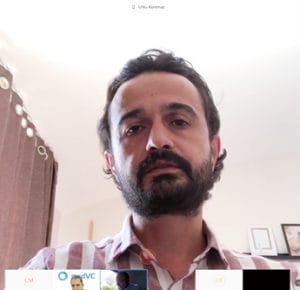
Utku Korkmaz, CEO of Solarcati, presented how his company, a Turkish solar panel service provider in Turkey, is benefitting from its participation in EUROGIA2020.


Utku Korkmaz, CEO of Solarcati

Project idea pitches

Another core element of the Proposers Day was the pitching of project ideas. 15 proposers presented their ideas on a wide range of ICT and energy topics. The presentations led to productive discussions, which were moderated by Christiane Reinsch from the CELTIC Office. CELTIC Consortium Building Sessions had been organized and announced to support the participants to find partners and build a successful proposal.

› Further information

› Proposers Day page on the CELTIC-NEXT website – https://www.celticnext.eu/celtic-eurogia-online-proposers-day-15-16-september-2020/


Joint CELTIC-NEXT and EUROGIA2020 call timeline

Supporting the Telecommunications Area in Spain through CELTIC-NEXT

Centre for the Development of Industrial Technology (CDTI)

Juana Sánchez
CELTIC-NEXT representative
Centre for the Development of Industrial Technology (CDTI)

The Centre for the Development of Industrial Technology is the main R&D funding agency in Spain.

CDTI is a public business entity, answering to the Ministry of Science and Innovation, which fosters the technological development and innovation of Spanish companies. It is the entity that channels the funding and support applications for national and international RDI projects of Spanish companies. Therefore, CDTI contributes to improving the technological level of the Spanish companies by means of implementing the following activities:

› Financial and economic-technical assessment of R&D projects implemented by companies.
› Managing and fostering Spanish participation in international technological cooperation programmes.
› Fostering international business technology transfer and support services for technological innovation.
› Supporting the setting up and consolidating of technological companies.

CDTI employs over 350 people, three quarters of whom are engineers and graduates. Even though the bulk of the CDTI infrastructure is in Madrid, the Centre offers to Spanish companies a strategic network of CDTI SOST (Spanish Office for Science and Technology) offices in ten countries: Belgium, Brazil, Chile, China, India, Japan, Korea, Mexico, Morocco and the USA to promote the Spanish technology at international level, mobilize global financial resources and detect international market opportunities for Spanish high-tech companies with the aim of fostering the transnational technological cooperation in International Programs at bilateral or multilateral level, with special focus in the European programs, like Horizon Europe or Eureka.


CDTI premises in Madrid

Commitment with Eureka and CELTIC-NEXT – new funding procedure implemented

Addressing its international orientation, CDTI has strong support with the Eureka programme in general and with Eureka Clusters in particular. The bottom-up orientation of Eureka is fully aligned with CDTI’s philosophy.

CELTIC-NEXT, focussed on the telecommunications area, has become a Eureka Cluster with high interest in Spain. The Spanish CEL­TIC community ranges from large companies to small and medium-sized companies that regularly participate in its calls to improve their competitiveness. The impact of Celtic projects encourages Spanish companies to use this way to accelerate their potential business establishment in the telecommuni­cations area.

In order to accelerate the time to contract of CELTIC projects, CDTI has a new funding procedure that forces Spanish companies to apply for funding as soon as Celtic projects are labelled. Spanish funding application is done in two phases: First, the leader of the Spanish sub-consortium applies a ‘Eureka request’ after the deadline of each CELTIC-NEXT call (margin: 15 days). Second, once the projects are labelled, each company involved in labelled projects presents the full memory (national request) with a margin of 20 days. This improved process will avoid long-term funding procedures for CELTIC projects and will shorten time-to-contract.


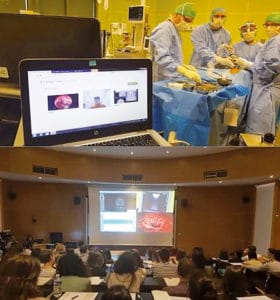
E3 medical test video sequence

Successful Spanish CELTIC project E3

The E3 project is a good example of CELTIC success based on three principles: OPEN platform that guarantees access EVERYWHERE for EVERYBODY. E3 has designed, implemented, tested and validated with final users (patients and professionals) an E2E (End-To-End) videoconference platform able to allow EVERYBODY (low-cost high-quality video conference & e-health services reusing in-home infrastructures) access to e-health services EVERYWHERE (both rural & urban areas, both patients and professionals) thanks to bandwidth adaptation techniques that allow simultaneous multipoint conferences with SD and HD.

These developments were tested and validated by doctors in 15 use cases over one common OPEN platform (adapted to point-to-point videoconferences and STB/HDTV functionalities), able to reuse in-home infrastructure (professional-to-patient scenarios and patient-to-patient scenarios).

E3 is a cross-domain project that uses Open Innovation to allow external partners (6 Spanish SMEs, 1 Polish SME, 1 Polish medical institution and 3 French medical institutions) to collaborate from project definition to test and validation easing go-to-market fit that has allowed to generate 12 new products and improve 14 products generating over 26.5 million euro revenue with 5.2X ROI since end 2020.

The main impact on Spanish partners has been on CALBOQUER SL (ASMEDIT) which launched Face-to-face+E3 developed solution to its 10 million customers with a 3 million euro revenue yearly increase. ASMEDIT is using STARFLOW (CLEVERNET) WAN Optimization solution to guarantee its professionals working from home connectivity, reliability and data in motion security.

Three start-ups have been created to commercialize E3 project developments, including SMART Health TV solutions in Spain which is participating in the ESA Space COVID19 Response Initiative as provider of tele­care technology for CNR (Consiglio Nazionale delle Ricerche).


E3 project: User-friendly experience / Videoconference at Home TV

The E3 project has received 8 awards including: CELTIC-NEXT Innovation Award Winner (Heidelberg, 2020), EUREKA Excellence Award Winner (EUREKA Stakeholders Conference Amsterdam, 2019) and CELTIC-NEXT Excellence Award Winner (CELTIC-NEXT Event at EuCNC in Valencia, 2019).

Conclusion

CELTIC-NEXT is a strategic Eureka Cluster for Spanish companies that offers an excellent framework to improve their competitiveness in the telecommunications area at international level. Spain has many successful projects that have helped companies to establish as a reference in such competitive markets. CELTIC’s support is key for participants. Besides, its Core Group offers high level orientation to participants.

CDTI, aligned with CELTIC-NEXT and with Eureka Clusters in general, has optimized the funding procedure with CELTIC calls to accelerate the time-to-contract of CELTIC projects. This new procedure has already been implemented in the CELTIC-NEXT Spring Call 2021.

› Further information

› CDTI website – https://www.cdti.es
› E3 project page – https://www.celticnext.eu/project-e3/

How Austria supports CELTIC-NEXT projects

The Austrian Research Promotion Agency (FFG)

Michael Walch
Eureka National Project Coordinator
Austrian Research Promotion Agency (FFG)

The Austrian Research Promotion Agency (FFG) is the one-stop shop national funding agency for industrial research and development in Austria. All FFG activities aim to strengthen Austria as a research and innovation centre on the global market. Thus, the FFG helps to assure jobs and wealth sustainably as well as to make a lasting contribution to the strength of the Austrian economy.

The FFG is wholly owned by the Republic of Austria and subsidized by the Federal Ministry for Climate Action, Environment, Energy, Mobility, Innovation and Technology (BMK) and the Federal Ministry for Digital and Economic Affairs (BMDW). As a provider of innovation enabling services, the FFG is also active on behalf of other national and international institutions.

Involvement in Eureka and CELTIC-NEXT

As part of its activities, FFG supports Eureka as an initiative to encourage collaboration between organisations across Europe and beyond in the near-market development of new and innovative advanced technology products, processes and services. With this strong market orientation, Eureka complements
the EU’s strategic research programmes. The flexible Eureka programmes offer multiple opportunities for SMEs, large companies, ­universities and research organisations.

Eureka Clusters like CELTIC-NEXT are industry-led initiatives that focus on technology areas of strategic interest. Projects are driven by communities of large companies, SMEs, universities, research institutions and end users. The aim is to promote development of new products and applications through networking and to strengthen the European economy on the world market.

FFG actively supports CELTIC-NEXT and provides the required funding to Austrian companies, in line with the distributed ­public-private partnership model that ­Eureka clusters employ. Likewise, FFG funding schemes play an important role in generating new knowledge, developing new products and services, and enhancing competitiveness in the global marketplace. They make it easier, or possible, to finance innovative projects, and help to absorb the risks involved in research.

Information about the process for submitting a successful project proposal and funding conditions in Austria can be found on the FFG’s CELTIC-NEXT page at: https://www.ffg.at/europa/eureka/cluster/celtic-plus

Case study – CELTIC project ASUA

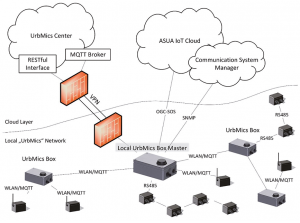
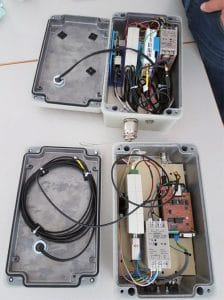
A good example of a successful CELTIC project with Austrian participation is ASUA, a collaboration between 8 consortium partners from 5 countries dedicated to Advanced Sensing for Urban Automation. The research work of the two Austrian consortium partners Geodata Ziviltechnikergesellschaft and Montanuniversität Leoben included the development of a system for the introduction of Smart City technologies in urban tunnel construction. The system called UrbMics is composed of (i) a multifunction box (UrbMics box) for local storage, intelligent processing and wireless transmission of monitoring data of a tunnel construction site, (ii) a wireless sensor network (UrbMics WSN) as well as (iii) an associated web-based information and control center (UrbMics center) to control the multifunction boxes and manage their ­data. In the project, the components have been specified, planned, developed, implemented and tested and validated on an ongoing, urban tunnel construction site. For this, Smart City application scenarios defined within the framework of the CELTIC project have been designed and implemented. The UrbMics platform is integrated into an ASUA reference platform and has also been used by other CELTIC project partners to validate their technologies.


Figure 1: Two UrbMics box field prototypes prepared for construction site installation, left: with, right: without built-in UrbMics WSN components).

The Austrian end result are operational prototypes of the systems UrbMics box, UrbMics WSN and UrbMics center and field tests of the prototypes.


Figure 2: Integration of the UrbMics overall system into the UARP (Urban Automation Reference Platform).


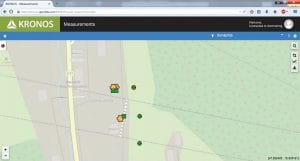
Figure 3: Web interface of the UrbMics center, map showing 3 UrbMics boxes and 6 sensor positions).

Outlook

Austria, as one of the founding members of Eureka, takes over the chairmanship of the network in 2020/2021 and will pave the road “Towards a New Eureka”. Accordingly, in the upcoming year the network will prioritise the further development of Eureka’s programmes, global outreach and internal cooperation. All core activities of the Austrian Chairmanship are built around the celebration of 35 years of Eureka. Thereby, one of the important topics is the revitalization of the Eureka Clusters. The goal is to renew the successful Eureka Clusters model to provide the best opportunities for global RDI in the time to come. Likewise, at FFG we look ahead to a bright future with CELTIC-NEXT and the projects generated in this programme.

› Further information

› FFG website – https://www.ffg.at/en

› CELTIC project ASUA – https://www.celticnext.eu/project-asua/

5G-PERFECTA

5G and next generation mobile performance compliance testing assurance

Antonio Cuadra-Sánchez
Indra Minsait

The 5G-PERFECTA project has developed a 5G performance compliance testing assurance solution that measures the KPIs to show the real behavior of 5G network and services.

The challenge of CELTIC-NEXT project 5G-PERFECTA has been to develop the technology to assure the 5G service quality based on data processing, that is, to guarantee that the quality of 5G networks is aligned with the expectations of bandwidth, latency and other key performance indicators. A series of innovation activities have been settled in order to establish a reference architecture for supervising 5G networks by means of monitoring techniques that measure 5G performance indicators to evaluate the real performance of 5G networks. The consortium, led by Indra Minsait, gathers 16 partners from Industry & Telco, Research Centers, Academia and SMEs of Poland, Portugal, Spain, Sweden, and Turkey.

Motivation

The 5G infrastructure will deliver solutions, architectures, technologies and standards for the ubiquitous 5G communication infrastructures of the next decade. The following parameters are indicative of the new network characteristics to be achieved at an operational level: 10 times to 100 times higher typical user data rate and End-to-End latency of < 1ms. This new high-performance network needs to be effectively tested to assure that 5G technology is actually offered with high quality levels. For this purpose, we have developed a 5G performance compliance testing assurance solution that calculates KPI (Key Performance Indicators) to show the real behavior of 5G network and services. In addition, we have developed automated processes, tools and mechanisms ensuring 5G service quality, based on data processing and analytics approaches.

Scenarios and use cases

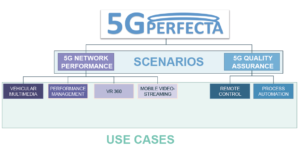
We have defined two main project scenarios and six use cases. The 5G Network Performance scenario provides the performance monitoring information and includes the testbed and measurement scope for 5G network performance analysis. The 5G Quality Assurance scenario provides the quality of service monitoring information, including the time-sensitive networking mechanisms, the deployment of critical services with performance guarantees, and the QoS observability for 5G. See in figure 1 the project scenarios and use cases.


5G-PERFECTA scenarios and use cases

Impact

The 5G performance compliance testing assurance solution will help the digital providers (operators, service providers, applications providers, etc.) to evaluate how next generation services are performed on the 5G networks for different purposes: measuring of 5G network performance, validating the services on 5G networks, monitoring the QoS and QoE, launching of new applications, etc. In addition, there is a very strong focus on end users in 5G PERFECTA, since they are the ones who really benefit from the correct behaviour of the 5G network. For this purpose, we have considered the end-user perspective in the analysis of the performance of services on 5G networks.

Conclusion

The project will provide capabilities that improve efficiency in content delivery by means of user-oriented quality assurance capabilities, which will be able to impact a significant part of the 5G revenues expected for the following years. The outcomes of this project will allow network and service providers to deploy the right 5G infrastructure to run the most advanced video technology business cases before final 5G standardization is complete.

5G-PERFECTA will provide a monitoring platform that delivers real measurements of several new feasible services over the new generation networks, including beyond 4G and the 5G network, tested on a real infrastructure. These performance indicators will allow to determine the suitability of new mobile infrastructures, including 5G to support next generation applications in mobility, such as remote driving, medical care, logistics, retail, Smart Cities, Industry 4.0, etc.

You can find more information on 5G-PERFECTA at https://www.celticnext.eu/project-5g-perfecta/.

Public Authorities

This project has been co-funded in Spain by the Centro para el Desarrollo Tecnológico Industrial (CDTI), in Sweden by Vinnova, in Portugal by Portugal 2020, in Poland by Narodowe Centrum Badań i Rozwoju and in Turkey by Tübitak.

More synergies and global cooperation in Eureka

Interview with Eureka Chairman Ulrich Schuh

On 1st July, Austria took over the Eureka Chairmanship for one year – already for the second time in the 35-year history of Eureka. The ambitious motto of the Austrian Chairmanship is ‘‘Towards a New Eureka’’. CELTIC News editor Milon Gupta asked Eureka Chairman Ulrich Schuh from the Austrian Research Promotion Agency (FFG), which hosts the Chairmanship on behalf of the Ministry for Digital and Economic Affairs, about the am­bitions and plans behind this motto.

Which challenges and opportunities do you see for Eureka today and tomorrow?

U. Schuh: Since the foundation of Eureka, the world has changed fundamentally and also the conditions for international cooperation in the field of innovation. Eureka faces the challenge that member countries currently have a wide set of opportunities at hand that allow the support of innovative companies at European and global level. So Eureka has to prove its added value. At the same time, the model of Eureka that is based on the principle of variable geometry and a decentralised ­organisation is more modern than ever. This has allowed Eureka to become a truly global organisation with 47 countries in its network.

What are the main priorities of the ­Austrian Eureka Chairmanship?

U. Schuh: The Austrian Chairmanship is guided by the slogan ‘New Eureka’, which is also the headline of the new Strategic Roadmap approved during the last Dutch Chairmanship. We have three priorities. First, new instruments will be launched during this year: the new Eurostars Partnership with the European Commission and especially the New Clusters Programme. Second, Austria will intensify and enlarge global cooperation within Eureka. We are proud to welcome Singapore to our network during our Chairmanship. Third, we will improve our services for our stakeholders and want to encourage all ­Eureka countries to be even more engaged
in the activities of our network.

Which enhanced roles do you anticipate for the current Eureka Clusters in the new Eureka Clusters Programme?

U. Schuh: The Clusters are a success story of Eureka, but we have also understood that the potential of the Clusters programme has not yet been fully exploited. In order to boost the impact of the Clusters, we want to increase their visibility to potential stakeholders and
to use synergies to improve efficiency and ­effectiveness. Visibility will be enhanced by synchronised thematic calls developed in cooperation with the existing Cluster communities. Synergies will be realised by the close cooperation of Cluster Communities through a multi-annual strategy and an annual work programme. The synchronised Call on Artificial Intelligence is a first successful pilot in this respect.

How is the involvement of non-Euro­pean countries like Canada and Korea enhancing the Eureka network?

U. Schuh: At its foundation, Eureka allowed Member States of the European Union to benefit from cooperation with EFTA countries in order to establish a Western European alternative in research, development and innovation to global competitors. Meanwhile, Eureka is a truly global organisation with 47 countries. The non-European Eureka countries have proven to be an essential asset of ­
Eureka. Korea became a partner country in 2017; Canada is also very active and has for example initiated the COVID-19 ECHO call in April this year. Also, our other associated countries – South Africa, Chile and Argentina – are reliable partners in the Eureka family.

How should the Eureka programmes add value in the evolving European and global innovation landscape?

U. Schuh: After 35 years the Eureka model of cooperation is more relevant than ever. The most pressing current challenges of countries in Europe and all over the world are the
COVID-19 pandemic and climate change. It is understood that these challenges cannot be solved at local, regional, national or even at European level. Here, global cooperation is ­inevitable, and this is true especially in the field of technology, where solutions have to be developed. Whenever two companies from two different countries are developing an R&D project, Eureka is the most suitable platform to support this initiative. We have the infrastructure in place, the available funding, efficient procedures, and via the Globalstars programme we reach out all around the world far beyond our current 47 countries.

Relaunch of CELTIC-NEXT in revised Eureka Clusters Programme

Ambitious roadmap for 2021 – 2025


Xavier Priem
Director CELTIC Office

CELTIC-NEXT has been relaunched with a new, ambitious roadmap as part of the revised Eureka Clusters Programme. The relaunch is very timely in a world of dramatic change that requires novel ICT solutions addressing the economic, societal, and environmental challenges the Eureka member states and the world as a whole are facing.

The revised Eureka Clusters Programme

The CELTIC-NEXT Cluster application for the four-year period 2021-2025 was accepted, together with the Multi-Annual Plan for the Eureka Clusters, on 18th June 2021. This concluded a relaunch process that had started in June 2020. The new Eureka Clusters model is meant to encourage industry-wide collaboration and the forming of new innovation ecosystems. The revised Eureka Clusters Programme aims to align and synchronise the Clusters’ processes.

Since June 2020, the Eureka Clusters had already intensified their joint and synchronised activities, most visibly through two jointly organised AI calls in 2020 and 2021, which both mobilised a substantial number of excellent project proposals.


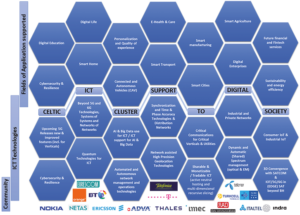
Topical areas of the CELTIC-NEXT Roadmap 2021–2025

Updated CELTIC-NEXT roadmap for 2021 – 2025

The theme of CELTIC-NEXT for the new period is: “Next-Generation Communications for a secured, trusted, and sustainable digital society”. All topics identified in the strategic roadmap of CELTIC-NEXT for the 2021–2025 period have been aligned under this theme. These topics are neither comprehensive nor prescriptive. In line with the bottom-up approach of CELTIC-NEXT, projects are free to explore any subject, as long as it is related to ICT and telecommunications.

A core part of the roadmap relates to the evolution of communication networks. The roadmap identifies the ongoing digitisation and automation of many aspects of our lives as fundamental drivers for transforming the communications network architecture and functionality. The shift to automation of everything is driven by current enabling technology trends like cloud-based services with dynamic, adaptive scaling, extensive virtualisation, novel software-defined automated solutions and ever-increasing wireless connectivity with a great promise of 5G, Beyond 5G, and the nascent 6G, and will require a redefinition of networking concepts and a new digital infrastructure involving radical shifts in technologies, architectures and business models to meet future digital needs.

The roadmap highlights a number of important trends and requirements expected to shape the projects and results of the CELTIC-NEXT Cluster in the coming years, including: pervasiveness, almost infinite network capacity, imperceptible latency, tera-scale things, cognitive operations, and perpetual protection.

Addressing the digital needs will require significant changes in network architecture and technology. Nine dimensions are identified in the roadmap towards an end-to-end convergent network architecture: 1. Massive-scale access, 2. Converged edge cloud, 3. Smart network fabric, 4. Universal adaptive core, 5. Programmable network operating system, 6. Network slicing, 7. Augmented cognition systems, 8. Digital value platforms, and 9. Dynamic data security.

Further related areas of the roadmap beyond communication networks in the narrow sense include: cybersecurity, artificial intelligence and big data, ICT solutions for sustainability, ICT-enabled health and wellness, new solutions for consumption and production, smart cities and smart territories, smart transport, smart energy, smart agriculture, smart home and smart building, digital enterprise and digital education, content, entertainment and gaming, fintech, and digital life services.

Many of the topics identified in the roadmap go across several Eureka Clusters, which is intentional, as ICT is at the core of innovation in all vertical sectors. In line with the concept of the revised Cluster Programme, CELTIC-NEXT will use these cross-Cluster topics as opportunities for creating synergies and increasing impact across the whole programme. Only in this way can CELTIC-NEXT and the other Clusters in the programme continue delivering top-level industry-driven innovations addressing the needs of economy, society and environment. In line with this cross-Cluster collaboration spirit, CELTIC-NEXT is one of three Core Technologies Clusters, together with partner Clusters ITEA (software) and Xecs (hardware). As a Pillar Cluster, CELTIC-NEXT supports the two more application-based Clusters EUROGIA2020 (low-carbon energy technologies) and SMART (manufacturing).

Excellence targets

CELTIC-NEXT has defined a set of excellence targets in order to keep its activities focused on achieving substantial measurable impacts. These targets are divided into three areas:

1. Technical excellence targets
› Accelerate the deployment and take-up of new advanced end-to-end ICT services, employing the new network concepts of 5G and leading to the implementation of 6G in Europe
› Actively facilitate the adoption of those ICT technologies by all targeted Verticals into their communities, business models and processes

2. Economic excellence targets
› Consolidate the position of European ICT manufacturers and service providers within Europe and on the global market
› Contribute to all Eureka Communities tackling the technological and socio-economic challenges in a holistic way by considering the end-to-end perspective of new communications solutions

3. Societal and environmental excellence targets
› Investigate where advanced communications can reduce carbon footprints for many vertical sectors
› Assist European nations and industry to access the societal benefits and returns of being at the forefront of the new digital society
› Consolidate the European sovereignty in ICT technologies and services as well as other critical infrastructures relying on ICT infrastructures, like the Energy Grid

These targets are highly ambitious and require close collaboration between the private and the public sector. The revised Eureka Clusters Programme provides the structure and the ecosystem to achieve them.

VIRTUOSE

Virtualized video services

Serhan Gül
Fraunhofer HHI

Mehmet Dagli
Netas

Tiia Ojanperä
VTT Technical Research Centre of Finland Ltd.

The motivation for CELTIC project VIRTUOSE was to develop video services that are scalable, secure and easily deployable on different computing platforms. This was achieved by using cloud computing and virtualization techniques for deployment of video services in order to realize different core use cases.

The three-year project (2016-2019) contributed to several R&D areas in the context of the core use cases. VIRTUOSE was a joint undertaking of 19 industrial and research partners from five European countries: Finland, Germany, Romania, Spain and Turkey. Nokia was the project coordinator and VTT the technical coordinator in VIRTUOSE.

Approach

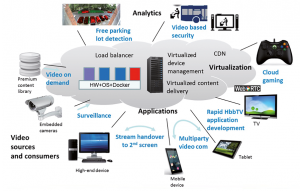
The four core use cases studied during the project were: cloud gaming, multiparty video communications, video transcoding & distribution, and video analytics. These video services benefitted from virtualized components and a common system architecture, allowing easy and dynamic video service deployment and scaling. Within the work areas, several sub-use cases were analysed and their implementations showcased in the form of demonstrators.

Novel cloud computing techniques, consisting of virtualization solutions, such as KVM, and Linux containers, such as Docker and LXC, were used to containerize the video services. Rancher was deployed to manage containerized service instances. In this manner, the VIRTUOSE architecture is able to ­offer solutions to the trade-off between ­distribution of the computation and locali­zation of the data, as well as making the source code portable to different virtualized platforms.


The figure shows the applicationes targeted by VIRTUOSE and a common framework for their realization.

Achieved results

The main results of the VIRTUOSE project include a common architecture for the different core use cases and virtualized components for video coding, analysis and streaming that can be easily deployed, maintained and scaled using lightweight containers. The project advanced the state-of-the-art through several algorithmic and system-level contributions in different domains.

For the cloud gaming use case, a low-­latency video encoder was developed using a low-complexity approach called logarithmical hopping encoding (LHE). The implementation was published as open source and integrated in the popular multimedia framework FFmpeg. For the video transcoding & distribution use case, Docker was used to containerize different video services and showcase a scenario where a video service provider sets up a new video distribution service for end users. In the developed demonstrator, video is transcoded in real-time, streamed over a content delivery network (CDN), and accessed with a HbbTV compatible set-top box. Virtualizing different components of the processing and transmission chain significantly advanced the flexibility, time to market and scalability of video-on-demand (VoD) services.

For the multiparty video communications, a new motion adaptive layer selection algorithm was developed, which provides continuous video delivery and highly increased quality of experience (QoE), especially on high motion activity video streams. Furthermore, an adaptive approach was ­adopted, in which containers for video conferencing services are scaled based on the number of participants. Efforts in the video analysis were focused on the development of low-complexity algorithms and approaches based on neural networks that provide high accuracy. Specifically, an object tracking algorithm was developed that operates ­directly on compressed video data, and a new approach for object detection was developed that allows weakly-supervised training using transfer learning and synthetically generated training data. Several analysis algorithms were integrated into a virtualized platform for camera-based vehicle management in challenging parking lot environments.

Live demonstrators were showcased in both project-specific and public events. The VIRTUOSE consortium also actively disseminated the results in scientific, industrial and standardization forums.

Conclusion

VIRTUOSE contributed to several R&D areas, ranging from computing, telecommunication and image processing to artificial intelligence and neural networks, thanks to the wide coverage of the considered use cases. Development of a new low-latency video encoder for cloud gaming, VoD service streaming through CDN by using virtualized components for ­video encoding and distribution, introduction of a new motion adaptive layer selection algorithm for video conferencing and low complexity algorithms based on neural networks for video analysis were the main achievements. The project also conducted successful demonstration, dissemination and exploitation activities, including scientific and technical papers, patents applications, master and PhD studies and participation to a number of events and exhibitions.

› Further information

› VIRTUOSE project page – http://www.tut.fi/virtuose/

4KREPROSYS

4K ultra-HD TV wireless remote production systems

Anthony Convers
HEIG-VD/REDS

Romuald Mosqueron
HEIG-VD/REDS

Marco Mattavelli
SCI-STI-MM/EPFL

The CELTIC project 4KREPROSYS developed a new integrated cost-effective approach for the production of 4K TV content. The solution is capable of covering the needs from indoor studio production up to difficult mobile outdoor production at large events. High-performance video compression for low-bandwidth usage, remote production capabilities and “all-IP” connectivity are the principle of the solution.

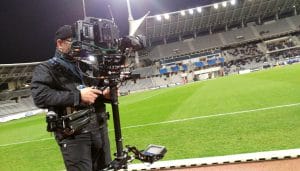
The production system was built by ­developing an integrated IP-based wireless system that can be used in the event production venues to capture audio-visual ­content in HD and Ultra-High Definition (UHD), including High Dynamic Range (HDR) formats ideal for covering large-scale sporting events, which require high outdoor ­mobility, with state-of-the-art image quality.

Main goals

The evolution of multimedia content and ­associated services towards improved user experience must rely on higher resolutions and more immersive and interactive formats. However, this is only possible if the production of such contents is economically viable and fully compatible and scalable with the production of traditional content formats. Previous production technologies and systems were the results of an “ad-hoc patchwork” of different components based on often non-compatible or non-appropriate legacy technologies that need to be integrated with difficulties and deployed in the field with very heavy and costly logistic means. New emerging and powerful technologies such as MPEG HEVC video compression, Internet/IP based wired and wireless connectivity with high bandwidth and low latencies, provided the motivation to re-think and re-design the essential components of TV content production infrastructures in a unified integrated ­approach.

The project focused its investigations and developments on the integration of MPEG HEVC and IP-based communications carrying content and service signals for both wireless and wired production components. The goals were to study, develop and experiment in the field production systems that support high performance (i.e. very high bitrates) for high-quality UHD and advanced multi-view formats, including high robustness for reaching high levels of reliability for indoor and highly mobile outdoor settings. Major challenges were to implement very powerful processing systems in compact and battery-operated assemblies. Moreover, the systems were required to answer to the new location approach of the TV studio infrastructure, ­traditionally deployed in the field, which is becoming a “virtual” component that can be locally or remotely deployed according to the best logistic (i.e. economical) solution for the specific production operation.


New HEVC low-delay wireless system used during FIFA world cup

Approach

The technologies developed to design the new 4K production systems are:

› Ultra-low latency MPEG HEVC encoding and decoding (the only compression standard that provides the necessary performance to compress 4K TV signals to reasonable bitrates with full studio quality).

› Low-latency IP-based wired and wireless communication links for local and remote production for both audio-video UHD and service signals.

› Low latency switching and synchronization of compressed streams without packet loss for the mixing and multiplexing of wired and wireless content and service streams.

› Low-latency content protection for on-line encryption of compressed streams.

Main results

The new audio-video codecs and wireless transmitters developed by the project made possible to master a complete RF recording & transmission infrastructure supporting 4UHD resolution. Another innovation on the production side was the approach based on integration and transmission of IP signals for both content and services. Multiplexing of audio, video and service data managed at the very beginning of the chain enabled the reduction of the number of frequencies needed for production events. By realizing robust and reliable bi-directional full-IP connectivity, the project has made it possible to deploy production configurations with full remote studio control.

Applied to a post-production distribution chain, the technologies developed in 4KReProSys can also be used for increasing QoE in broadcast services and support new contribution concepts.

Conclusion and outlook

The major result of the project is a fully integrated production system, controlled by a ­remote studio via a low-band width communication infrastructure, for the production of UHD TV resolutions capable of covering highly mobile outdoor sport events. In July 2018, AMP-VISUAL-TV was able to set up and manage with full success the transmission of all wireless 4K cameras used for one month to cover 12 stadiums during the FIFA World Cup event in Russia.

The most visible European business perspective will be the possibility of all television and production companies to profit from the new 4K wireless and all-IP production capabilities associated to the new low-bandwidth remote production possibilities.

For the results achieved, the 4KReProSys consortium won a prestigious European ­distinction, the CELTIC Excellence Award for Multimedia.

› Further information

› 4KReProSys project page – https://www.celticnext.eu/project-4kreprosys/

  • Previous
  • 1
  • 2
  • 3
  • 4
  • ...
  • 7
  • Next

5Copyright © 2025 by Eurescom

 
  • Corporate Information
  • Data Protection Declaration
  • Terms of Use
  • Corporate Information
  • Data Protection Declaration
  • Terms of Use