Skip to content
  • About Us
    • Company Profile
    • Our Team
    • Shareholders & Members
    • Opportunities
  • Services
    • Launch of Industry-Driven R&D Initiatives
    • Securing of Research Funding
    • Management of European R&D Projects
    • Management of European R&D Programmes
    • Studies on Strategic Topics in ICT
  • EuresTools®
    • EuresTools Reporter
    • EuresTools Tracker
    • EuresTools Workspace
    • EuresTools Website
    • EuresTools Conferencing
    • EuresTools Mailing List
    • EuresTools Pricing
  • Projects
    • Ongoing Projects
    • Past Projects
  • News
    • News
    • Events
    • Eurescom message
  • Contact
    • Travel information
    • Location
×
Linkedin Youtube
 

VIRTUOSE

Virtualized video services
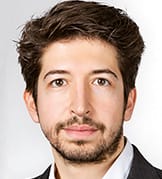
Serhan Gül
Fraunhofer HHI
serhan.guel@hhi.fraunhofer.de
Mehmet Dagli
Netas
mdagli@netas.com.tr
Tiia Ojanperä
VTT Technical Research Centre of Finland Ltd.
tiia.ojanpera@vtt.fi

The motivation for CELTIC project VIRTUOSE was to develop video services that are scalable, secure and easily deployable on different computing platforms. This was achieved by using cloud computing and virtualization techniques for deployment of video services in order to realize different core use cases.

The three-year project (2016-2019) contributed to several R&D areas in the context of the core use cases. VIRTUOSE was a joint undertaking of 19 industrial and research partners from five European countries: Finland, Germany, Romania, Spain and Turkey. Nokia was the project coordinator and VTT the technical coordinator in VIRTUOSE.

Approach

The four core use cases studied during the project were: cloud gaming, multiparty video communications, video transcoding & distribution, and video analytics. These video services benefitted from virtualized components and a common system architecture, allowing easy and dynamic video service deployment and scaling. Within the work areas, several sub-use cases were analysed and their implementations showcased in the form of demonstrators.

Novel cloud computing techniques, consisting of virtualization solutions, such as KVM, and Linux containers, such as Docker and LXC, were used to containerize the video services. Rancher was deployed to manage containerized service instances. In this manner, the VIRTUOSE architecture is able to ­offer solutions to the trade-off between ­distribution of the computation and locali­zation of the data, as well as making the source code portable to different virtualized platforms.
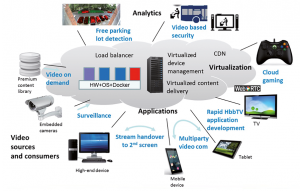

The figure shows the applicationes targeted by VIRTUOSE and a common framework for their realization.

Achieved results

The main results of the VIRTUOSE project include a common architecture for the different core use cases and virtualized components for video coding, analysis and streaming that can be easily deployed, maintained and scaled using lightweight containers. The project advanced the state-of-the-art through several algorithmic and system-level contributions in different domains.

For the cloud gaming use case, a low-­latency video encoder was developed using a low-complexity approach called logarithmical hopping encoding (LHE). The implementation was published as open source and integrated in the popular multimedia framework FFmpeg. For the video transcoding & distribution use case, Docker was used to containerize different video services and showcase a scenario where a video service provider sets up a new video distribution service for end users. In the developed demonstrator, video is transcoded in real-time, streamed over a content delivery network (CDN), and accessed with a HbbTV compatible set-top box. Virtualizing different components of the processing and transmission chain significantly advanced the flexibility, time to market and scalability of video-on-demand (VoD) services.

For the multiparty video communications, a new motion adaptive layer selection algorithm was developed, which provides continuous video delivery and highly increased quality of experience (QoE), especially on high motion activity video streams. Furthermore, an adaptive approach was ­adopted, in which containers for video conferencing services are scaled based on the number of participants. Efforts in the video analysis were focused on the development of low-complexity algorithms and approaches based on neural networks that provide high accuracy. Specifically, an object tracking algorithm was developed that operates ­directly on compressed video data, and a new approach for object detection was developed that allows weakly-supervised training using transfer learning and synthetically generated training data. Several analysis algorithms were integrated into a virtualized platform for camera-based vehicle management in challenging parking lot environments.

Live demonstrators were showcased in both project-specific and public events. The VIRTUOSE consortium also actively disseminated the results in scientific, industrial and standardization forums.

Conclusion

VIRTUOSE contributed to several R&D areas, ranging from computing, telecommunication and image processing to artificial intelligence and neural networks, thanks to the wide coverage of the considered use cases. Development of a new low-latency video encoder for cloud gaming, VoD service streaming through CDN by using virtualized components for ­video encoding and distribution, introduction of a new motion adaptive layer selection algorithm for video conferencing and low complexity algorithms based on neural networks for video analysis were the main achievements. The project also conducted successful demonstration, dissemination and exploitation activities, including scientific and technical papers, patents applications, master and PhD studies and participation to a number of events and exhibitions.

› Further information

› VIRTUOSE project page – http://www.tut.fi/virtuose/
4KREPROSYS

4K ultra-HD TV wireless remote production systems

Anthony Convers
HEIG-VD/REDS
anthony.convers@heig-vd.ch

Romuald Mosqueron
HEIG-VD/REDS
romuald.mosqueron@heig-vd.ch

Marco Mattavelli
SCI-STI-MM/EPFL
marco.mattavelli@epfl.ch

The CELTIC project 4KREPROSYS developed a new integrated cost-effective approach for the production of 4K TV content. The solution is capable of covering the needs from indoor studio production up to difficult mobile outdoor production at large events. High-performance video compression for low-bandwidth usage, remote production capabilities and “all-IP” connectivity are the principle of the solution.

The production system was built by ­developing an integrated IP-based wireless system that can be used in the event production venues to capture audio-visual ­content in HD and Ultra-High Definition (UHD), including High Dynamic Range (HDR) formats ideal for covering large-scale sporting events, which require high outdoor ­mobility, with state-of-the-art image quality.

Main goals

The evolution of multimedia content and ­associated services towards improved user experience must rely on higher resolutions and more immersive and interactive formats. However, this is only possible if the production of such contents is economically viable and fully compatible and scalable with the production of traditional content formats. Previous production technologies and systems were the results of an “ad-hoc patchwork” of different components based on often non-compatible or non-appropriate legacy technologies that need to be integrated with difficulties and deployed in the field with very heavy and costly logistic means. New emerging and powerful technologies such as MPEG HEVC video compression, Internet/IP based wired and wireless connectivity with high bandwidth and low latencies, provided the motivation to re-think and re-design the essential components of TV content production infrastructures in a unified integrated ­approach.

The project focused its investigations and developments on the integration of MPEG HEVC and IP-based communications carrying content and service signals for both wireless and wired production components. The goals were to study, develop and experiment in the field production systems that support high performance (i.e. very high bitrates) for high-quality UHD and advanced multi-view formats, including high robustness for reaching high levels of reliability for indoor and highly mobile outdoor settings. Major challenges were to implement very powerful processing systems in compact and battery-operated assemblies. Moreover, the systems were required to answer to the new location approach of the TV studio infrastructure, ­traditionally deployed in the field, which is becoming a “virtual” component that can be locally or remotely deployed according to the best logistic (i.e. economical) solution for the specific production operation.


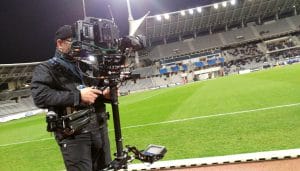
New HEVC low-delay wireless system used during FIFA world cup

Approach

The technologies developed to design the new 4K production systems are:

› Ultra-low latency MPEG HEVC encoding and decoding (the only compression standard that provides the necessary performance to compress 4K TV signals to reasonable bitrates with full studio quality).

› Low-latency IP-based wired and wireless communication links for local and remote production for both audio-video UHD and service signals.

› Low latency switching and synchronization of compressed streams without packet loss for the mixing and multiplexing of wired and wireless content and service streams.

› Low-latency content protection for on-line encryption of compressed streams.

Main results

The new audio-video codecs and wireless transmitters developed by the project made possible to master a complete RF recording & transmission infrastructure supporting 4UHD resolution. Another innovation on the production side was the approach based on integration and transmission of IP signals for both content and services. Multiplexing of audio, video and service data managed at the very beginning of the chain enabled the reduction of the number of frequencies needed for production events. By realizing robust and reliable bi-directional full-IP connectivity, the project has made it possible to deploy production configurations with full remote studio control.

Applied to a post-production distribution chain, the technologies developed in 4KReProSys can also be used for increasing QoE in broadcast services and support new contribution concepts.

Conclusion and outlook

The major result of the project is a fully integrated production system, controlled by a ­remote studio via a low-band width communication infrastructure, for the production of UHD TV resolutions capable of covering highly mobile outdoor sport events. In July 2018, AMP-VISUAL-TV was able to set up and manage with full success the transmission of all wireless 4K cameras used for one month to cover 12 stadiums during the FIFA World Cup event in Russia.

The most visible European business perspective will be the possibility of all television and production companies to profit from the new 4K wireless and all-IP production capabilities associated to the new low-bandwidth remote production possibilities.

For the results achieved, the 4KReProSys consortium won a prestigious European ­distinction, the CELTIC Excellence Award for Multimedia.

› Further information

› 4KReProSys project page – https://www.celticnext.eu/project-4kreprosys/

High number of proposals in ­Eureka Clusters AI Call 2021

The second Eureka Clusters AI Call, which was launched on 1st March, has attracted a high number of project proposals. By the deadline of 28th June, 43 proposals had been submitted. These proposals represent a total commitment of 2,518 person years by international researchers and developers from large enterprises, SMEs, research & technology organisations, and academia.

The aim of this Call is to boost the productivity and competitiveness of European industries through the adoption and use of AI systems and services. 14 Eureka countries have allocated budget to support ground-breaking Artificial Intelligence innovations. The Call has been jointly organised by the following Eureka Clusters: CELTIC-NEXT, EUROGIA, ITEA, PENTA–EURIPIDES, and SMART. For 9 of the submitted proposals, CELTIC-NEXT has been selected as the primary Cluster. For 6 additional proposals, CELTIC-NEXT has been selected as the secondary Cluster. This means that CELTIC-NEXT has been selected in more than a third of the proposals among the 5 Clusters.

The proposals are now being evaluated. Results are expected to be known by the end of September.

› Further information

Eureka Clusters AI Call website – https://eureka-clusters-ai.eu

6 new projects received CELTIC-NEXT label

In the CELTIC-NEXT Spring Call 2021, 10 validated proposals submitted by 12th April 2021 got selected in the evaluation process, and out of them 6 new projects received the CELTIC-NEXT label.

The labelled projects are now eligible for funding by the project partners’ national funding bodies.

The consortia of the six projects include a total number of 76 partner organisations from 12 countries, ranging from leading industry players to SMEs and academic institutions.

The six projects include the following topics:

› 6G for Connected Sky
› Massive IoT over High Density LoRaWan Networks
› Ultra Scalable Wireless Access
› AI-Powered Communication for Health Crisis Management
› Federated AI Platform for Industrial Technologies
› Cloud-based Online Access to Computational Fluid Dynamic Simulations

As soon as the funding for the new projects is confirmed and they are ready to start, each of them will be presented on the CELTIC-NEXT website (www.celticnext.eu).

Health5G

Healthcare Transforming with 5G Wireless Tech


Javier Gavilanes
Experis
javier.gavilanes@experis.es

Gema Maestro
Experis
gema.maestro@experis.es


Barış Bulut
Enforma, Turkey
baris@enforma-tr.com

The advent of advanced mobile sensing and data processing technologies is a major driver in the transformation of many verticals including the healthcare sector. This shift is further accelerated due to societal changes including ageing populations and increasing global healthcare expenditures.

The three-year CELTIC project Health5G ran from 2019 to 2021, and it successfully aimed to discover healthcare scenarios that could bank on technological advancements especially in 5G mobile technologies.

Eureka Clusters like CELTIC-NEXT traditionally support high technology readiness level (TRL) outcomes. Obtaining results with a successful technology-market fit was ensured by the diverse skillsets of the 26 partners from 6 countries.

Approach

There can be a multitude of scenarios in healthcare. The project team started out by splitting all potential scenarios into three groups:

1. Healthcare at hospital: Advancements in sensing, connectivity, and AI lead to improvements in existing hospital-based patient treatments, resulting in more accurate, personalised, and trackable treatments for patients. Here, we worked on several interesting hospital use case scenarios.

2. Healthcare at home: Technological developments and ageing populations are enabling all patients, especially the elderly and the vulnerable, to be taken care of – not only at hospitals, but also at the comfort of their homes. In Health5G, we addressed this set of scenarios under what we called ‘Healthcare at home’.

3. Emergency healthcare: Ubiquitous connectivity and improved sensing & AI technologies were used in emergency scenarios to improve impacts of first aid and reduce fatalities. The results were studied in Health5G under emergency scenarios.

Such a discrete and upfront split provided a more systematic way by generating unique focal points to the consortium partners. Consequently, all the undertaken work would fit into one of the three categories of healthcare, whereby the pilots would also be designed accordingly.

These scenarios were considered with three different priorities in mind, the three pillars:

1. Patient healthcare: Medical centres and scenarios in which healthcare service is given and/or where healthcare workers are.

2. 5G wireless technology: The combination of several technological layers that leads to a commercial 5G signal, making the services available anywhere at any time to anyone.

3. Healthcare technologies: All the tech companies and researchers that do not necessarily provide healthcare but are the cogs in the healthcare machine, as they provide the underlying applications, data management, and security & privacy technologies.


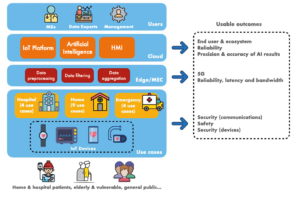
Illustration of the Health5G conceptual architecture

Achieved results

Typical CELTIC projects deliver results close to market. Hence, creating use cases with a storyline supported by partners in a meaningful value chain was considered key to success. Indeed, Health5G concluded with six country pilots and a seventh demo on the overarching topic of cybersecurity:

› Swedish Country Pilot: Patient Home Care – Integrated Swedish Demonstration
› German Country Pilot: Zero Touch Infrastructure Orchestration for Emergency Services
› Korean Country Pilot: Wireless Patient Monitoring Inside Hospitals
› Turkish Country Pilot: Healthcare at Hospital and at Home
› Spanish Country Pilot: Gait Monitoring System and Automatic Deployer by Experis
› Irish Country Pilot: Wearable Video from Paramedic to Hospital
› Cybersecurity Pilot: Sirena – Security and Cybersecurity Tool

With the addition of smaller scale PoC demonstrations, the project generated 34 public demo videos.

On the exploitation front, Health5G outcomes already started turning into further R&I projects, postgraduate subjects, field trials, or in some cases purchase orders. As for dissemination, the statistics reveal 67 journal and conference papers, 10 conference, session or track organisations, 37 stakeholder value workshops, 2 standardisation contributions, and 5 press releases. So far as standardisation goes, the main emphasis was on compliance. Standards for wireless technologies (5G), security & privacy, and medical devices were carefully studied and understood by the consortium. Of secondary priority, contribution to standards was a topic where preparations were completed for proposing changes to the O-RAN standard.

Conclusion and outlook

During Healht5G, the consortium took valuable steps to reap rewards of 5G wireless technologies and advanced medical applications that rely on ubiquitous sensing and computing. A careful analysis of the needs of patients and healthcare providers will help pave the way for healthcare services of the future.

› Further information

Healht5G project website – https://health5g.eu

CELTIC Health5G project Healthcare 5G Wireless Tech

Memorandum of Understanding with 6G-IA signed

Collaboration for faster terrestrial and non-terrestrial convergence


On 4th April 2022, Eureka Cluster CELTIC-NEXT and the 6G Smart Networks and Services Industry Association (6G-IA) signed a Memorandum of Understanding (MoU), which aims at establishing synergies and complementary activities in collaborative ICT research. The MoU will help foster economic growth and jobs through coordinated R&D&I activities and the commercial exploitation of generated results. The collaboration aims to leverage the complementarity of 6G-IA and CELTIC-NEXT and build on synergies to maximise the return on investment and to support achieving the UN Sustainable Development Goals.

ICT has become, more than ever, a pillar of sovereignty and resiliency in the rapidly changing social, political and economic environment of today and its regional battlefields. The Russian war against Ukraine as well as the measures against the COVID-19 pandemic have shown how critical it is to count on both terrestrial and non-terrestrial ICT services, as together they constitute one of the critical infrastructures of a country, especially considering the digitalisation of the society and the vertical industries.

Therefore, it is mandatory to increase and leverage to its maximum the European and allied countries’ funding to reach a critical mass of R&D&I and a faster time-to-market for the European countries and their allies’ ICT industry.

This Memorandum of Understanding provides the platform for leveraging on each signatory’s strengths and cooperation, to support sovereignty and resiliency for Europe and allied countries.

The purpose of this MoU is to set out a simple framework where the signatories can identify the complementary nature of their respective objectives and to identify and implement shared activities that benefit both initiatives and contribute to the achievement of their goals.

The signatories aim to leverage the diversity of 6G-IA and CELTIC-NEXT as well as the fact that their projects are somewhat sequential in terms of their Technology Readiness Levels (TLRs), to maximise the return on the respective investments and increase the impact on the Sustainable Development Goals.

The signatories will focus on encouraging cross-programme discussions and workshops on potential technology pathfinders and solutions, with a view to stimulating a pipeline of new projects for both initiatives and sharing reciprocal contributions to each other’s Strategic Research and Innovation Agenda (SRIA) documents.

The focus of the cooperation is to stimulate the respective communities to consider the issues in a holistic way considering the “end-to-end” perspective of the new communications services being enabled by 5G and 6G technologies, as well as developing an understanding of the economic, environmental, and societal benefits.

How the MoU will be implemented

To support the achievement of their common objectives, the signatories intend to:

› Create awareness and promote opportunities for collaboration within and across the respective communities
› Consult mutually on their SRIAs
› Collaborate on the organisation and execution of activities with a view to reaching the common objectives identified
› Participate in and support suitable events organized by the other signatory
› Plan and manage joint activities in areas of common interest in line with the signatories’ respective legal frameworks
› Undertake joint communication, as appropriate
› Leverage their relevant resources and expertise necessary to ensure the success of the common objectives
› Regularly review the effectiveness of this collaboration, with reference to the priorities agreed

Conclusion

This MoU is the second of a series of new collaborations for CELTIC-NEXT. This fulfils the objectives set by CELTIC-NEXT’s Core Group to develop CELTIC-NEXT’s support to and impact for the ICT community by enriching its DNA with new verticals and communities. The 6G-IA community is also eager to collaborate more with the CELTIC ICT community. This MoU offers the perfect playground for both communities to meet and work together on strategic topics and projects.

Eureka CELTIC 6G-IA

The Eureka CELTIC – ESA Space-ICT Programme

Enabling the faster convergence and development of terrestrial and non-terrestrial networks & services

On 22 November 2021, Eureka Cluster CELTIC-NEXT and the European Space Agency (ESA) signed a Memorandum of Intent (MoI) in Porto, Portugal, which aims to bring their respective communities closer together. The MoI will help to foster economic growth and jobs through coordinated R&D&I activities and the commercial exploitation of integrated space and terrestrial systems enabled by 5G and 6G. The collaboration aims to leverage the complementarity of ESA and CELTIC-NEXT and build on synergies to maximise the return on investment and to support achieving the UN Sustainable Development Goals.

In today’s rapidly changing political and economic environment and its regional battlefields, Space ICT has become, more than ever, a pillar for sovereignty and resiliency.

Space ICT is currently at the centre of attention for global industry and governments. On the economic side, new non-European entrants are currently disrupting the sector with Low-Earth-Orbit (LEO) satellites and High-Altitude Pseudo-Satellites (HAPS). On the political side, satellites, with all their potential missions and services, have shown to be essential assets for countries, not only for media broadcasting and observation, but also for connectivity to individuals and objects.

European industry and countries must defend their economic and political shares in Space ICT. European industry must be able to support European countries’ ICT & data sovereignty. Sovereignty cannot be achieved by purchasing and deploying equipment and services from foreign vendors that could fall under or are already under control of non-trustable governments.

Recent events in Eastern Europe have shown, how critical it is to count on both terrestrial and non-terrestrial ICT services, as together they constitute one of the critical infrastructures of a country, especially considering the digitalisation of the society and the vertical industries.

Therefore, it is mandatory to increase and leverage to its maximum the European and allied countries’ funding to reach the critical mass for R&D&I and a faster time-to-market for the European countries and allies’ ICT industry.


Eureka Chairman Miguel Bello Mora, Elodie Viau – Director of Telecommunications and Integrated Applications and Head of ECSAT at the European Space Agency (ESA), and CELTIC Office Director Xavier Priem

The central role of space and satellites

Space, satellites and alike play an extended and increasingly critical role in 5G, 6G and overall ICT services enabling the digital society.

Space and satellites had already an important role in the global ICT world for the economy, industry, and the people. They have already provided media broadcasting (TV), geo-positioning (GPS, GONASS, etc.), data links (backhauling and access), and telephony (satellite phones). For data links and telephony, they were mainly meant to provide those services in areas not well or at all covered by terrestrial networks, and recently also where high-data capacity was not needed. LEO fleets have somehow changed this perception by providing high-peak capacity over the coverage of one LEO satellite, with the foreseeable de-facto limitation of the maximum number of simultaneously attached users, as those share the same total LEO satellite bandwidth.

Since 5G and reinforced with 5G-Advanced, and the planned 6G, more industry verticals are getting digitalised, automated and autonomised, wireless connected instead of wired connected, or simply “connected”. People will expect that services delivered by those vertical industry sectors will be ubiquitous, always on and resilient. A good example is Connected and Autonomous Vehicles (CAV), being cars, trucks, terrestrial drones but also flying objects like future flying taxis, delivery drones, and more. 3GPP has now opened wider doors for the inclusion of SatCom besides the traditional backhauling role.

Space ICT remains a complex field with specifics in terms of operational conditions for R&D&I as well as field deployment.

Entry barriers to the Space ICT sector

Several factors create an often too high barrier to entry for new or small players originating from the terrestrial ICT sector to move their technologies and products to the space or third dimension:

› The specific space environment for radiations, dimensions and weight, power supply limitations (level and duration) implying very costly special hardware platforms, if they even exist
› The satellites‘ launch costs
› The inherent inaccessibility after launch in case of outages or upgrades poses challenges not existing for terrestrial network players
› And, moreover, the space and satellite technologies (platform, payload, antennas…) knowledge itself

For the existing actors from the space sector, they seek for more competencies in 3GPP technologies and closer integration with terrestrial actors.

What CELTIC-NEXT and ESA bring to the collaboration

ESA TIA ARTES and CELTIC-NEXT provide various funding instruments: Open Calls, ITT, PPP for ESA, and bottom-up, flagship and joint ECP calls for CELTIC-NEXT. By exposing those instruments to each other’s community and together, both organisations will provide a privileged forum for cross-fertilisation and collaboration of both communities, leveraging the different TRLs, funding schemes and public funding agencies across the large sum of their respective geographical coverages: the Eureka countries for CELTIC and the ESA countries, some being common and some being different. Some stakeholders are common to ESA and CELTIC-NEXT, but most are new to the other. Both organisations see high complementarity in joining forces to leverage the association of their respective assets, forces, and communities.

As Elodie Viau said at the MoI Signature ceremony in Porto: “ESA`s strategic programme line Space for 5G & 6G demonstrates the essential nature of satellites for 5G and 6G. It sets the standards and frameworks for systems and services interoperability, as well as the base for integrating terrestrial networks with satellites. We draw technology and product roadmaps; we support and foster the development of integrated satellite terrestrial systems and value-added services.”

What this collaboration will enable and what it will target

This MoI and the attached collaboration will enable the faster convergence and development of terrestrial and non-terrestrial network and service technologies in the innovative field of Space ICT, i.e., three-dimensional networking.

The MoI will focus on technology pathfinders and solutions to develop and validate research & development projects initiated by ESA and CELTIC-NEXT. In addition, the MoI includes the organisation of joint events as well as the dissemination of relevant information to terrestrial, non-terrestrial, and combined operators and vertical market stakeholders.

More specifically, the MoI will encourage terrestrial ICT and Space ICT industry collaboration with other industry verticals to facilitate the adoption of advanced Space ICT technologies in the business models and processes of all industry sectors. The focus of the cooperation is to consider the issues in a holistic way by considering the end-to-end perspective of new communications services enabled by 5G and 6G technologies, including an understanding of the economic, environmental, and societal benefits.

How it will be implemented

In a first phase, each organization will run its own funding instruments, with its own processes. This cooperation does not replace their respective funding programmes and instruments, but leverages them for identified synergies in terms of topics of interest or strategic goals for their communities.

Coordination on specific themes will be put in place. These themes, include, but are not limited to:

› Multi-layered Space ICT and Flying Objects Convergence
› Design and development of systems, subsystems and technology
› Networks and services conformance and interoperability tests
› Viable business ecosystem models
› Convergence and integration of terrestrial and non-terrestrial networks
› Frequency spectrum sharing between satellite networks and other satellite/terrestrial networks
› Network timing and synchronisation technologies
› Edge cloud computing
› Data driven (AI enabled) management
› Data curation technologies
› Digital twins

To support the achievement of their common objectives, the two organisations intend to:

› Share knowledge, ideas and lessons learned
› Create awareness and promote opportunities for collaboration
› Utilise and leverage their relevant resources and expertise necessary to ensure the success of the common objectives, in support of the activities initiated in the context of this cooperation
› Plan and manage jointly relevant activities in areas of common interest in line with the signatories’ respective legal frameworks
› Collaborate on the organisation and execution of activities with a view to reaching the common objectives identified
› Regularly attend meetings concerning the effectiveness of the collaboration, with reference to the priorities agreed
› Participate in suitable events organized by the other signatory
› Undertake joint communication, as appropriate, addressing the cooperation domains

Joint actions will be developed such as:

› Roadmapping
› Joint cross-community technology and strategy advisory boards
› Exchange on call dates and processes to anticipate best conditions for calls and participants
› Knowledge network creation and animation
› Joint working groups on specific topics across funded projects
› Joint webinars and workshops
› Promotion and provision of testbeds and trials platforms (R&D, integration, launch)
› Mutual advertisement of calls and bringing communities to jointly apply

The strategic technology calls and actions roadmaps are currently under development. CELTIC-NEXT is happy to receive your input and feedback to enrich its contribution to the joint work.


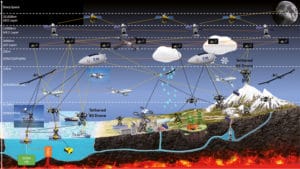
The new Space-ICT Programme – Targeting the global 3D Internet

Outlook

This MoI is the first of a series of new collaborations for CELTIC-NEXT. This fulfils the objectives set by CELTIC-NEXT’s Core Group to develop CELTIC-NEXT’s support to and impact for the ICT community by enriching its DNA with new verticals and communities. The space community is also eager to collaborate more with the terrestrial ICT community. This collaboration offers the perfect playground for both communities to meet and work together on strategic topics and projects. CELTIC-NEXT welcomes greatly the space community’s contribution to this strategic programme in terms of inputs to the roadmaps, participation to joint events and meetings, and proposals in the coming Space-ICT and 3D-NET focused calls to be announced soon.

CELTIC ESA Space-ICT Programme

Accelerating the digital transformation in Europe

Public event of CELTIC flagship project AI-NET

The public event of AI-NET in Berlin on
28 April 2022 presented the first-year results of the CELTIC flagship project. In addition, the half-day event hosted by Fraunhofer HHI provided the opportunity to discuss topics of strategic relevance related to the work of ­AI-NET.

The event, moderated by CELTIC-NEXT Chairman David Kennedy from Eurescom, started with high-level presentations by representatives of the four public authorities funding the project.


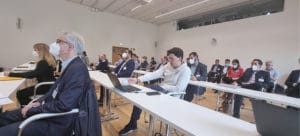
The attentive audience on site – A larger number of participants attended remotely

Public authorities stress digital ­sovereignty

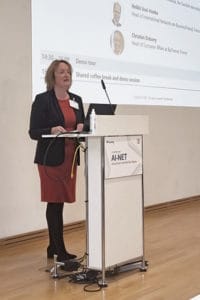
Prof. Dr.-Ing. Ina Schieferdecker, Director-General for Research for Digitalization and Innovation at the German Federal Ministry of Education and Research, set the tone, when she explained the relevance of AI-NET: “AI-NET is an important step for Germany and Europe towards resilient and secure network infrastructures for technological sovereignty.” She highlighted that a peaceful Europe needs to be in the driving seat of the digital transformation as progressed by AI-NET. She put this in the context of the Russian invasion of Ukraine and the COVID-19 pandemic and their impact on the economic and technological sovereignty of Europe.


Prof. Dr.-Ing. Ina Schieferdecker from the German Federal Ministry of Education and Research

Andreas Aurelius, Head of ICT department at Swedish innovation agency Vinnova, stressed the importance of resilient societies enabled by resilient digital infrastructures in Europe. He particularly highlighted AI-NET’s contribution to enabling resilient networks infrastructures across Europe by making them more secure and autonomous – characteristics he considers critical for our future society and economy.

In the same vein, Heikki Uusi-Honko, Head of International Networks at Business Finland, underlined the high relevance of AI-NET, as industrial sovereignty is more topical now than ever. He added that in order to get innovations fast to the market, it requires a native digital mindset, which AI-NET has demonstrated. He highlighted the expected impact for Europe and its fast step change in the digital transformation.

Christian Dubarry, Head of European Affairs at Bpifrance, explained how France considers cloud computing as a future champion of sovereignty, and expects a doubling of the number of companies for trusted cloud computing already by 2025. He said that AI-NET ANTILLAS could contribute to these goals with its concept of edge and fog infrastructure.

All four public authority representatives acknowledged the intermediate results of the three AI-NET sub-projects.

Presentation of project results

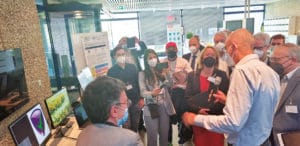
After a demonstration tour of selected results achieved by AI-NET, the event continued with presentations of AI-NET and its sub-projects. Coordinator Achim Autenrieth, Director Advanced Technology at ADVA, started by providing an overview on AI-NET as a whole before handing over to the leaders of the three sub-projects. Azimeh Sefidcon, Research Area director for Cloud at Ericsson, presented AI-NET-ANIARA and its achievements to date. AI-NET-PROTECT was presented by Jörg-Peter Elbers, Senior VP Advanced Technology at ADVA. And finally Olivier Audouin, Director of external affairs at Nokia, gave an overview on AI-NET-ANTILLAS and its results.


Huge interest in the AI-NET results at the demo tour

Panel discussion on digital sovereignty

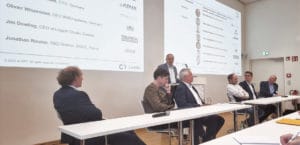
The final highlight of the event was a panel discussion on the geopolitical, economic and technological challenges Europe is facing on its way digital sovereignty. The six panel participants provided a diversity of industry views on the subject. Panel participants included Johan Sandell, CTO of Waystream, Christoph Glingener, CTO of ADVA, Timo Lehnigk-Emden, CTO of Creonic, Olivier Winzenried, CEO of WIBU systems, Jim Dowling, CEO of Logical Clocks, and Jonathan Rivalan, R&D Director of SMILE.

The lively discussion, moderated by CELTIC-NEXT Chairman David Kennedy, identified numerous challenges that need to be addressed, from supply-chain risks to critical dependencies in the areas of key technologies and raw materials required for Europe’s digital infrastructure. The panel participants and the audience joining the discussion could not converge on the best path to achieving digital sovereignty, but achieved a higher level of insight on the challenges to be tackled.


Lively panel discussion on digital sovereignty (sitting, from left): Timo Lehnigk-Emden, CTO of Creonic, Jim Dowling, CEO of Logical Clocks, Olivier Winzenried, CEO of WIBU systems, Jonathan Rivalan, R&D Director of SMILE, Johan Sandell, CTO of Waystream, Christoph Glingener, CTO of ADVA, and moderator David Kennedy (standing)

About AI-NET

CELTIC flagship project AI-NET was officially launched on 1st June 2021. AI-NET aims at ‘Accelerating Digital Transformation in Europe with Intelligent Network Automation’. The project is addressing the challenge that the current centralised cloud infrastructure is not adequate for serving the requirements of the digital transformation in Europe. AI-NET is built on the premise that three technologies need to be combined to shape a new secure service and application platform: 5G/6G, edge-centric computing, and artificial intelligence.

The main goal of the AI-NET project is to provide enablers and solutions for high-performance services deployed and operated at the network edge. AI-NET is using artificial intelligence for complementing traditional optimisation algorithms, in order to manage vastly increased network complexity.

› Further information

AI-NET project website – https://ai-net.tech

AI-NET CELTIC

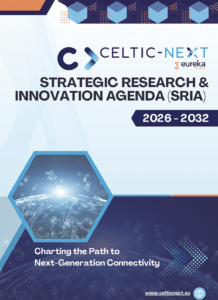
CELTIC-NEXT SRIA 2026 – 2032: A Strategic Vision for Europe’s Digital Future

David Kennedy
CELTIC-NEXT Chair Person
kennedy@eurescom.eu

I have to say that as the chairman of CELTIC-NEXT, I am very proud of this new edition of the CELTIC-NEXT Strategic Research and Innovation Agenda (SRIA). The work on renewing the CELTIC-NEXT SRIA started from the realisation that Europe currently faces profound socioeconomic, environmental and political challenges that go well beyond the technical performance of any single technology. In this context, the transition from 5G to 6G has the potential to integrate digital infrastructures with smart environments, energy-efficient systems, and AI-driven services, creating networks that are not only faster but also more intelligent, ethical, inclusive, sustainable, and human-centric.

Achieving this vision requires EUREKA countries to address multiple, interlinked priorities: embedding sustainability at the core of network design, empowering citizens through trustworthy digital services, enabling advanced smart cities and industries, and safeguarding technological and industrial competitiveness in a rapidly evolving global landscape.

The CELTIC-NEXT holistic vision, which emphasises collaborative, cross-sector innovation, is based on an end-to-end approach to communications and ICT technology development that aligns the vision of future ICT services with real-world business and societal needs. Our renewed SRIA shows this long-term strategic approach to align Europe’s digital infrastructure with societal goals and global competitiveness but also maps potential paths for maintaining significant positive societal, economic, and environmental impacts, while also advocating for European leadership and sovereignty in critical technology areas.

This new edition of the CELTIC-NEXT SRIA explains the long-term logic of actions to be undertaken by the CELTIC-NEXT participants and supported by the Member States for the next six years. It gives the ICT industry, and the ICT consumers, the freedom and the context to propose projects reflecting their current priorities while also supporting the underlying principles, logic and pathways of the short-, medium- or long-term CELTIC-NEXT SRIA Roadmaps.

But it is probably simpler to understand this CELTIC-NEXT SRIA 2026–2032 as a call to action.

The CELTIC-NEXT community now has the chance to lead globally in building networks that are trustworthy, sustainable, and human centric. By aligning research, industry, and policy, the CELTIC-NEXT programme can ensure that 6G and future digital infrastructure technologies become pillars of a resilient, inclusive, and sustainable digital society.

This SRIA is definitely worth reading – and you should be planning your projects now!!

Further information – https://www.celticnext.eu/strategic-roadmap/
CELTIC-NEXT Eureka SRIA

Back to the Future—A 21-Year Journey of Collaborative Innovation

David Kennedy
CELTIC-NEXT Chair Person
kennedy@eurescom.eu

21 years of Innovation through ­collaboration

21 years in the life of any initiative is significant achievement as it shows that the goals, methods and achievements of the community are maintaining relevance and value for the community.

As a EUREKA cluster, the CELTIC community held their first call for projects in 2003, resulting in selection of 15 projects based on quality and relevance and were supported by the national authorities and launched.

Whilst, the current statistics show that, there have been over 175 CELTIC projects which have generated at least 650 patents and 1500 products and services. Besides, this work resulted in almost 1500 higher level degrees (PhD & MSc) and stimulated more than 4500 scientific publications. This is the power of Collaborative Innovation.

For 21 years the CELTIC-NEXT process has continued to evolve to meet the ever-changing research requirements of the ICT industries, related academics and vertical sector organisations and, more critically, the national interests of the EUREKA Member States. In fact, what the CELTIC-NEXT EUREKA community has learnt over the years is that this marriage of the industry needs with the priorities of national interest can achieve a high return on investment for the supporting parties. This Win-Win type of collaboration presents a sustainable model.

Innovative Collaboration

However, we cannot assume things will always be the same. As we speak, new challenges in the way we prepare and do collaborative innovation have arisen in more recent times. Some involve the politics of the moment, having faster programs, and others raise security and sovereignty issues. Finding fair and practical ways to address such issues will test the industry players and the national authorities’ joint ability to always find the common ground of mutual interest. But having recently participated in exercises where the interested parties sat down around a table to discuss what improvements we can make to increase the value and effectiveness of the EUREKA Cluster programs, I have no doubt solutions can be found. Authorities and Industry have a shared ambition to make the clusters programs better, more relevant and easier to operate for the future. This willingness to evolve innovatively on how we do collaborative innovation is the key to future success for all.


The future vision of CELTIC NEXT

If we look forward in even the next 10 years, we can expect that the communications infrastructure will have become even more pervasive, people will have ceased to notice how they are connected but they will be quite confident that the connectivity of the required quality will always be there when they need it. Similarly, our devices – from our phones to our cars – will have capabilities not just to serve our needs but to anticipate our future needs and make sure the data and communications services are there for us. Industry will be transformed with fully digitised systems modelling and managing just about every industrial process.

Behind all of these visions will be a set of people who will work with their international peers in a collaborative way to advance the technologies, improve the social sciences and ensure a sustainable future for all. CELTIC-NEXT will work on enabling this vision.

Looking forward to the next 21 years !!


© Canva

CELTIC-NEXT Eureka
  • Previous
  • 1
  • ...
  • 3
  • 4
  • 5
  • ...
  • 7
  • Next

5Copyright © 2025 by Eurescom

 
  • Corporate Information
  • Data Protection Declaration
  • Terms of Use
  • Corporate Information
  • Data Protection Declaration
  • Terms of Use