Skip to content
  • About Us
    • Company Profile
    • Our Team
    • Shareholders & Members
    • Opportunities
  • Services
    • Launch of Industry-Driven R&D Initiatives
    • Securing of Research Funding
    • Management of European R&D Projects
    • Management of European R&D Programmes
    • Studies on Strategic Topics in ICT
  • EuresTools®
    • EuresTools Reporter
    • EuresTools Tracker
    • EuresTools Workspace
    • EuresTools Website
    • EuresTools Conferencing
    • EuresTools Mailing List
    • EuresTools Pricing
  • Projects
    • Ongoing Projects
    • Past Projects
  • News
    • News
    • Events
    • Eurescom message
  • Contact
    • Travel information
    • Location
×
Linkedin Twitter Youtube
 

EUREKA Awards for CELTIC Projects 4KREPROSYS and E3

EUREKA Stakeholder Conference in Amsterdam

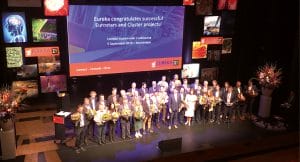
At the EUREKA Stakeholder Conference in Amsterdam on 5th September 2019, the CELTIC projects 4KREPROSYS and E3 were among the happy winners of the prestigious EUREKA Awards. The EUREKA Awards were presented on the main stage of the DeLaMar Theater by Odilia Knap, Chairwoman of the EUREKA Network.

Three months earlier, in June 2019, both projects had already received CELTIC Excellence Awards at the CELTIC Event in Valencia – 4KREPROSYS for excellence in multimedia and E3 for excellence in the applications domain.

EUREKA Award Winnner 4KREPROSYS

4KREPROSYS (4K ultraHD TV wireless REmote PROduction SYStems) investigated and developed a new integrated cost-effective approach for the production of 4K TV content. The goal was to cover a wide range of 4K TV production needs, from indoor studio production to large outdoor events, such as Olympic Games, cycling, and car races. 4KREPROSYS was involved in major events like the FIFA World Cup 2018, which underlines the high relevance of the project’s solutions.

The project consortium included: AMP VISUAL TV (coordinator), France; WorldLinX Alliance NV, Belgium; Siru, Finland; Supponor Oy, Finland; TUT-Tampere University of Technology, Finland; INSA de Rennes (IETR), France; Kalray, France; NuLink SA, Switzerland; European Broadcasting Union (EBU), Switzerland; EPFL – Ecole Polytechnique Fédérale Lausanne, Switzerland.

4KREPROSYS website: https://www.celticnext.eu/project-4kreprosys

EUREKA Award Winnner E3

E3 (E-health services Everywhere and for Everybody) designed and implemented an end-to-end platform which enables patients and professionals in both rural and urban areas to cost-effectively access e-health services based on high-quality video conferencing technology. The platform was successfully tested in 15 healthcare scenarios and validated by doctors and professors.

The project consortium included: ViLynx Spain S.L.U., Spain; Calboquer S.L., Spain; IDI EIKON, Spain; SeniorSome Oy, Finland; eHOIVA Palveluverkko Oy, Finland; Institut Mines Télécom, France; Université de Lorraine, France; Vitec Multimedia, France; Poznań Supercomputing and Networking Center, Poland; Galaksiya Bilisim Teknolojileri, Turkey; SoSoft, Turkey; Vestel Electronics, Turkey.

E3 website: https://www.celticnext.eu/project-e3

CELTIC results used by medVC to fight COVID-19

HIPERMED-based telemedicine service STOP-CORONA

Sometimes it takes a few years until you see the full benefits of research results. CELTIC project HIPERMED is a perfect example. When it ended in 2013, nobody would have thought that seven years later its results would contribute to a telemedicine solution which is used in the fight against the COVID-19 pandemic. However, that is exactly what has happened, due to the work of medVC, a Polish SME located in Poznań. MedVC has already connected 35 Polish hospitals with patients at home via its free video service STOP-CORONA, in order to contain the spread of the coronavirus.

More hospitals in Europe will follow. There are already inquiries for using STOP-CORONA from hospitals in France, Germany, Italy, and Spain. MedVC is expecting also demand from hospitals in Central European countries and beyond.

The STOP-CORONA service

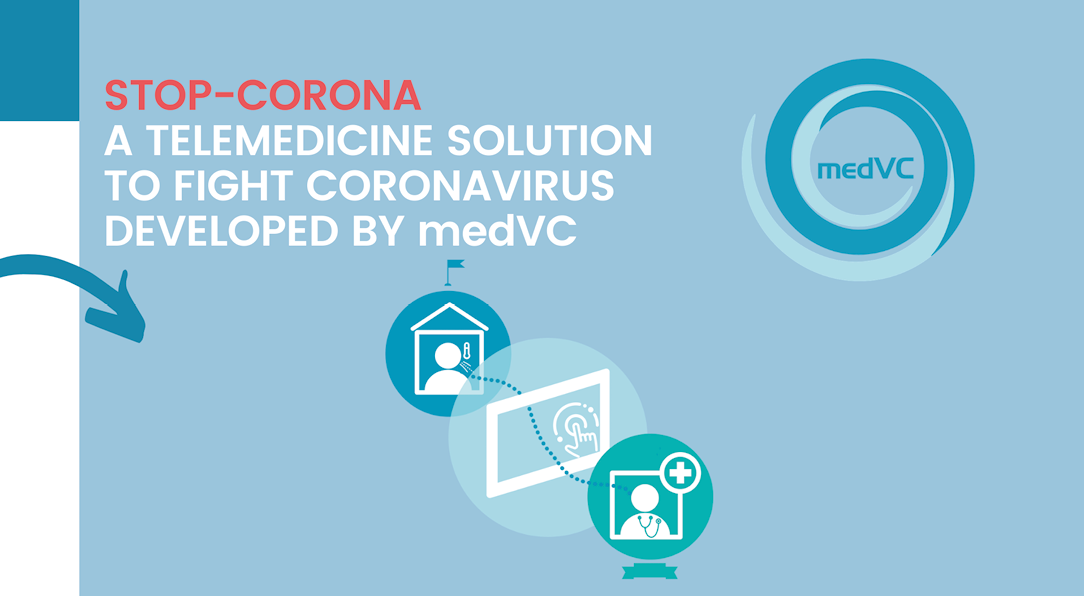
STOP-CORONA is an easy-to-use patient-to-hospital video communication service, which is offered by medVC free of charge to hospitals around the world. “We want to help by giving all hospitals the possibility to unblock their telephone lines, reduce the need for ambulances to go to patients, and stop patients from overcrowding the emergency rooms,” explained Piotr Pawałowski, CEO of medVC.

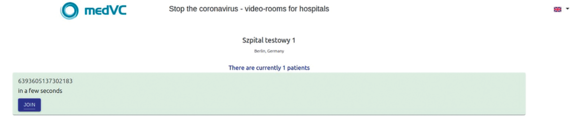
The service enables each hospital that registers to let its doctors see the patients using videoconferencing. The main benefit of the STOP-CORONA system is to keep the patients at home by allowing them to have audio-visual contact with the hospital. The doctor not only hears, but, above all, sees the patient. In this way doctors can initially assess the patients’ health status. Patients stay at home, not spreading the virus.

The system is intuitive and very easy to use. The patient only has to press the link on the hospital’s website to enter the system’s virtual waiting room. The solution is browser-based and uses WebRTC. Thus, no other software needs to be installed, which makes the system easy to use for less technically inclined and elderly patients. MedVC ensures that the STOP-CORONA system is secure and encrypted, and no data is being recorded.

Background on medVC

MedVC goes back to a group of engineers from the Poznań Supercomputing and Networking Center, Poland (PSNC), who founded the company in 2014. They had participated in the award-winning CELTIC project “HIPERMED – High Per­formance Telemedicine Platform” and its successor project “E3 – E-health services ­Everywhere and for Everybody”. Using CELTIC project results as a basis, medVC developed a commercial remote collaboration tool for medical professionals, which allows real-time audio-visual communication.

› Further information

› STOP-CORONA system by medVC –
https://stop-corona.medvc.eu

› HIPERMED project page –
https://www.celticnext.eu/project-hipermed/

› E3 project page –
https://www.celticnext.eu/project-e3/

Proposal Pitching in Turkey

CELTIC-NEXT Proposers Day in Istanbul
Maria Barros Weiss
CELTIC Office at Eurescom
barros(at)celticnext.eu

The CELTIC-NEXT Proposers Day in Istanbul on 25th September highlighted the strong interest of the Turkish RDI community in building international partnerships. The audience witnessed inspiring presentations, engaged in interesting discussions, and learned about twelve new interesting proposal ideas.

The event took place at the Istanbul Technology University. It was organized by CELTIC-NEXT and the Turkish Public Authority TÜBİTAK with the support of Sabancı University and Enterprise Europe Network. The programme consisted of interesting keynote speeches, practical information about the CELTIC-NEXT programme and the national funding programmes in Turkey and Spain, a lively panel discussion about the business impact of CELTIC projects, and a session for project proposal pitches.

In the morning, Mr. Tarık Şahin from TÜBİTAK, Ms. Valérie Blavette, CELTIC Chairperson from Orange, and Mr. Rıza Durucasugil, CELTIC Vice-chair from NETAŞ, opened the event and welcomed the participants. After the opening, Ms. Fatma Kesik from Sabancı University presented the opportunities of the Enterprise Europe Network. In the following keynote speech by Mr. Mustafa Eruyar from ISBAK, he shared the future vision of smart cities and presented exemplary scenarios and use cases from the city of Istanbul.

The Public Authority representatives, Mr. Tarık Şahin from Turkey and Ms. Juana Sánchez Pérez from CDTI in Spain, highlighted their support of the CELTIC-NEXT programme and presented the funding opportunities in Turkey and Spain. Guidelines and recommendations on how to submit a CELTIC-NEXT project proposal were presented as well.
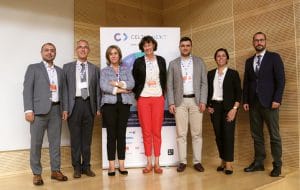

Speakers and organisers of the Proposers Day (from left): Hakan Çelik from ISBAK, Rıza Durucasugil, Vice-chair
of CELTIC Core Group from NETAŞ, Juana Sánchez Pérez from CDTI (Spanish Public Authority), Valérie Blavette,
CELTIC Chairperson from Orange, Mustafa Eruyar from ISBAK, Maria Barros Weiss, CELTIC Office at Eurescom,
and Umut Ege from TÜBİTAK (Turkish Public Authority)

Panel discussion

The ensuing panel discussion was moderated by Ms. Işıl Özkan, CELTIC Core Group Member from Turkcell, and focused on the business impact of CELTIC projects. In the discussion, Mr. Burak Görkemli from Argela mentioned the importance of international collaboration and referred to the projects his company has been involved in, namely TILAS, H2b2Vs and SIGMONA.

Mr. Yaşar Burak Savak, from Vestel Electronics, stressed the impact created by awards, based on the example of CELTIC and EUREKA awards received by the E3 project. Mr. Mehmet Dağlı, from NETAŞ presented the impact of the VIRTUOSE project on the different organizations in the consortium, referring to the patent submissions, prototypes and field trials. He also mentioned new and improved products implemented by the project. In addition, he highlighted a start-up on cloud gaming created in Spain, which uses the video encoders implemented in the project. Mr. Mustafa Eruyar from İSBAK stressed the importance not only of the impact on business but also on the quality of living, highlighting results of CELTIC projects like COMOSEF. The social impact created through the services offered by the projects to the public was also recognised during the discussions.

The panellists also discussed challenges of CELTIC projects and international collaborations in general, like for example the size of the consortium or dealing with the requirements of multiple funding agencies. They also pointed out the contradiction between agile processes and short deadlines used by many companies and the long deadlines of project proposals, which are hard to reconcile. Many times the companies’ strategies change during the long duration of project set-up and implementation, which could become a risk for projects.

They mentioned leadership roles in CELTIC-NEXT as beneficial for the organizations, and they especially appreciated the bottom-up character of the programme, which they considered to be a big advantage for the alignment of project work with the companies’ strategies. The impact of project collaborations for academia was also stressed, as well as the importance of having academic partners in projects, proven for instance by the 110 high-quality papers published by CELTIC projects SIGMONA, H2B2VS, and TILAS combined.

Timely technology and quality of the project implementation, as well as a strong coordination and valid use cases were factors indicated as crucial for the success and business impact of the projects.

Proposal pitches and networking ­session

During the proposal presentations session, twelve potential project ideas were presented to the audience, covering topics like 5G, artificial intelligence, big data, IoT, blockchain, automation, and others. The proposed applications of such technologies ranged from a wide spectrum of vertical industries, such as banking, supply chains, self-driving vehicles, assisted living, smart energy, and smart agriculture, just to name a few. The interest of the audience in the project ideas was demonstrated not only by the full room, but also through the lively networking session at the end and the interactions among the event participants and feedback to CELTIC and Public Authority representatives.

Outlook

The Proposers Day in Istanbul was part of a series of events co-organised by CELTIC-NEXT to support interested proposers in finding collaboration partners and building international project consortia. Besides the several proposers days organized in different EUREKA/CELTIC countries, CELTIC also offers Proposers Sessions via web-conference. The pitch presentations presented during all the proposers days or sessions are available for download on the CELTIC-NEXT website.
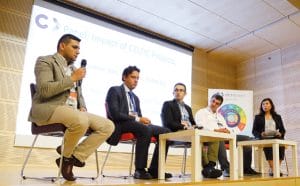

Panel on the business impact of CELTIC projects (from left): Mustafa Eruyar, İSBAK, Mehmet Dağlı, NETAŞ,
Burak Görkemli, Argela, Yaşar Burak Savak, Vestel Electronics, and moderator Işıl Özkan, CELTIC Core Group
Member from Turkcell.

› Further information
  • How to get involved – https://www.celticnext.eu/how-to-get-involved/
  • Proposal pitches presented at the Proposers Day in Istanbul – https://www.celticnext.eu/pitch-presentations-from-proposers-day-in-istanbul/
  • Join new project ideas – https://www.celticnext.eu/join-new-project-ideas

Universal Critical Infrastructure

CELTIC project UNICRINF

Maria Luisa Arranz
Nokia Spain
Maria_Luisa.Arranz_Chacon(at)nokia.com

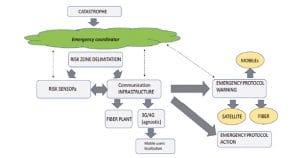
Major catastrophes demand efficient coordination and control of resources in order to ensure people’s safety. In the era of 5G and IoT, networks and applications play a fundamental role in monitoring and decision making in all areas involved. CELTIC project UNICRINF plans to use the available communications infrastructures to create a global integrated platform to monitor catastrophes, create ad-hoc communication infrastructures, communicate with emergency teams, and advise citizens.

Areas involved in a major catastrophe include emergency services, affected people, hospital resources, communications networks, infrastructure, and more. The fundamental objective during an emergency situation is the safety of the people. Technology should help and allow information to flow smoothly between all people involved.


Emergency scenarios and application domains

Emergencies come in different shapes – it could be an earthquake, a tsunami, a flood, a volcanic eruption, a toxic explosion, or a big fire. What all these disasters have in common is that they can compromise communications, which is vital for emergency services and affected people.

However, communications must also include the monitoring of the affected infrastructures, the contact with the people within the affected area regardless of the operator that serves them, the warning of the nearby population by all means available with action guidelines or the evacuation route of victims and available resources.


The UNICRINF project aims to facilitate effective disaster communication solutions covering a variety of scenarios and use cases, including:

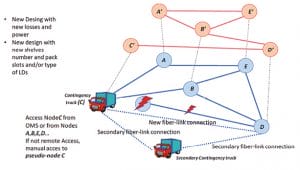
  • Helping to up the part of the optical trunk network using a contingency truck that replaces the affected node as well as the priority services.
  • Updating a local 5G or 4G VPN network using small cell or portable nodes
  • Facilitating access to the internet and external servers through an ad-hoc satellite connection
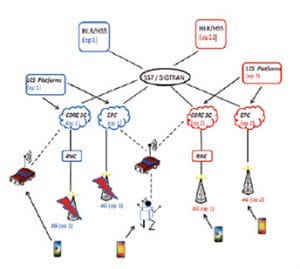
  • Performing a national pseudo roaming in order to have the affected people listed and located in the affected area regardless of the operator that serves them

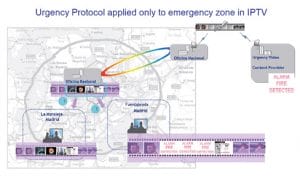
Currently not even the geolocation is available in 112 calls as well as the broadcast of the same service.

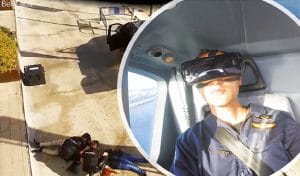
  • Allowing the transmission and reception of images taken by unmanned aerial, land or sea drones, both to the control centre and to people on the ground through augmented-reality glasses
  • Multiscreen display in the control centre of the state of physical, human and image resources
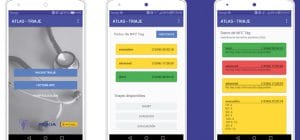
  • Control of victims with digital triage and allocation of vehicular and hospital resources with online monitoring
  • Traffic control by emergency services for greater fluidity in the evacuation of people and victims
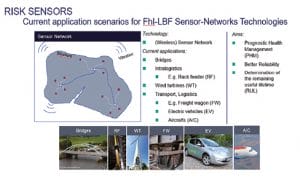
  • Monitoring and control of damaged infrastructure and possible toxic spills (air or sea) through IoT sensors
  • Notice to the population of the affected area with action guidelines or evacuation orders

Information for emergency decisions

For correct decision making in an emergency situation, the state of the communications network, the acquisition of data and its ­presentation in a user-friendly way are important. Applications that facilitate the co­ordination and control of resources should be included and handled in a simple way. The collection and processing of data from sensor networks must be able to be filtered according to programmable criteria. There are many areas where current information to facilitate the resolution of problems from the control centre is required.


› Further information
  • UNICRINF project page – https://www.celticnext.eu/project-unicrinf/
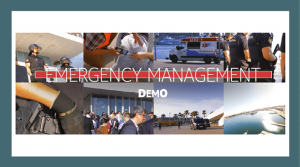
  • Video of emergency communication demo – https://youtu.be/b2wFQ6eB6Zo
  • Previous
  • 1
  • ...
  • 6
  • 7

5Copyright © 2025 by Eurescom

 
  • Corporate Information
  • Data Protection Declaration
  • Terms of Use
  • Corporate Information
  • Data Protection Declaration
  • Terms of Use