Skip to content
  • About Us
    • Company Profile
    • Our Team
    • Shareholders & Members
    • Opportunities
  • Services
    • Launch of Industry-Driven R&D Initiatives
    • Securing of Research Funding
    • Management of European R&D Projects
    • Management of European R&D Programmes
    • Studies on Strategic Topics in ICT
  • EuresTools®
    • EuresTools Reporter
    • EuresTools Tracker
    • EuresTools Workspace
    • EuresTools Website
    • EuresTools Conferencing
    • EuresTools Mailing List
    • EuresTools Pricing
  • Projects
    • Ongoing Projects
    • Past Projects
  • News
    • News
    • Events
    • Eurescom message
  • Contact
    • Travel information
    • Location
×
Linkedin Youtube
 

Events calendar

29 June 2026
IEEE NetSoft Workshop
Berlin, Germany
https://netsoft2026.ieee-netsoft.org/

8 – 10 September 2026
Berlin 6G Conference 2026
Berlin, Germany
https://www.6g-plattform.de/berlin-6g-conference/

4 – 9 October 2026
European Microwave Week (EuMW 2026)
Excel, London, UK
https://www.eumw.eu/general-information/

21 – 22 October 2026
Techritory Forum 2026
Riga, Latvia
https://techritory.com/

26 – 27 November 2026
14th FOKUS FUSECO Forum
Berlin, Germany
https://www.fokus.fraunhofer.de/en/ngni/events/fuseco-forum_2026.html

2 – 3 November 2026
NEM Summit 2026
Valencia, Spain
https://nem-initiative.org/events/nem-summit/

1st December 2026
OPTI-6G Project Final Event
Brunel, United Kingdom
https://opti-6g.sns-ju.eu/

7 – 11 December 2026
IEEE GLOBECOM 2026
Macau S.A.R., China
https://globecom2026.ieee-globecom.org/

Truth is rarely pure and never simple

In the KENNEDY Perspective on “Sustainable sustainability”, the article reflects on the evolution of telecommunications networks and how techno-economic balancing act between the costs of providing the connectivity versus the costs of the materials and equipment is critical.

Continue reading
AI resilient ICT truth

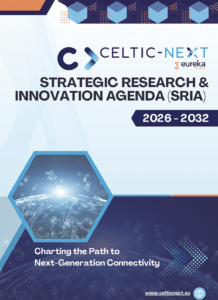
CELTIC-NEXT SRIA 2026 – 2032: A Strategic Vision for Europe’s Digital Future

David Kennedy
CELTIC-NEXT Chair Person
kennedy@eurescom.eu

I have to say that as the chairman of CELTIC-NEXT, I am very proud of this new edition of the CELTIC-NEXT Strategic Research and Innovation Agenda (SRIA). The work on renewing the CELTIC-NEXT SRIA started from the realisation that Europe currently faces profound socioeconomic, environmental and political challenges that go well beyond the technical performance of any single technology. In this context, the transition from 5G to 6G has the potential to integrate digital infrastructures with smart environments, energy-efficient systems, and AI-driven services, creating networks that are not only faster but also more intelligent, ethical, inclusive, sustainable, and human-centric.

Achieving this vision requires EUREKA countries to address multiple, interlinked priorities: embedding sustainability at the core of network design, empowering citizens through trustworthy digital services, enabling advanced smart cities and industries, and safeguarding technological and industrial competitiveness in a rapidly evolving global landscape.

The CELTIC-NEXT holistic vision, which emphasises collaborative, cross-sector innovation, is based on an end-to-end approach to communications and ICT technology development that aligns the vision of future ICT services with real-world business and societal needs. Our renewed SRIA shows this long-term strategic approach to align Europe’s digital infrastructure with societal goals and global competitiveness but also maps potential paths for maintaining significant positive societal, economic, and environmental impacts, while also advocating for European leadership and sovereignty in critical technology areas.

This new edition of the CELTIC-NEXT SRIA explains the long-term logic of actions to be undertaken by the CELTIC-NEXT participants and supported by the Member States for the next six years. It gives the ICT industry, and the ICT consumers, the freedom and the context to propose projects reflecting their current priorities while also supporting the underlying principles, logic and pathways of the short-, medium- or long-term CELTIC-NEXT SRIA Roadmaps.

But it is probably simpler to understand this CELTIC-NEXT SRIA 2026–2032 as a call to action.

The CELTIC-NEXT community now has the chance to lead globally in building networks that are trustworthy, sustainable, and human centric. By aligning research, industry, and policy, the CELTIC-NEXT programme can ensure that 6G and future digital infrastructure technologies become pillars of a resilient, inclusive, and sustainable digital society.

This SRIA is definitely worth reading – and you should be planning your projects now!!

Further information – https://www.celticnext.eu/strategic-roadmap/
CELTIC-NEXT Eureka SRIA

A Look Back at the CELTIC-NEXT Proposers ­Brokerage Day 2026 in Vienna, Austria


Audrey Bienvenu
CELTIC Office

At the beginning of the year, on 30 January 2026, the CELTIC-NEXT community gathered in Vienna for the Proposers Brokerage Day Spring Call 2026, kindly hosted by Austrian Research Promotion Agency (FFG) in Vienna, and supported by the 6G Smart Networks and Services Industry Association (6G-IA).

The event brought together researchers, industry representatives and public authorities with a shared interest in shaping the next generation of communication technologies, and was a valuable opportunity to develop new concepts for future businesses that support a trusted digital transformation in a smart, connected world.

This day was the occasion for many presentations and interactions.

It opened with welcome remarks from Alexander Pogany (BMIMI, Austria), Sonia Nour (EUREKA Secretariat), Colin Willcock (6G-IA) and Xavier Priem (CELTIC-NEXT), who collectively set the scene for the discussions ahead, emphasising collaboration and the importance of cross-border innovation.

The keynote address by Madhusanka Liyanage (University College Dublin) focused on “Future Connectivity Security: Harnessing AI and Quantum for 6G”. It provided a clear overview of the challenges and opportunities linked to securing next-generation networks, particularly in the context of increasingly complex and hybrid technological environments.

A series of national presentations followed, offering a comprehensive view of funding frameworks and priorities across participating countries. Contributions from Michael Walch (Austria, FFG), Juana Sánchez (Spain, CDTI), Justina Ruksnaite (Lithuania), Inyoung Yoo (South Korea, KIAT) and Sanna Edlund (Sweden, Vinnova) were complemented by further insights from Andrzej Wajs (Poland, NCBR), Heikki Uusi Honko (Finland, Business Finland) and Bahriye Özkara (Türkiye, TÜBİTAK). Together, these sessions highlighted both the diversity and alignment of national approaches supporting CELTIC projects.

The business impact session, moderated by Prof. David CastellsRufas (UAB, CELTIC GOE), brought forward concrete examples of ongoing innovation. Christoph Lipps (DFKI) presented key CELTIC flagships—SUSTAINET, AI-NET and SENDATE—while Klaus Chmelina (Geodata) introduced CISSAN, and Christian Raffelsberger (Lakeside Labs) showcased 6GSKY. These presentations illustrated how collaborative research is already contributing to areas such as sustainability, secure connectivity and advanced digital services.
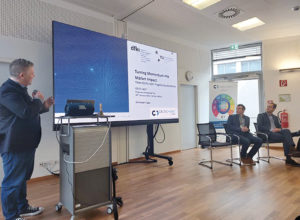

Christoph Lipps (Senior Researcher at DFKI) presenting the success stories of the Flagship Projects SENDATE, AI-NET, and SUSTAINET

The afternoon was dedicated to pitching sessions, where new project ideas were presented by proposers, with coordination moderation from Christiane Reinsch (CELTIC-NEXT Programme Coordinator). These sessions provided a platform for emerging concepts across a broad range of domains, from quantum-enabled security and 6G infrastructures to media applications and digital resilience. The format encouraged concise presentations and direct engagement, paving the way for future consortium building.

The day concluded with a networking session, allowing participants to exchange with proposers and national authorities in a more informal setting. These discussions, often as valuable as the formal sessions themselves, helped initiate connections and refine project ideas.

In conclusion, the Proposers Brokerage Day in Vienna confirmed the continued relevance of CELTIC-NEXT as a platform for collaborative innovation. By bringing together key stakeholders and facilitating both strategic dialogue and practical exchanges, the event contributed to the development of new project ideas supporting a trusted and forward-looking digital transformation.

Further information
  • www.celticnext.eu/proposers-brokerage-day-30-january-2026-in-vienna/

About CELTIC-NEXT

CELTIC-NEXT is the Eureka Cluster for next-generation communications enabling the inclusive digital society. CELTIC-NEXT stimulates and orchestrates international collaborative projects in the Information and Communications Technology (ICT) domain. The CELTIC-NEXT programme includes a wide scope of ICT topics based on new high-performance communications networks supporting data-rich applications and advanced services, both in the ICT sector and across all vertical sectors.

CELTIC-NEXT is an industry-driven initiative, involving all the major ICT industry players as well as many SMEs, service providers, and research institutions. The CELTIC-NEXT activities are open to all organisations that share the CELTIC-NEXT vision of an inclusive digital society and are willing to collaborate to their own benefit, aligned with their national priorities, to advance the development and uptake of advanced ICT solutions.

CELTIC-NEXT website – https://www.celticnext.eu/
CELTIC-NEXT Cluster proposers brokerage day
  • Previous
  • 1
  • 2

5Copyright © 2025 by Eurescom

 
  • Corporate Information
  • Data Protection Declaration
  • Terms of Use
  • Corporate Information
  • Data Protection Declaration
  • Terms of Use