Skip to content
  • About Us
    • Company Profile
    • Our Team
    • Shareholders & Members
    • Opportunities
  • Services
    • Launch of Industry-Driven R&D Initiatives
    • Securing of Research Funding
    • Management of European R&D Projects
    • Management of European R&D Programmes
    • Studies on Strategic Topics in ICT
  • EuresTools®
    • EuresTools Reporter
    • EuresTools Tracker
    • EuresTools Workspace
    • EuresTools Website
    • EuresTools Conferencing
    • EuresTools Mailing List
    • EuresTools Pricing
  • Projects
    • Ongoing Projects
    • Past Projects
  • News
    • News
    • Events
    • Eurescom message
  • Contact
    • Travel information
    • Location
×
Linkedin Twitter Youtube
 

Let’s invent together a smarter and safer world

It is more than ever time to invest in ICT

Valérie Blavette
Orange
blavette(at)celticnext.eu

I hope all readers of CELTIC News are well. My feeling is that going through a pandemic changes us and makes us think differently. It makes us understand what is crucial and what is only nice to have. We also learn that we can adapt, do things differently and fast. Not only AI will pave the way for a smarter world, even if for sure AI will play an important role there.

Despite all difficulties, most of us have still been able to telework and communicate thanks to digital tools, telecom networks and the cloud.

AI, telecom and IT tools have proved to be critical assets

First of all we can be proud of our telecom and IT assets. As an example, the dimensioning of networks allowed the unusual traffic peaks during the first weeks of the crisis. Working for the research of a big telecom operator, Orange, I am proud of my colleagues in the operational units and of all the working forces which allowed the continuity of services of the critical infrastructures.

Most importantly, the telecom infrastructures connected the hospitals and the businesses during that strained period. What would have been our daily life during the social distancing measures and home office without the telecom infrastructure? Without the digital applications? Without news from the remote family, talking to friends, allowing grandparents to see the younger ones, exchanging and getting information, making online food shopping? As a mother, I also appreciated that my children could do their lessons online, even if it is not always easy for a ten-year-old boy to organize his daily screen time around math, English and geography instead of using it for Fortnite, FIFA or “The Legend of Zelda”.

When I helped our au pair to get her first online medical teleconsultation from home, I thought of the CELTIC eHealth projects HIPERMED and E3, which created novel solutions for teleconsultation and telesurgery.

Some results from other CELTIC projects have also been very valuable, like VIRTUOSE, which created solutions for multi-party ­video communication and video analysis, area management and security. Or the UNICRINF project, which developed novel solutions for improving emergency communication.

Continuous support by the CELTIC ­Office

At the time I wrote this article, the CELTIC office was busy as always supporting proposers and CELTIC projects at any stage. For running projects online reviews have been organized. A first joint call between the CELTIC and the EUROGIA communities has been organized during the first trimester of this year. On 31st of March the CELTIC office has held a successful AI proposer’s webinar with a large audience – around 200 registered participants from 24 countries, many of them joining from home.

EUREKA Clusters AI call

At a time when the COVID-19 crisis has created more solidarity, more connections, even if we needed to be physically distant, the Clusters CELTIC-NEXT, EUROGIA, ITEA, PENTA and EURIPIDES2 have been cooperating more than ever to define the first EUREKA Clusters AI call.

When defining this first common call, the EUREKA Clusters have learnt a lot on how to streamline processes and make it easier for both applicants and Public Authorities. In particular a single online project submission tool for all participating Clusters has been defined and set up. We proved collectively agile, and I would like to thank the inter-Cluster colleagues for their cooperation in this new adventure.

Conclusion

Going back to the Coronavirus crisis, I hope we will be collectively able to heed all the lessons learned. No doubt our ICT infrastructures, digital tools and the use of AI at different levels have saved many lives since the beginning of the year. Some Asian countries especially reacted very fast, showing us images of what we so far thought was sci-fi. Thanks to Big Data, IA, and global collaboration, the research helped a lot to react as fast as possible to limit the damages caused by the pandemic.

That is why, even if the European and worldwide economy will need some time to recover, I am convinced it is more than ever time to invest in ICT. Research should be as fast as possible, to fight such a pandemic or to invent a smarter, safer world. That is what CELTIC and EUREKA should be after in the coming months.


Photo: © Adobe Stock

Upcoming Events

EuCNC & 6G Summit 2024 in Antwerp, Belgium

The 2024 EuCNC & 6G Summit builds on putting together two successful conferences in the area of telecommunications: EuCNC, in its 33rd edition of a series, supported by the European Commission; the 6G Summit, in its 6th edition, originated from the 6G Flagship programme in Finland, one of the very first in its area. CELTIC-NEXT and Xecs will jointly hold the booth #60.

› Further information

  • https://www.eucnc.eu/

Eureka Clusters Special Session at the GIS 2024 in Istanbul

The Global Innovation Summit 2024 brings together global leaders, decision-makers, companies, and key research organizations from all over the globe to tackle the most pressing challenges of an ever-changing world.

This year’s event is coordinated by the Scientific and Technological Research Council of Türkiye (TÜBİTAK). Among the main priorities of the Turkish Chairship towards building bridges for global challenges are: impactful instruments, building a green and digital future, sustainability of Eureka, embrace the Globe.

On 13 June from 13:45-15:00, the Eureka Clusters CELTIC-NEXT, EUROGIA, ITEA, SMART and Xecs will organise the session ‘Turkish companies and Clusters: A mutual synergy’.

This session will enable you to discover and interact with the Eureka Clusters funding instrument, and to learn more about the experiences, benefits and impact for and by (Turkish) companies through participation in Eureka Cluster projects.

› Further information

https://gis-2024.b2match.io/contact

CELTIC 21st Anniversary Celebration & CELTIC-NEXT Exhibition at Berlin 6G Conference 2024 (1st-4th July 2024 at Berlin Congress Centre – BCC)

As already mentioned, on the 2nd of July 2024, CELTIC will celebrate its 21 years of existence on the scene of the international cooperation fostering innovation in the ICT domain and its application verticals. The Celebration’s agenda will be communicated online. High level speakers from BMBF, Eureka and the Industry will share the floor of the Plenary Auditorium and express themselves on CELTIC, its great achievements and their vision of its future.

On the 2nd of July also, in the afternoon session, AINET will hold its Closure Event also in the Plenary space.

CELTIC-NEXT will also hold its exhibition from 1st to 4th of July at BCC. CELTIC-NEXT’s running projects will expose their current achievements sharing the 6 booths dedicated to CELTIC-NEXT. The Office will be present with a booth for providing information on the programme. Finished projects will have the possibility to hold posters.

Please join us to celebrate together 21 years of international innovation cooperation!

CELTIC-NEXT Proposers’ Brokerage Day Autumn Call 2024

CELTIC-NEXT is pleased to announce that the next Autumn Call 2024 will be launched on the 28th of May 2024 with an online event. The Proposers’ Brokerage Day will take place on the 5th of September 2024 in physical presence. The location will be announced via our Newsletter and our Web site.

These events are the occasion for all to find potential partners consortium and to get the first feedback from the Public Authorities.

CELTIC-NEXT bottom-up calls are the perfect opportunity to enable projects in the field of next-generation communications for the digital society that contribute to a sustainable world. By applying and participating in any CELTIC-NEXT Calls, your organization can access national public funding for your R&D project as well as a large community sharing your interests.

› Further information to come

https://www.celticnext.eu/

Smart connected world meets clean energy

Joint CELTIC Eurogia Proposers Day in Madrid


Christiane Reinsch
CELTIC Office
reinsch(at)celticnext.eu

On 29th January, the first joint CELTIC and EUROGIA Proposers Day took place at Nokia Bell Labs in Madrid. The registered participants from both Cluster communities came together to discuss new projects ideas for ICT-based end-to-end solutions in different vertical sectors (CELTIC) and green energy technologies (EUROGIA). Experts presented new insights on recent technological developments in Artificial Intelligence and information on funding opportunities. Proposers presented twelve new project ideas in a pitching session. The Proposers Day stimulated new project proposals on disruptive technologies in the areas of ICT and energy, which were submitted in the Joint CELTIC Eurogia Call that closed in spring.

The event was opened by the CEO of Nokia Spain, Mr Ignacio Gallego, and Mr Álvaro Villegas from Nokia Bell Labs, Spain. Welcome addresses were given by Ms Juana Sanchez from CDTI, Mr Pierre Besse from EUROGIA, and Mr Jari Lehmusvuori, CELTIC Vice-Chair and head of department at Nokia Bell Labs in Finland, who also moderated the event.

Mr Diego Lopez from Telefonica gave an inspiring keynote on AI with the title “Building the Golden Closed Loop – AI and Networking”. He explained that the key issues of AI are not so much the AI engine but the data used to feed it and the resulting action flows – the most intelligent AI engine will only be as good as the data used to analyse.

Pierre Besse, Vice-President of EUROGIA and Peter Herrmann, CELTIC Office director presented how easy it is to submit a project to the Joint Call. Both presented the eligible subjects of their respective Cluster and explained the requirements for a successful project proposal and how the online submission tool can be accessed. In addition, they explained the evaluation process for proposals by technical experts and Public Authorities.


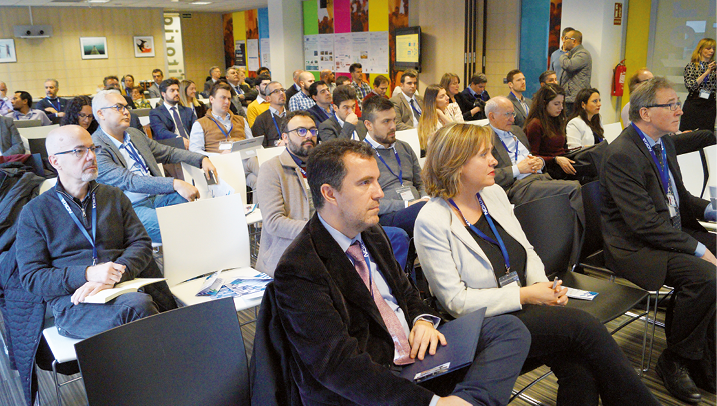
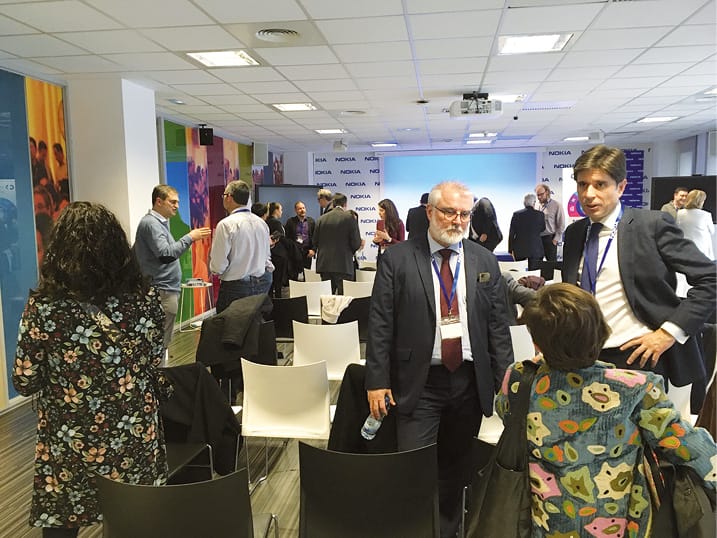
Audience of the Proposers Day at Nokia Bell Labs in Madrid

Panel of funding bodies

An important part of the Proposers Day was the panel of the funding bodies from Spain, Canada and Luxembourg.

Ms Juana Sanchez from CDTI in Spain explained the CDTI bottom-up approach that is well aligned with the philosophy of EUREKA Clusters. She also explained how the application process for public funding via the open CDTI call works. She recommended that proposers should not forget to check the funding availability for each partner in each country involved in a proposal.

Mr Kasturi Narayanan from the National Research Council of Canada presented his organisation’s Industrial Research Assistance Program. This program addresses SMEs with up to 500 employees operating in Canada. The main objective is to generate growth of companies through innovation. Mr Alexander Link explained the EUREKA Perspective program for companies in Luxembourg. This program addresses small and large companies. He explained the key steps for obtaining public funding in the context of EUREKA Calls and gave his recommendations on what companies have to do, to receive public funding.

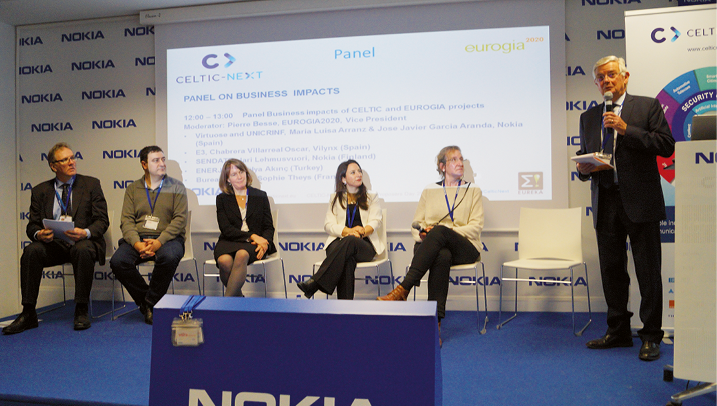
Business panel session

Ms Maria Luisa Arranz from Nokia, coordinator of CELTIC project UNICRINF, talked about the achievements of the project and about the live emergency demonstration which was shown at the Port of Valencia before the CELTIC Event in June 2019 (see UNCRINF article in CELTIC News 2/2019 and video of the demo at youtu.be/b2wFQ6eB6Zo).

Mr Oscar Chabrera Villarreal from Vilynx, Spain presented the SME-led CELTIC project E3 and two other CELTIC projects that have helped ViLynx to get into the AI and video business. Today ViLynx is growing and is also active in the US. The project also allowed the consortium to learn about the needs of the healthcare sector, as four hospitals and one medical institution were participating.

Mr Jari Lehmusvuori from Nokia Bell Labs, Finland presented the CELTIC flagship project SENDATE that addressed secure networking for a data center cloud in Europe. It brought together about 80 partners in four countries, and it had a budget of €70m. Among the highlights are several world records, like the world’s first 100 Gb/s safe quantum transport over 2,800 km and the world’s first aggregation and reception of 400 Gb/s super-channel with a single photodiode. The project also developed an architecture for the different data center types, the first security architecture ever. It established an open ecosystem for open source software projects, too. Thanks to SENDATE, European suppliers are back in the business of data centers.

Ms Sophie Theys from Bureau Veritas reported about the benefits of being a member of the Eurogia Board, which is active in building and participating in an industry ecosystem of strategic importance to Bureau Veritas. She also illustrated the impacts of the Eurogia projects, such as CO2FieldLab, to develop new innovative services, such as new standards for the assessment of CO2 sequestration sites on society and the environment.

Ms Hülya Akınç from Enerjisa explained her company’s active participation in EUROGIA. She showed how Enerjisa gets benefits by proposing projects to the Eurogia ecosystem in order to develop innovative products and services strategic to Enerjisa. She illustrated this impact by describing the EnergyNext project for the asset management of distribution lines through the country using drones, which considerably improves energy efficiency and costs of maintenance services.


Panel participants (from left): Jari Lehmusvuori from Nokia (Finland), Oscar Chabrera from Vilynx (Spain),
Sophie Theys from Bureau Veritas (France), Hülya Akınç from Enerjisa (Turkey), Maria Luisa Arranz from Nokia (Spain),
and moderator Pierre Besse from EUROGIA

Project idea pitches

Another core element of the Proposers Day was the pitching of project ideas. 12 proposers presented their ideas on a wide range of ICT and energy topics. The presentations led to productive discussions, which were moderated by Christiane Reinsch from the CELTIC Office.

The discussions were continued in the weeks after the Proposers Day via the CELTIC Consortium Building Web Sessions, which led to the formation of new project consortia.


Highly interactive session on project idea pitches

Ongoing CELTIC-NEXT signed collaborations

Memorandum of Intent signed with ESA to enable faster convergence and development between terrestrial and non-terrestrial networks & services


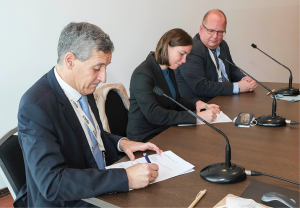
On November 22, 2021, Eureka Cluster CELTIC-NEXT and the European Space Agency (ESA) formalized a partnership through the signing of a Memorandum of Intent (MoI) in Porto, Portugal. This collaboration aims to strengthen ties between their respective communities and drive economic growth and job creation by coordinating research, development, and innovation (R&D&I) activities in integrated space and terrestrial systems enabled by 5G and 6G technologies.

This MoI emphasizes leveraging the synergies between ESA and CELTIC-NEXT to maximize investment returns and contribute towards achieving the UN Sustainable Development Goals. In today’s dynamic political and economic environment, Space ICT has emerged as a critical pillar for sovereignty and resilience. The growing importance of Space ICT is evident as it becomes central to global industry and government agendas. From an economic standpoint, new non-European players are disrupting the sector with innovations like Low-Earth-Orbit (LEO) satellites and High-Altitude Pseudo-Satellites (HAPS).

The collaboration between CELTIC-NEXT and ESA aims to address these challenges by fostering cross-fertilization and collaboration between their communities. This partnership will facilitate the convergence and development of terrestrial and non-terrestrial network and service technologies, including three-dimensional networking.


Signing the Memorandum of Intent (from left): Eureka Chairman Miguel Bello Mora,
Elodie Viau – Director of Telecommunications and Integrated Applications and Head of ECSAT
at the European Space Agency (ESA), and CELTIC Office Director Xavier Priem.

To implement this collaboration, both organizations will leverage their respective funding instruments, processes, and expertise while coordinating on specific themes such as network convergence, system development, business ecosystem models, and spectrum sharing. Joint activities will include roadmapping, advisory boards, knowledge networks, webinars, workshops, and testbeds/trial platforms to support common objectives and priorities.

Further collaboration to expect

This MoI marks the beginning of a series of strategic collaborations for CELTIC-NEXT, enriching its support and impact within the ICT community. The collaboration offers an ideal platform for the space and terrestrial ICT communities to collaborate on strategic initiatives and projects. CELTIC-NEXT looks forward to the space community’s contributions and engagement in upcoming joint initiatives focused on Space ICT and three-dimensional networking.

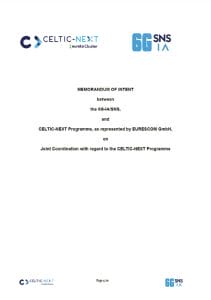
Memorandum of Understanding signed with the 6G-IA to establish ­synergies and complementary activities in collaborative ICT research


The Memorandum of Understanding (MoU) to collaborate on ICT research between Eureka Cluster CELTIC-NEXT and the 6G Smart Networks and Services Industry Association (6G-IA) is now signed for a year now. As its aim is to enhance economic growth and job creation through joint R&D&I activities and the commercialization of outcomes, this collaboration leverages the strengths of both organizations to maximize investment returns and support the UN Sustainable Development Goals.

In the context of today’s rapidly evolving social, political, and economic landscape, information and communication technology (ICT) plays a crucial role in ensuring national sovereignty and resilience. Recent global events such as the Russian-Ukrainian conflict and the COVID-19 pandemic have underscored the critical importance of both terrestrial and non-terrestrial ICT services as essential components of a country’s infrastructure. To address these challenges, there is a pressing need to increase and optimize funding for R&D&I initiatives in European, with the goal of accelerating innovation and enhancing the competitiveness of the ICT industry.

This collaboration is for now facilitating cross-program discussions and soon workshops and joint projects will be organised to aim at advancing technology readiness and addressing key societal challenges outlined in the Sustainable Development Goals. It encourages cross-program discussions, workshops, and collaborative projects to advance technology readiness and achieve Sustainable Development Goals. Consultations on Strategic Research and Innovation Agendas (SRIAs), organize joint activities, and leverage resources to achieve common objectives are in discussion. Regular reviews will ensure effective collaboration and alignment with each community priorities.

Opportunities for the future

This MoU represents a new collaboration for CELTIC-NEXT and expands its impact within the ICT community. It provides a platform for the 6G-IA and CELTIC-NEXT communities to collaborate on strategic topics and projects.

To operationalize the MoU, the signatories have committed to several actions, including promoting collaboration within their respective communities, consulting on Strategic Research and Innovation Agendas (SRIAs), organizing joint activities, and leveraging their combined resources and expertise.

Outlook

These two memorandums signed with two different big organisation in their domains are a significant milestone for CELTIC-NEXT, representing a strategic expansion of its impact within the ICT community. By fostering closer ties and cooperation, they provide valuable platforms for both communities to collaborate on critical strategic initiatives and projects that will shape the future of ICT.

They will also allow knowledge exchange and SRIA’s cross collaborations in the years to come, will help levering funding schemes across low TRL topics, support an easier pipelining for proposals and offer innovative entities the full panel between top-down programs and bottom-up spaces for their collaborative projects.

Eureka CELTIC ESA

Overview of CELTIC-NEXT running projects

Presenting our current 15 innovative projects in the domain of ICT

In the first half of 2024, the CELTIC-NEXT ICT cluster has a total of 15 ongoing projects that started between October 2021 and May 2024. These projects collectively represent cutting-edge ICT research and development efforts focused on diverse areas such as networking, AI, healthcare and wireless technologies to drive innovation and address critical challenges.

These 15 projects aim to discover technological advancements and outcomes in high technology readiness level (TRL) in the domain of ICT. In the perspective of CELTIC-NEXT vision to obtaining results with a successful technology-market oriented approach, the projects represent an investment of 132.9 millions of euros in public and private money. Around 311 companies, start-ups, SMEs and major industrial-players, Research and Technologyl Organisation (RTO), and universities are involved in actual research from 22 different countries in and outside Europe.


EMBRACE: Efficient Multi-Band netwoRk Architecture and  Components for Petabit/s Elastic networks
Start Date: October 2021         End Date: October 2024       Budget (total):  3207.6 K€
Project Coordinator: Orange SA, France
EMBRACE develops, investigates, and demonstrates the required photonic technology for a complete optical system exploiting the entire spectrum of the single mode fibre (SMF) for applications from metro to long-haul reach. This solution is supported by the large availability of SMFs with almost negligible water peak and thus extended low-loss spectral window. Right now, EMBRACE project is working on solutions to exploit the whole 1260-1625 nm spectrum. Within the project, the designed and prototyped multi-band (MB) components (coherent transceivers, optical amplifiers, wavelength selective switches, lasers) will be integrated into a permanent project demonstrator and tested over real installed fibres owned by the operators participating to the consortium.


SAFE HOME: Security-aware fog-based efficient Home monitoring for elders
Start Date: April 2021            End Date: March 2024         Budget (total):  2853 K€
Project Coordinator: Instituto de Telecomunicações, Portugal

SAFE-HOME is a multi-disciplinary project, which exploits the intersection of a number of disruptive technologies, namely sensor design, artificial intelligence and machine learning algorithms, and recent advances in wireless networking, with emphasis on the interoperability of fog-cloud. The project aims at designing a system for monitoring the activity and movement of elders within a confined space (Home), in order to understand their activity level, with ability to identify emergency situations for alerting specific personnel, based on emergency type (e.g. medical staff, ambulance, or emergency contact). SAFE-HOME will also consider users surrounding information (e.g. neighbourhood and city information) in order to enrich solution results.


iCare4NextG: Integrated care for next-generation
Start Date: April 2021            End Date: March 2024         Budget (total):  3421 K€
Project Coordinator: Turkcell Teknoloji, Turkey

The project develops a service framework where increased possibilities for improved wellness and care at home, directed by data driven methods, integrating needs from different stages of life, different caregivers and different diagnosis. A combined strategy of service framework development, business modelling and use case solutions are undertaken and this multi-track approach aims at developing a service framework that enables the creation of flexible user solutions and a business milieu where new digital business models can flourish. Care integration would incorporate a number of different providers, to deliver to the end user in an integrated way.


AI-NET Flagship: Accellerating digital transformation in Europe by Intelligent NETwork automation
Start Date: June 2021            End Date: August 2024          Budget (total): 66547 K€
Sub-projects: AI-NET-ANIARA, AI-NET-PROTECT, AI-NET-ANTILLAS 
The most recent CELTIC flagship project is AI-NET, launched in mid-2021 with a €66M total budget. Public authorities of Germany, Sweden and Finland, as well as major players from industry (both large and SME), and academia, are part of this ambitious European initiative.


AI-NET-ANIARA: Automation of Network edge Infrastructure & Applications with Artificial Intelligence
Start Date: June 2021            End Date: January 2024         Budget (total):  11214 K€
Project Coordinator: Ericsson AB (EAB), Sweden
The primary objective of the ANIARA project is to provide enablers and solutions for high-performance services deployed and operated at the network edge. To manage complexity, of artificial intelligence is used, to complement traditional optimisation algorithms. Deep edge network nodes will be deployed at locations not prepared for the power requirements of edge-centric compute.


AI-NET-PROTECT: Providing Resilient & secure networks [Operating on Trusted Equipment] to CriTical infrastructures
Start Date: June 2021            End Date: June 2024         Budget (total):  26585 K€
Project Coordinator: ADVA Optical Networking SE, Germany
The primary focus of the AI-NET-PROTECT sub-project is to provide automated resilience and secure networks operated on trusted equipment to critical infrastructures and enterprises. AI-NET-PROTECT will ensure the protection of critical data, network performance (like latency, throughput, availability), and infrastructure (against tampering and attacks).


AI-NET-ANTILLAS: Accellerating digital transformation in Europe by Intelligent NETwork automation
Start Date: June 2021            End Date: August 2024         Budget (total):  28748 K€
Project Coordinator: Nokia, Germany
AINET project objective is to provide enablers and solutions for high-performance services deployed and operated at the network edge. They contribute to cyber-resilient intelligent network automation from the edge to the core through the FOG, and from the services to the physical resources, for end users, machine-to-machine and IoT networks. AINET-ANTILLAS concentrates on applying these technologies to automotive / teleoperated driving, manufacturing industry, public safety, and public utility businesses. The goal is to provide enablers and solutions for high-performance services deployed and operated at the network edge or in the cloud.


ENTRY100GHz: Energy-Efficient Radio Systems at 100 GHz
Start Date: September 2021       End Date: August 2024    Budget (total):  9151.42 K€
Project Coordinator: Chalmers University of Technology (CTH), Sweden
The aim of the current project is to develop a highly efficient integrated antenna module and RF front-end solution with adaptive waveform generation in spatial, temporal, and frequency domains for beyond 5G (B5G) wireless communication infrastructure at 100GHz band and support other application sectors such as security & sensing, imaging, industrial IOT, automation etc. The proposed solution will be able to adapt dynamically to different user scenarios such as ultra-high data-rate multi-user broadband communication, reliable high mobility connectivity, ultra-low latency machine communications etc.


USWA: Ultra Scalable Wireless Access
Start Date: December 2022   End Date: November 2025  Budget (total): 12883.18 K€
Project Coordinator: Wirepas Oy, Finland

The project Ultra Scalable Wireless Access (USWA) focuses on technology research how to utilize the new DECT-2020 NR radio technology developed in ETSI in various use cases. DECT-2020 NR provides modern radio interface design with state-of-the-art radio capabilities for industrial use cases. DECT-2020 NR technology supports natively mesh radio network architecture which is enabling large scale local networking by relaying data between different devices and also enabling direct communication between devices. DECT-2020 NR technology can operate in a specific license exempt band used by legacy DECT.


F4iTECH: Federated AI Platform for Industrial Technologies
Start Date: March 2022         End Date: February 2025      Budget (total):  2232.44 K€
Project Coordinator: Inosens, Turkey
Current AI-based industrial applications have a linear sequential approach for data collection, processing and model deployment cycles where each part of the cycle has a clear task. However, collecting the data required for learning the desired models in one place may not always be possible and centralized data collection may cause data quality issues. This project aims to provide great benefit to the manufacturing and transportation industries by efficiently incorporating artificial intelligence into the production or operation line to resolve and eliminate some invisible and internalized problems that cost a lot.


COA-CFD: Cloud-based Online Access to Computational Fluid Dynamic Simulations
Start Date: March 2022          End Date: March 2026         Budget (total):  15836.8 K€
Project Coordinator: Engineering Software Steyr, Austria
Computational Fluid Dynamics (CFD) simulations utilize computational resources to simulate free flows of fluids (air, water, etc.), and the interaction of fluids with surfaces. CFD simulations are used in development of new mechanical parts in the automotive, aerospace and military industries to increase efficiency. CFD based experiments are cost effective in comparison to conventional methods and can estimate properties which cannot be empirically measured. For the last decade, Engineering Software Steyr GmbH (ESS) has been developing new CFD capabilities (particle-based methods) in the form of four new solvers (CFD simulation programs) and hybridizing them to increase usability.


AICom4Health: AI-Powered Communication for Health Crisis Management
Start Date: January 2022         End Date: May 2025        Budget (total):  4985.30 K€
Project Coordinator: SII Concatel S. L., Spain
The objective of AIcom4Health project is to offer an innovative solution towards recovering the pandemics negative impacts on public health ,healthcare access and socioeconomics through remote monitoring -AI based platform’s integration to the public’s daily life whereas employing healthier citizens for smart cities s in the area of 5G and beyond, network slicing, edge computing, artificial intelligence and machine learning based on feasible use cases including both medical and non-medical sensors for making accurate decisions and predicting risks against contagion in the future. The use cases include integration of an IoT platform with various types of sensors to monitor physiological, behavioral and environmental data from natural indoors and outdoors environments.


6G-SKY: 6G for Connected Sky
Start Date: May 2022            End Date: April 2025         Budget (total):  8924 K€
Project Coordinator: Airbus Defence and Space GmbH, Germany
6G for Connected Sky project aims at solutions to enable reliable and robust connectivity for aerial and ground users via flexible and adaptive network architecture adopting multiple technologies such as satellite and direct air to ground communication (DA2GC). In addition, this project focuses on novel wireless network design and management schemes in 3-dimensional (3D) space including different types of flying vehicles with their unique requirements. Another focus is to provide robust, low latency and/or high-capacity communications to ground users in the rural areas without any infrastructure via non terrestrial networks (NTNs), which are already initially introduced in 5G.


CANOPY: Cognitive and Automated Network Operations for Present and Beyond
Start Date: January 2022       End Date: December 2024   Budget (total):  4203.35 K€
Project Coordinator: Celfinet, Portugal
The objective of this project is to create a novel NOC proactive management solution that will enable the evolution from the current reactive mode of operation towards a proactive and preventive mode. The vision is to predict problems that are going to occur before they impact customer service, providing an integrated view of the issue being solved, performing Root Cause Analysis (RCA) to understand and identify what causes triggered the problem and the corresponding recommended resolution.


CISSAN: Collective intelligence supported by security aware nodes
Start Date: May 2023            End Date: May 2026         Budget (total): 8985.23 K€
Project Coordinator: University of Jyväskylä, Finland
CISSAN proposes and implements algorithms for mitigating IoT security threats through collective decision-making and with a reduced impact on the limited resources of IoT devices. These algorithms are based on research and innovation in optimizing the distribution of security capabilities and aggregating the intelligence in IoT network nodes. Three industrial use cases, on the use of IoT, inform the project developments and are used for validating and demonstrating the project results: (i) public transportation; (ii) smart energy grids; (iii) mining and tunnelling operations.


IoDT2: Internet of Digital Twin Things
Start Date: May 2024            End Date: April 2027         Budget (total): 2504 K€
Project Coordinator: Loughborough University, UK

As current digital twin practices have limitations due to the central location of most digital twin models, which can cause data processing latency and network bandwidth issues, the freshly labelled project will be built on an Information Centric Network (ICN) inspired digital twin network called Digital Twin Centric Network (DTCN). This will allow digital twin models, data, and compute resources to be published and located across networks easily. This framework will have applications in various industries, such as manufacturing (Industry 4.0), healthcare, and smart cities. To demonstrate and validate the framework, the proposers will use an asset management use case in the aerospace sector.

Further information

CELTIC-NEXT website – https://www.celticnext.eu/running-projects/
Ready for change

How CELTIC-NEXT’s flexibility enables our industry-driven projects to be successful

Valérie Blavette
Orange
blavette(at)celticnext.eu

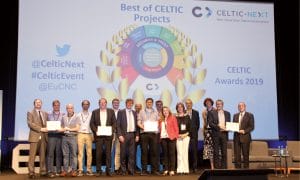
The ICT landscape is changing rapidly. In order to keep pace, R&D programmes need to adapt to meet the changing needs. In the case of CELTIC-NEXT, I can confidently say that we are up to the challenge, as this year’s successes confirm. At the CELTIC Event in Valencia on 19th June 2019, which was co-located with the EuCNC Event and the Global 5G Event 2019, three projects were awarded for their excellence in the areas of networking technologies (SOOGREEN), applications (E3), and multimedia (4KREPROSYS). The NOTTS project was honoured with the Innovation Award for its outstanding market innovation beyond the project lifespan.

This year has been quite special for our Cluster, as three already awarded CELTIC projects have received in addition EUREKA Awards! In May, SIGMONA was highlighted as EUREKA Global Project of the Year at the EUREKA Global Innovation Summit in Manchester. In September, 4KREPROSYS and E3 each received a EUREKA award at the EUREKA Stakeholder Event in Amsterdam.

These awards for CELTIC projects are the direct consequence of our programme’s flexibility. It allows projects to stay aligned with the quickly evolving technological landscape and the company strategies. CELTIC’s flexibility in combination with the industry-driven character is at the core of our programme. In view of the ongoing initiative for defining the future of Clusters, which has been launched by the current EUREKA chair from the Netherlands, I am convinced that we need to maintain the flexibility and the industry-driven character of our programme in order to stay successful in the future.

The future of Clusters at the EUREKA Stakeholder event

The future of Clusters was a major topic at the EUREKA Stakeholder event in Amsterdam on 4th September. In this context, a central goal was to capture feedback by stakeholders on Clusters and other EUREKA instruments. Representatives from industry and academia shared their views about EUREKA Clusters. In addition, a live survey among the audience on areas of improvement for Clusters was conducted, which showed interesting results. The participants voted that the most essential measures for improving the Cluster programmes should be:

  • Increase availability of funding from countries – 41{b28ae05319d94bff0b4d65c5a9f4524dd588360f05c61ef440e1608e0a1c4144} of participants supported this
  • Simplify the proposal process – 25{b28ae05319d94bff0b4d65c5a9f4524dd588360f05c61ef440e1608e0a1c4144}
  • Have a shorter time to contract – 21{b28ae05319d94bff0b4d65c5a9f4524dd588360f05c61ef440e1608e0a1c4144}
  • Higher visibility of EUREKA Cluster programmes – 9{b28ae05319d94bff0b4d65c5a9f4524dd588360f05c61ef440e1608e0a1c4144}
  • Create cross-technology / cross-Cluster projects – 5{b28ae05319d94bff0b4d65c5a9f4524dd588360f05c61ef440e1608e0a1c4144}

The major improvement factor identified by the stakeholders – availability of funding from countries – is beyond the scope of any structural change within the Clusters. Concerning the other factors, which are to varying degrees influenceable by Clusters, it should be noted that in the case of CELTIC-NEXT part of the proposal process has already been simplified. We have changed from a two-phase proposal submission to a one-phase submission process, which reduces the required time and effort.

My highlights from the Proposers Day in Istanbul

In order to foster new project submissions, CELTIC-NEXT held a proposer’s day in Istanbul on 25th September. There was a keynote by Hakan Çelik, the R&D Design Chief of ISBAK, about the smart city of Istanbul, which I found particularly interesting.

Mr Çelik explained in his presentation that smart cities are a complex and overarching topic. It includes security, smart mobility, governance, energy, living issues, as well as people and NGOs representing them. According to Mr Çelik, the ultimate goal of smart cities is to improve quality of life and enable better sustainability.

Another highlight was a panel on the business impact of Celtic projects, which was moderated by Işıl Özkan from Turkcell. Representatives of Vestel, Argela, NETAS and ISBAK shared their experiences on the benefits of a number of CELTIC projects in which they were involved, including CONVINCE, TILAS, H2b2Vs, SIGMONA, VIRTUOSE, and COMOSEF. The panellists emphasized the flexibility of CELTIC as a key success factor.

Finally, in the pitching sessions 12 interesting new project ideas were presented, in order to find additional partners for project proposals to be submitted in October or at our spring call next year.

Across the various CELTIC-NEXT Proposers Days in 2019, a total of 52 project pitches were presented, which indicates how attractive our Cluster is to industry and academia in Europe and beyond.

Plans for call on Artificial Intelligence

One of the hottest topics is currently Artificial Intelligence (AI). A number of countries have expressed their interest in a synchronised AI call between CELTIC-NEXT and most of the other EUREKA Clusters. Among the interested countries are Spain, UK, Turkey, Germany, Sweden, Finland, Canada, Denmark, Netherlands, Austria, South Korea, and Hungary as well as the Belgian regions Flanders, Brussels, and Wallonia. Some other countries may join this AI initiative later.

We aim to organise this synchronised AI call in June 2020 in addition to the usual CELTIC-NEXT bottom-up calls. Keep checking our website (www.celticnext.eu)and social media channels for updates.

Conclusion

My first year as CELTIC chairperson has been exciting. It has shown me that it is important for our programme to embrace change. And it has shown me at the same time how important it is to adhere to the key principles of CELTIC – flexibility and the industry-driven character of our programme. Based on this, I am confident that CELTIC will continue to thrive in a changing landscape. And as this year’s inter-Cluster spokesperson I may add that EUREKA Clusters as a whole will keep playing an important role in generating value for industry and citizens in Europe and beyond.

The ICT landscape is changing rapidly. In order to keep pace, R&D programmes need to adapt to meet the changing needs. In the case of CELTIC-NEXT, I can confidently say that we are up to the challenge, as this year’s successes confirm. At the CELTIC Event in Valencia on 19th June 2019, which was co-located with the EuCNC Event and the Global 5G Event 2019, three projects were awarded for their excellence in the areas of networking technologies (SOOGREEN), applications (E3), and multimedia (4KREPROSYS). The NOTTS project was honoured with the Innovation Award for its outstanding market innovation beyond the project lifespan.

This year has been quite special for our Cluster, as three already awarded CELTIC projects have received in addition EUREKA Awards! In May, SIGMONA was highlighted as EUREKA Global Project of the Year at the EUREKA Global Innovation Summit in Manchester. In September, 4KREPROSYS and E3 each received a EUREKA award at the EUREKA Stakeholder Event in Amsterdam.

These awards for CELTIC projects are the direct consequence of our programme’s flexibility. It allows projects to stay aligned with the quickly evolving technological landscape and the company strategies. CELTIC’s flexibility in combination with the industry-driven character is at the core of our programme. In view of the ongoing initiative for defining the future of Clusters, which has been launched by the current EUREKA chair from the Netherlands, I am convinced that we need to maintain the flexibility and the industry-driven character of our programme in order to stay successful in the future.

Achievements of the CELTIC-NEXT and Ambitions and Upcoming Goals for 2025

Xavier Priem
Director CELTIC Office

For CELTIC-NEXT, 2024 was a year of celebration and renewed ­successful innovation support and change. Let’s look together at what was achieved in 2024 and what we plan for 2025.

Looking back to 2024

2024 was a challenging year for many reasons. Joint collaborative innovation and knowledge exchange is one of the best weapons against obscurantism, pandemics and wars. Our ICT community is one of the best positioned to understand and support this. Cybersecurity, Resilience of Critical Infrastructures, and Sustainability… are topics to be fully supported by our ICT technologies and are ranked now as absolute priorities in the new world paradigm. The new flagship SUSTAINET goes along those strategic lines.

2024 was also a year of joyful, proud celebration! CELTIC turned 21 years old! This unique anniversary was celebrated in Berlin on July 2nd, 2024, during the 6G Berlin Conference under the new joint Canadian-German Presidency of Eureka. High-level representatives from our Industry and Ministries and Eureka’s new President took the floor to share their support and enthusiasm for CELTIC throughout its history and in the coming years!

The EUREKA Network was under Türkiye’s chairmanship from July 2023 to June 2024. Many thanks to Türkiye for the tremendous period, the extraordinary work achieved under its chairmanship, and the fruitful network meetings organised in essential locations in Türkiye. Türkiye is an important stakeholder of CELTIC-NEXT, being at the Public Authority and the ICT community levels, with a vibrant ecosystem and highly appreciated participants in the various CELTIC projects throughout the years!

On the 2nd of July, on the occasion of the CELTIC-NEXT’s 21-year celebration, EUREKA publicly announced its new Presidency: a first in its history, two countries have taken over the Presidency of EUREKA from Türkiye: Germany and Canada!

The dual presidency of Canada and Germany is not only new in EUREKA’s history, but it also reflects the overall will of the EUREKA Network to grow outside Europe and give central roles to countries outside of the European continent. This will increasingly open the door to global collaborative innovation projects. Technologies developed within such a framework can better address global challenges, such as the UN SDGs like sustainable development and circular economy.


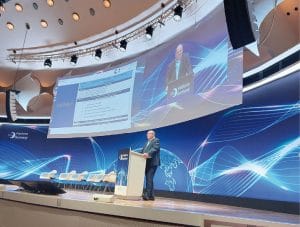
Xavier Priem, CELTIC Director, Opening the CELTIC 21st Anniversary Celebration

Status of the Eureka Clusters’ ­Programme

All Eureka Clusters have been brought under the 2021-created Eureka Clusters’ Programme (ECP). A Multi-Annual Plan was defined and implemented over the last three years. This plan runs from July 2021 to June 2025. Eureka Public Authorities and the Clusters are currently analysing together the results of this first period of the ECP to derive an improved programme framework for the coming years. CELTIC-NEXT is closely collaborating with the other Clusters and the Public Authorities to represent the interests of our ICT Community best.

This new presidency is essential for the EUREKA Clusters as it is mandated to establish the new ECP public-private partnership framework arrangement between the Eureka Countries and the five Clusters of the Eureka Clusters’ Programme. Intensive work has started to establish the new base of the ECP to reach better support for beneficiaries and all stakeholders around the table. The five Clusters have elected CELTIC-NEXT’s Director to represent them and lead the work on the Eureka Clusters Programme Partnership Arrangement document and annexes. The target is to sign the final document during the last Eureka Network HLG/HLR meeting in June 2025. This is a challenging task as it will define the Eureka Clusters Public Private Partnership arrangements for the upcoming multi-year period.

We will soon collect our community’s feedback on our strategic research and innovation roadmap (SRIA) as we are currently conducting an update process. The target is to provide this new SRIA as input to our participation in the new ECP period starting July 2025. The duration of the new ECP is still under discussion but it is already decided to make it longer than the original four years. We will incorporate this new roadmap in our Launch Events and Proposers’ Brokerage Days, starting second half 2025, to allow consortia to propose innovative projects in a more extensive variety of technologies, services, applications, and verticals. This reinforces our traditional bottom-up approach. We will continue to run our Spring and Autumn Calls based on our successful legacy. This is a unique selling point of CELTIC as a Eureka Cluster compared to other international funding schemes.

Running Calls

When this edition of the CELTIC-NEXT’s News is published, the Autumn Call 2024 will have closed. Therefore, it is already time to announce the Spring Call 2025! The Spring Call 2025 will be launched in December 2024 with an online event. The Proposers’ Brokerage Day will occur in a physical presence at the beginning of February 2025. The precise date and location will be announced via our Newsletter and website. The submission will close on the 25th of April 2025 for a labelling decision before mid-June 2025. Forecasted possible start dates for labelled projects would be the second half of 2025. We can also happily say that more countries support CELTIC-NEXT.

Flagships – Goodbye and thank you AI-NET, hello SUSTAINET!

AI-NET Flagship and its three vertical projects delivered tremendous successes, greatly impacting several fundamental KPIs. Those projects ended in July 2024, except for AI-NET-ANTILLAS, which will still pursue some work until the end of 2025.

A tremendous final Closure Event occurred on July 2nd, 2024, collocated with the 6G Conference Berlin. AI-NET received the CELTIC-NEXT Best Innovation Award.

“AI-NET achieved outstanding achievements in the area of 6G enabling technologies complementing 5G solutions with a focus on edge-centric compute and AI, shaping new secure services and application platforms. Excellent results for a sustainable computing platform supporting AI on top of the communications system have been successfully demonstrated. AI-NET showed highly competitive solutions, for example, in the area of energy-efficient edge data centres. Data centre solutions are close to the best hyper scaler solution that reached power-aware effectiveness of 1-1.2 PUE. That clearly outlines the competitive edge that the project has achieved to meet global challenges for Europe’s future prosperity and competitiveness.

Scientific excellence in future 6G Technologies and the achievement of ambitious KPIs to secure future markets that can enable 6G Technologies have been shown.

Overall, 316 scientific publications in leading international journals and conferences supported by 184 PhD and Master Thesis have been accepted and successfully finished. High business outcomes are expected due to the 72 IPR, Open Source, and Standards contributions. With 77 Proof of Concepts, 70 keynotes, and 43 hirings, the project underlines its excellence even further.

The project worked on timely solutions concerning security, sustainability, performance and cost reduction of AI in future telecom networks. Energy Metering measuring energy consumption in real industry environments was only one part of the project next to hybrid IT management solutions and incremental manufacturing. Optimized power distribution in synergy with the network management and the lightweight software layer solutions can be used as a first entry point for the Telecom customer to access a Telco cloud. New AI algorithms that showed federated learning (FL) next to unlearning, analysing overfitting parametrization next to smart clustering solutions promised data saving in large scale once deployed on a computing platform.”

In the meantime, the new flagship called SUSTAINET was labelled for its initial application in June 2024. Its central thematic is focusing on network resilience, energy efficiency, sustainability, high-performing end-to-end networks, and network security.

SUSTAINET high-level description: “In the midst of global crises and geopolitical challenges, Europe is charting its course towards a digital, sustainable future. However, with its share of the global ICT market declining, urgent actions are required to ensure technological sovereignty. This project addresses this multifaceted challenge by focusing on network resilience, energy efficiency, sustainability, high-performing end-to-end networks, and network security.

Achieving seamless interconnection of digital systems, essential for future high-performance communication networks, demands research in ICT hardware and control software. The transition towards a “Digital Society” necessitates increased dependence on ICT for power supply control, emphasising the need for resilient, scalable networking technologies combined with the support of new services such as cognitive and complete context awareness.

Network resilience is paramount in such interconnected networking for critical infrastructures and requires new concepts to ensure communication continuity during errors or disasters. Such networking will also call for secure networks with robust cybersecurity measures to combat evolving threats.

Furthermore, network sustainability is vital for realising a climate-neutral future. Telecommunications networks must prioritise connectivity and serve as platforms for a sustainable society. Operators must adapt to fluctuating renewable energy availability, transitioning from consumers to prosumers in the energy market.

Collaborative R&D efforts are imperative to achieve these objectives and regain technological sovereignty. Government support and industry initiatives must converge to drive innovation in key technologies, fostering industrial cooperation and joint R&D initiatives.

This project proposes a holistic approach, integrating research in frictionless network performance, resilience, security, and sustainability to propel Europe towards a sustainable, technologically sovereign future.”

The CELTIC-NEXT office is happy to connect with potential new additional partners interested in joining the flagship during the ramp-up phase. Please contact us at .

Outlook for 2025

2025 will be the year of the new flagship(s) implementation, a strong collaborative effort from all stakeholders, consortia participants, the CELTIC-NEXT Office, and the involved Public Authorities!

2025 should be a year of growth, thanks to the upcoming new ECP framework arrangement, the renewed trust and support of existing partnering Public Authorities, and new incoming funding countries like Brazil and Chile!

Further information

Stay tuned by visiting our Call Calendar page: https://www.celticnext.eu/call-calendar/

and/or by subscribing to our Newsletter under https://www.celticnext.eu/news-subscription/

https://www.celticnext.eu/celtic-21st-anniversary-
celebration-at-the-berlin-6g-conference-2024-2nd-to-4th-july-2024/

CELTIC-NEXT Cluster

Roadmap implementation & Outlook

How CELTIC-NEXT is delivering on its 2021’s ambitions and what is
coming for CELTIC-NEXT in 2024-2025


Xavier Priem
Director CELTIC Office

For CELTIC-NEXT, 2021 was a year of renewal and change. 2022 and 2023 were two important years of implementation and analysis. Let’s have a look together to what has been achieved to date, and what we plan for 2024 & 2025.

Progress on Implementing the Roadmap

Since 2022, we have pursued the implementation of CELTIC’s new roadmap by running several actions. We incorporated this roadmap in our Launch Events and Proposers’ Brokerage Days, to allow consortia to propose innovative projects in the large number of fields of technologies, applications, and verticals of the new roadmap. This is our traditional bottom-up approach. We will continue to run our Spring and Autumn Calls as per our successful legacy. This is a unique selling point of CELTIC as a Eureka Cluster compared to other international funding schemes. And it will remain so in the future.

Working on the Partnerships

We signed two major partnerships (with ESA and with 6G-IA-SNS) to enhance our funding impact in the global ICT community, as well as in other industries. Those partnerships will nourish further our roadmap and attractiveness to Public Authorities to fund impactful innovative projects across and beyond the Eureka and European (contracted form: Eurekan) countries. The targets of those partnerships are: knowledge exchange & SRIAs cross-contributions; leveraging funding schemes across Technology Readiness Levels (TRLs) & topics; calls timing alignment & Easier pipelining of proposals; from Research to Market (TRL 7, early adopters, testbeds…); offering innovative entities the full panel between top-down programs and bottom-up spaces for their collaborative projects.


CELTIC-NEXT director Xavier Priem presented the CELTIC-NEXT Eureka CLUSTER
advantages and proposal support at the 5G Techritory in a 6G-SNS ICE co-creation workshop on National initiatives.

Running Calls

At the time of publication of this edition of the CELTIC-NEXT’s News, the Spring Call 2024 will have ended. Therefore, it is already time to announce the Autumn Call 2024! The Autumn Call 2024 will be launched on the 28th of May 2024 with an online event. The Proposers’ Brokerage Day will take place on the 5th of September 2024 in physical presence. The location will be announced via our Newsletter and our Web site. The submission will close on the 21st of October 2024, for a labelling early December 2024. Forecasted possible start dates for labelled projects would be first half of 2025. We can also happily say that more countries support CELTIC-NEXT and that Sweden supports again our Autumn Calls.

Flagships

AINET is ending, time has come for a new flagship

AINET Flagship and its three vertical projects have been tremendous successes with a high impact on several fundamental KPIs. Those projects are about to end. A final Closure Event is programmed for the 2nd of July 2024, collocated with the 6G Conference Berlin. Please check the Events section of this CELTIC-NEXT News issue.

As we are writing those lines, a new large consortium has formed and is making the proposal of a new flagship proposal in the stream of SASER, SENDATE and AINET. More information will be shared if this proposal gets labelled during this summer. The CELTIC-NEXT office is happy to establish the contact between potential new partners interested in joining the flagship after its labelling. Please contact us at .

Designing the Space ICT flagship programme

Space ICT has become a subject of high attention for industry and governments, and this has been strongly reinforced by the effects of the COVID-19 pandemic and the war in Ukraine. A clear sign has been also sent by 3GPP, which has now opened wider doors for the inclusion of SatCom besides the traditional backhauling role. The Memorandum of Intent will encourage terrestrial ICT and Space ICT industry collaboration with other industry verticals to facilitate the adoption of advanced Space ICT technologies in the business models and processes of all industry sectors. CELTIC-NEXT and ESA are working together to define a joint roadmap of technologies, use cases and agenda of calls. ESA is a key actor in the development of all aspects and fields of space activity. Once the first roadmap and calls agenda are ready, CELTIC and ESA will advertise those. The joint Roadmap and Agenda are being defined. The first CELTIC Space ICT flagship is under discussion with the Industry and the funding agencies and ministries.

Acquiring new Core Group memberships

The CELTIC-NEXT’s Director has the mandate from CELTIC-NEXT’s Core Group to propose and integrate new industry members to the existing Core Group. Some discussions are ongoing for some industrial companies.

ECP & Joint thematic calls

An analysis of the first results for the in 2021 initiated Eureka Clusters Programme (ECP) is currently ongoing. Target is to understand if the new structured collaborative approach grouping the five Eureka clusters under a Eureka Programme as such has achieved the goals it was assigned. Same applies to the first Joint Thematic Call on Sustainability. More will be reported once this analysis is finished.

No new Join Thematic Call bringing all Clusters together in a same call is foreseen as of today. Potential new more focused Joint Calls with CELTIC-NEXT, where a sub-group of clusters (2 to 3) would engage together, are under discussion. Once those calls are exhaustively defined, the CELTIC-NEXT office will advert them. Stay tuned by visiting ou Call Calendar page: https://www.celticnext.eu/call-calendar/ and/or by subscribing to our Newsletter under https://www.celticnext.eu/news-subscription/ .

Outlook

2024 is and will remain a challenging year for many topics. Joint collaborative innovation and knowledge exchange is one of the best weapons against obscurantism, pandemics and wars. Our ICT community is one of the best positioned to understand and support this. Cybersecurity, Resilience of Critical Infrastructures, Sustainability… are certainly topics to be fully supported by our ICT technologies and to be ranked now as absolute priorities in the new world that is in front of us. The new flagship proposal goes along those strategic lines.

2024 is also a year of joyful proud Celebration! CELTIC is getting 21 years old! This special Anniversary will be celebrated in Berlin on the 2nd of July 2024, during the 6G Berlin Conference, under the new presidency of Eureka by Germany and Canada. High Level Representatives from our Industry and from Ministries and Eureka’s new President will take the floor to share their support and enthusiasm about CELTIC across its history and for the coming years!

A detailed agenda will be shared soon. Stay tuned by visiting ou Call Calendar page: https://www.celticnext.eu/call-calendar/ and/or by subscribing to our Newsletter ­under https://www.celticnext.eu/news-subscription/.

CELTIC-NEXT Cluster

An exciting year of transition and renewal for CELTIC-NEXT

New ambitions and new roadmap


Xavier Priem
Director CELTIC Office

CELTIC-NEXT has been through several changes this year: a new Director, updated vision, mission and roadmap, and last but not least, the active role in the new Eureka Clusters Programme (ECP). Our Spring Call has been very successful, with six projects labelled and now in the funding phase, and we are curious to see the proposals from our Autumn Call, which closed on 22nd November. We are very active in preparing the future with a new Flagship series programme and closing partnerships with other funding bodies.

An enriched DNA for future growth

When I became the new CELTIC Director at the end of March this year, I discovered, from the inside, CELTIC’s strong DNA, built over its 18 years of successful fostering of the ICT RDI community across Eureka countries. It has been around nine months since then – one could say, the time of a pregnancy. It has been an interesting experience, because, in a way, we have further enriched CELTIC’s DNA over the last months in various manners.

First, we did this by following the long-­established tradition of labelling new projects from the last bottom-up Spring Call; here I personally wish to all projects to be successful in being awarded with their ­national fundings.

Secondly, we did this via the joint work and exchanges we had with our other Eureka Clusters friends in the context of the ECP Multi-Annual-Plan preparation and successful approval, on 17th June 2021, by Eu­reka and its funding Public Authorities. We will use the opportunity of the ECP MAP to address wider industrial communities and bring in additional funding countries to our ICT community. The ECP MAP application gave us also the additional opportunity to revisit the vision, mission and roadmap, last elaborated in 2018, in the light of the latest challenges and opportunities that both our ICT community and the wider world have been facing since then, like COVID-19, supply-chain challenges and the new potential role of satellites and alike in 5G, 6G and overall services.

Finally, and very much linked to the last point, CELTIC will cross its DNA with other communities in the near future, starting with the European Space sector.

This new enriched DNA will be the base for future flagship calls and projects, coming in addition to the successful series of CELTIC flagship projects like SASER, SENDATE and currently AI-NET.

Progressing implementation of Eureka Clusters Programme

After an intensive preparation and application period, which culminated in the ECP authorisation to operate as Clusters, the five Eureka Clusters CELTIC-NEXT, EUROGIA2020, ITEA4,

SMART and XECS are now implementing the first Multi-Annual-Plan (MAP) as well as the first Annual Operational Plan (AOP). CELTIC-NEXT is, as in the preparation phase, very active in the implementation phase, in order to best represent our ICT community’s interests in the joint committees and actions. This period is crucial for CELTIC-NEXT to get the maximum return on investment from the new Eureka Clusters Programme, by getting the best representation in those additional funded calls. Therefore, I want to use this occasion to encourage readers from the RDI community to feed us with your needs, wishes and ideas on topics (technologies, use cases, and more) for the elaboration of future joint thematic call topics. The first thematic call will be about “Sustainable Industry” and will, among others, look at Green ICT as well as Space-Earth-Ocean Integrated Systems.


Conclusion and Outlook

As the new Director, I am proud and honoured to drive this transformation and the development of CELTIC on behalf of CELTIC’s Management Group and Core Group members. Our new strategy gets already positive responses from the funding authorities of numerous Eureka countries, who want to invest in our new vision, mission and roadmap as presented in our application to ECP MAP. Our future flagship series programme is also getting very good traction, encouraging us to further pursue this new path. 2022 will be an interesting year for CELTIC!

CELTIC-NEXT Cluster

ReICOvAir

Reliable Industrial Communication Over the Air

Thomas Heyn
Fraunhofer IIS, Erlangen, Germany
Thomas.heyn(at)iis.fraunhofer.de

The motivation for the ReICOvAir project is the vision to enable the widespread usage of wireless communication systems in industrial environments. This was achieved by creating an innovative verification method as well as initial testing systems relying on this method in order to qualify the reliability of various wireless communication systems.

ReICOvAir concentrated on the fact that there is no common way of measuring the quality of wireless communication systems in industrial scenarios. The purpose of ReICOvAir was to provide the required methods and testbeds to carry out a quality assessment of wireless communication systems in industrial environments.

Approach

The prerequisites to recreate RF signal propagation characteristics from industrial environments in the lab are two-fold. Firstly, a valid parameter database for the propagation channel conditions in industrial environments has to be established. Secondly, a channel model supporting the relevant use cases in the factory also needs to be in place. Therefore, great care was taken planning the QuaDRiGa channel model update and the required propagation measurements in industrial environments.

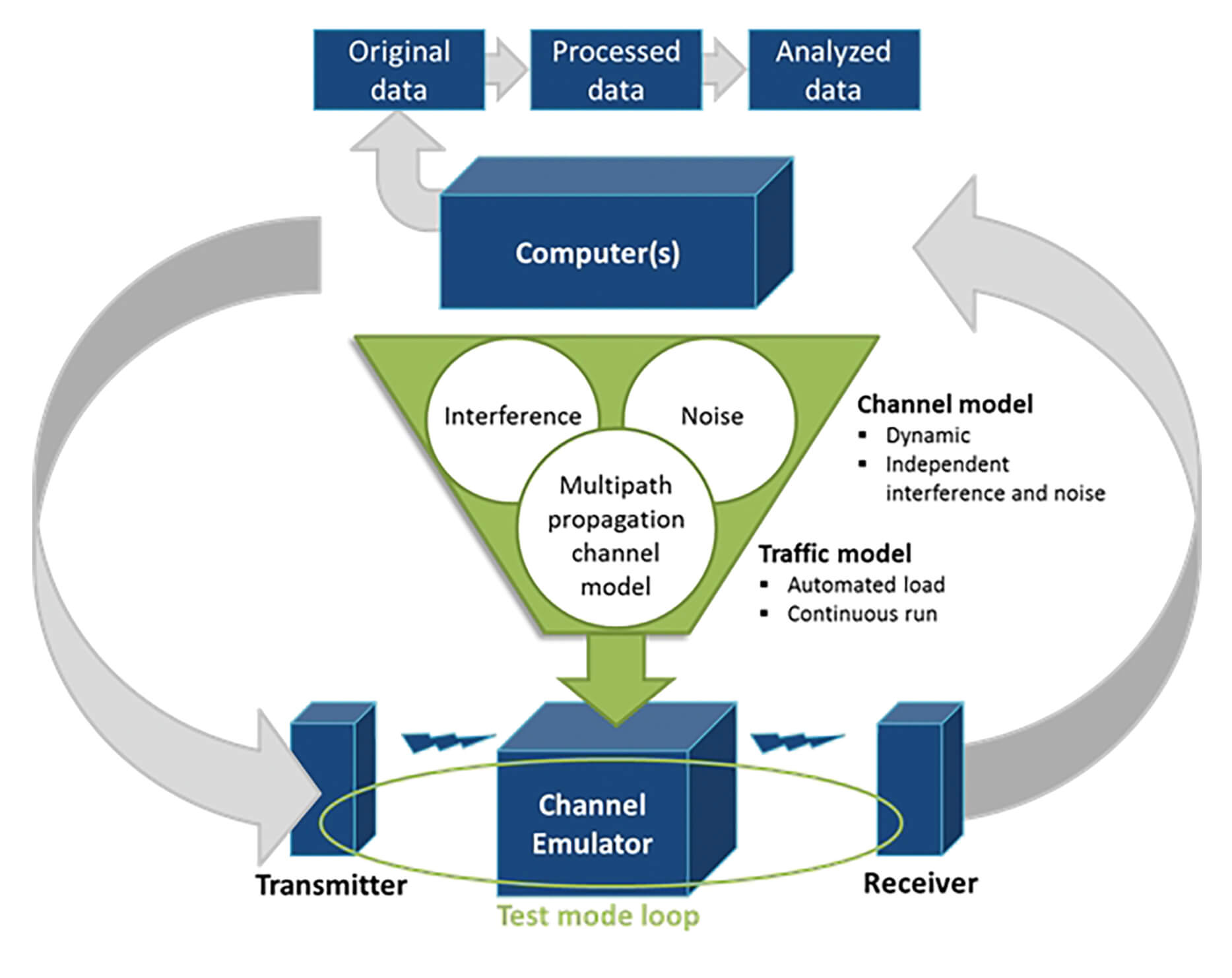
Based on the updated QuaDRiGa channel model, software simulation and hardware emulation environments were designed and implemented. They allow non-expert users to apply the sophisticated channel model to simulations, as well as RF-transmissions, and real devices via a hardware channel emulator and a data traffic emulator (see Figure 1).


Figure 1: ReICOvAir test concept

Achieved results

The project’s main achievement is providing the key enabling factors in order to prove the reliability of wireless transmission systems in industrial environments.

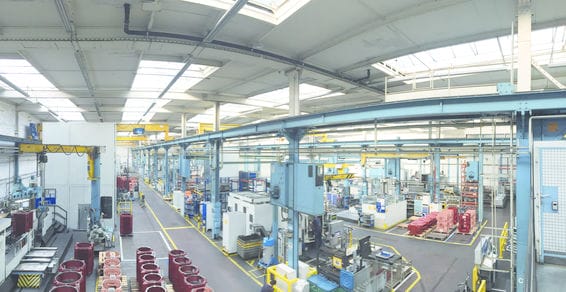
In a first step, the propagation parameters of industrial environments were characterised via extensive measurement campaigns at 2.4 and 5.3 GHz in live production sites in Finland and Germany (see Figure 2). The measurement results highlight the differences compared to the formerly used channel model for office indoor environments. This is the initial step for a realistic recreation of an industrial propagation environment in the lab.

In a second step, the necessary tools for practical use were developed. The core of these tools is the enhancement of the QuaDRiGa channel model that now supports simultaneous movement of transmitter and receiver. Additionally, it provides the expected correlation in reception conditions of two collocated devices. With regard to the predecessor model, by incorporating the sum-of-sinusoids method into the model, a reduction of the required processing effort was achieved making the system much more manageable for high numbers of users and large areas.

The channel model supports detailed software simulations as well as hardware emulations. These two approaches provide proof-of-concept solutions for testing services, allowing the qualification of an ideal software model, assuming no implementation losses, as well as the testing of real devices. This achieves the vision of “bringing the factory into the lab”.

To make the results valuable for the industry, the QuaDRIGa channel model was released as open source, thus building trust by allowing independent in-depth analysis of the model.

The project has so far generated various publications and contributed to national (VDI, DKE) and international standardization bodies (5G-ACIA, IEC, 3GPP).


Figure 2: Measurement site at Siemens, Germany

Conclusion and outlook

The state-of-the-art QuaDRiGa channel model was enhanced to enable the realistic simulation of radio wave propagation within industrial environments. The major enhancements are: obtaining a set of propagation parameters for industrial environments, the support of a fully mobile system, where transmitter and receiver can move at the same time, as well as the establishment of a simulation and emulation lab testbed. Based on these results, it is now possible to simulate the wireless communication behaviour of an entire factory and apply this behaviour to real devices. Great care was taken to disseminate the results and provide the findings to standardization bodies such as 3GPP.

The project results advanced the required testing of wireless communication, as realistic assessment of the behaviour of wireless transmission systems such as 5G, both in standardization and in the industrial sector for specific use cases, now becomes possible. Ultimately, the results of the project will enhance the industrial sector’s ­con­fidence in relying more on wireless transmission systems and will lead to a change in the design of future factories.

› Further information

› ReICOvAir project page – www.celticnext.eu/project-reicovair

  • Previous
  • 1
  • ...
  • 4
  • 5
  • 6
  • 7
  • Next

5Copyright © 2025 by Eurescom

 
  • Corporate Information
  • Data Protection Declaration
  • Terms of Use
  • Corporate Information
  • Data Protection Declaration
  • Terms of Use